
TL;DR summary:
- The top home insurance mistakes to avoid are shopping on price alone, insuring for market value instead of rebuild cost, assuming flood, earthquake, and sewer backup are covered, skipping endorsements, and never updating your policy after a remodel or major purchase.
- Standard home policies don’t cover flood, and people outside high-risk flood zones file more than 25% of flood claims nationwide, according to FEMA.
- Wind and hail is the most frequent cause of homeowners claims nationally, so know whether your Texas policy carries a separate percentage-based wind/hail deductible.
- Your best next step: pull your declarations page, confirm your dwelling limit matches your rebuild cost, and ask an independent agent to compare carriers and flag gaps.
The top home insurance mistakes to avoid rarely look like mistakes on the day you buy a policy. They show up months or years later, at claim time, when a dwelling limit turns out to be too low, a flood or sewer backup turns out to be excluded, or a percentage deductible turns out to be far larger than you remembered. The single most important corrective action you can take right now is simple: pull out your declarations page, confirm your dwelling limit matches your home’s estimated rebuild cost rather than its sale price, and verify which perils are excluded.
The top home insurance mistakes to avoid at a glance:
- Choosing the cheapest policy without checking coverage terms or carrier reliability
- Setting your dwelling limit at market value instead of replacement (rebuild) cost
- Assuming flood, earthquake, and sewer backup are included in your standard policy
- Skipping endorsements for other structures, scheduled personal property, and loss of use
- Never taking a home inventory or checking sublimits on valuables
- Picking the wrong deductible, especially missing a separate wind/hail deductible
- Not verifying insurer financial strength or claims-handling reputation
- Failing to update coverage after a remodel, major purchase, or life change
Table of Contents
- Key Takeaways
- Top home insurance mistakes to avoid — and exactly how to fix them
- How to set the right dwelling limit so you are not underinsured
- Perils your standard policy probably does not cover
- How to evaluate an insurer before you commit
- How to lower your premium without creating coverage gaps
- When to review your policy — and what should trigger an immediate update
- Expert tips from a Certified Insurance Counselor
- What these mistakes actually cost — and why they keep happening
- How Hettler Insurance Agency can help you close these coverage gaps
- Sources
- Frequently Asked Questions
Key Takeaways
Avoiding the top home insurance mistakes comes down to discipline: verify your dwelling limit equals your rebuild cost, confirm your exclusions, and update your policy every time your home or finances change.
| Point | Details |
|---|---|
| Match limit to rebuild cost | Set your dwelling limit to estimated rebuild cost, not market value or mortgage balance, to avoid a major shortfall after a total loss. |
| Flood and sewer backup need separate coverage | Standard home policies don’t cover flood, and sewer or drain backup usually requires an endorsement. Buy NFIP or private flood coverage and ask about a backup endorsement. |
| Know your wind/hail deductible | Wind and hail is the most frequent homeowners claim type nationally, and many Texas policies use a percentage-based wind/hail deductible. |
| Check insurer financial strength | Confirm your carrier’s A.M. Best rating and review Texas complaint data before committing. |
| Update after every major change | Renovations, major purchases, and occupancy changes all affect your coverage needs, so tell your agent promptly. |
| Hettler Insurance Agency shops 30+ carriers | The agency compares 30+ top-rated carriers, checks rebuild cost, and flags missing endorsements, with no extra agency fees. |
Top home insurance mistakes to avoid — and exactly how to fix them
1. Buying based on price alone
The cheapest policy rarely delivers the best value after a loss. A carrier with rock-bottom premiums may have weak financial ratings, slow claims handling, or coverage terms riddled with sublimits that leave you short when you need the money most. Consumer Reports recommends getting multiple quotes and checking claims-handling reputation before signing anything, because a lower premium means little if your claim drags on or gets underpaid.
How to fix it: Get at least three quotes. Compare coverage terms side by side, not just the premium line. Check the carrier’s A.M. Best rating and its Texas complaint data from TDI.
2. Insuring for market value instead of rebuild cost
This is the most expensive mistake on the list. Market value includes land, location, and neighborhood demand. Rebuild cost covers only the labor and materials needed to reconstruct the structure. After a total loss, your insurer pays to rebuild, not to buy you an equivalent home on the open market, and the two numbers can be far apart.
NerdWallet notes that dwelling limits should be based on what it would cost to rebuild your home. The Texas Department of Insurance likewise advises choosing enough coverage to replace your house and personal property if they were destroyed. Buying only the minimum your lender requires, which may track the loan balance rather than rebuild cost, can leave a large out-of-pocket shortfall after a major loss.
How to fix it: Ask your agent to run a replacement cost estimate. Check your current coverage limits against that estimate, and read up on how replacement cost coverage works.
3. Assuming flood, earthquake, and sewer backup are covered
Standard home policies exclude flood damage and earthquake or earth movement, and backup of sewers or drains usually requires an added endorsement, according to the TDI Home Insurance Guide. These are not edge cases. FEMA confirms that standard homeowners policies do not cover floods, and that people who live outside high-risk areas file more than 25 percent of flood claims nationwide. In Texas, TDI reports that more than half of the homes flooded by Hurricane Harvey were outside designated flood zones.
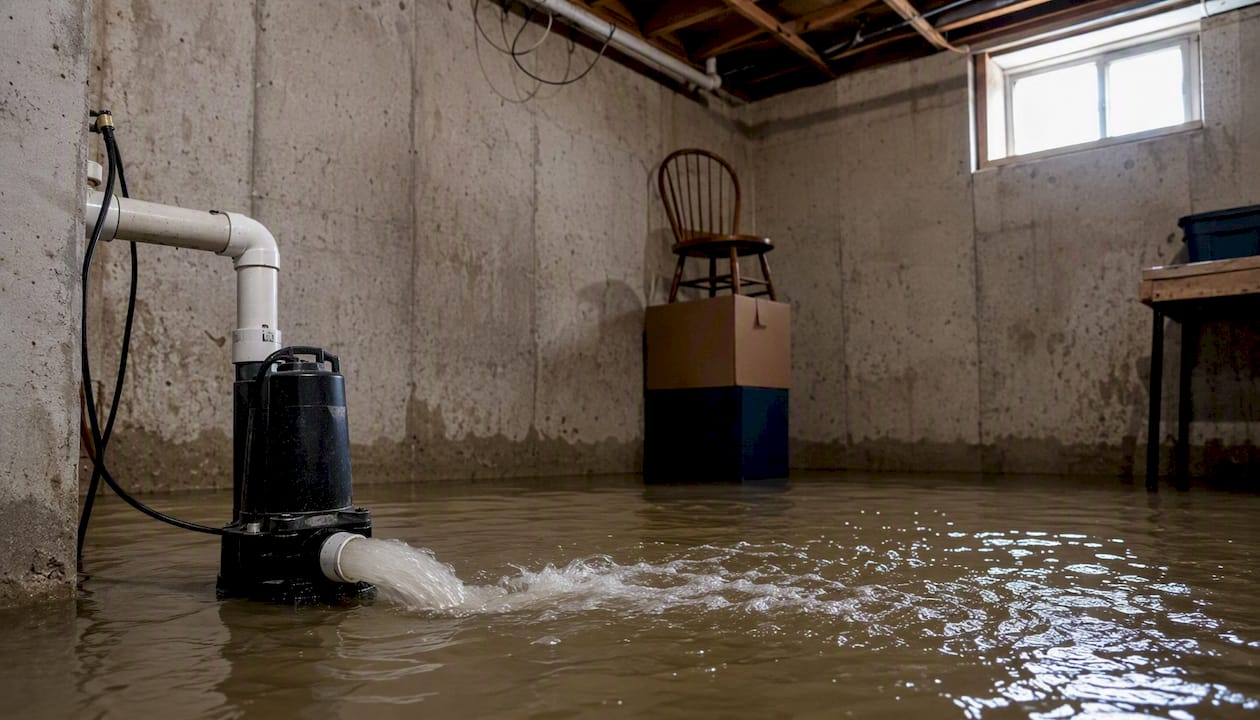
Sewer backup catches many homeowners by surprise, because the damage starts inside the house rather than from rising water outside. Without a backup endorsement, that cleanup can fall entirely on you.
How to fix it: Look up your flood zone at FloodSmart.gov, then read our guide to Texas flood insurance for homeowners. Ask your agent about a sewer-backup endorsement and an earthquake endorsement.
4. Skipping endorsements for other structures, loss of use, and scheduled property
A standard policy covers your dwelling and some personal property, but the default limits on other structures (detached garages, fences, sheds) and loss-of-use coverage (additional living expenses while your home is being repaired) may be lower than you need. TDI notes that home policies limit what they’ll pay for things like jewelry and art, so high-value items can be covered at far less than their actual replacement value.
How to fix it: Review your declarations page for other structures and loss-of-use limits. Schedule high-value items separately with a personal articles floater or endorsement. Ask your agent whether business equipment you keep at home is covered, because most home policies cap that coverage at a low amount.
5. Not inventorying contents or checking sublimits on valuables
Without a documented inventory, proving what you owned before a fire or theft is difficult. Adjusters work from what you can substantiate, and a large personal property claim with no receipts, photos, or serial numbers is hard to support. TDI advises photographing or videotaping each room, including closets, storage buildings, and the garage, and opening drawers to photograph what’s inside.
How to fix it: Walk through your home with your phone and record a video inventory. Store it in a cloud account so it survives a house fire. Note serial numbers for electronics and appliances, and keep receipts for major purchases.
Pro Tip: Request a loss history report (CLUE report) on your home before you buy or renew. It shows prior claims on the property, which can reveal recurring water damage or structural issues that may affect your coverage terms.
6. Choosing the wrong deductible or missing separate disaster deductibles
Raising your deductible lowers your premium, but only makes sense if you can actually pay that deductible after a loss. More critically, many Texas homeowners carry a separate wind/hail deductible expressed as a percentage of the dwelling limit rather than a flat dollar amount. On a home insured for $300,000, for example, a 2% wind/hail deductible means the first $6,000 of a hail claim is yours.
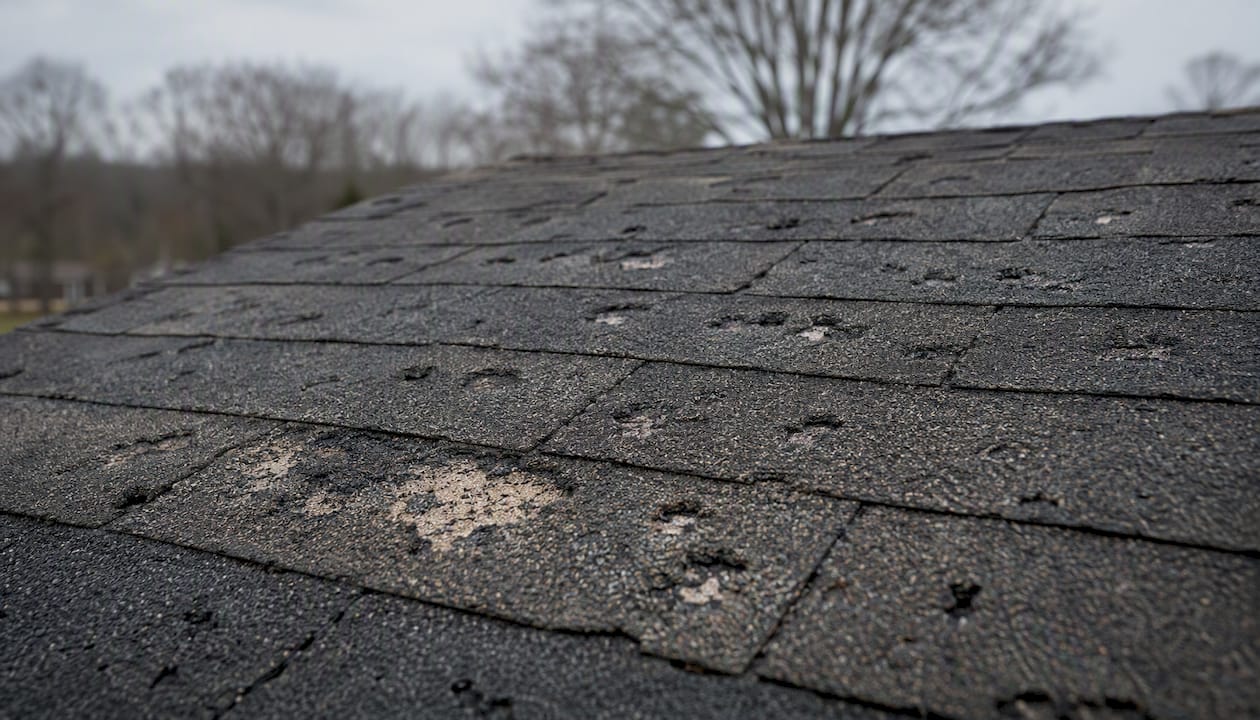
Wind and hail is the most frequent cause of homeowners claims nationally, at 2.8 claims per 100 insured homes per year, according to the Insurance Information Institute. For West Texas homeowners, that makes this one of the most consequential deductible decisions you will make.
How to fix it: Read your declarations page for any percentage-based deductibles, then review how percentage deductibles work on Texas homes and our Texas deductible guide for hail and flood.
7. Not checking insurer financial strength or claims-handling reputation
A policy is only as good as the company behind it. An insurer with weak financial strength may struggle to pay claims after a regional catastrophe, exactly when you need it most. Complaint data shows how often policyholders file complaints against a carrier relative to its size.
How to fix it: Look up your carrier’s A.M. Best financial strength rating. Check TDI complaint data for Texas carriers, and review J.D. Power homeowner satisfaction scores for claims-handling feedback. An independent agent can explain what those ratings mean for your situation.
8. Failing to update your policy after renovations or major purchases
A kitchen remodel, a new addition, or a converted garage increases your home’s rebuild cost. If your dwelling limit stays the same, you may be underinsured the moment the contractor leaves. The same applies to major purchases: a new home theater system, a high-end appliance package, or a valuable piece of jewelry can push your personal property exposure above your policy’s sublimits.
How to fix it: Tell your agent promptly about any significant renovation, ideally before the work is finished. Request an updated rebuild estimate. Add a scheduled endorsement for new high-value items.
9. Not shopping multiple carriers or using an independent agent
A captive agent represents one carrier. An independent agent represents many. When your risk profile changes, your area’s loss history shifts, or a carrier tightens its underwriting, an independent agent can move your policy to a better-fit carrier without you having to start from scratch. When you do switch, follow TDI’s rule: never cancel a policy until you get your new policy or a written statement of coverage.
How to fix it: Work with an independent agent who can compare multiple carriers. Ask about bundling home and auto in Texas, which often produces savings without reducing coverage.
10. Poor documentation and claims-filing practices
Many homeowners wait too long to file a claim, fail to photograph damage before making emergency repairs, or don’t keep a copy of their policy and declarations page where they can reach it after a disaster. Some also miss the chance to report additional damage that surfaces after the initial settlement.
How to fix it: Keep a digital copy of your declarations page in cloud storage. Photograph all damage before any repairs, and make only the temporary repairs needed to prevent further damage. File claims promptly and follow up in writing. Keep a log of every conversation with your adjuster, including dates and names.
11. Ignoring liability coverage and personal umbrella policies
Standard homeowners policies include personal liability coverage, but the limit can be exhausted quickly if a guest is seriously injured on your property and medical bills plus legal fees exceed it. A personal umbrella policy adds extra liability coverage above your home and auto limits, and TDI notes you can buy a separate umbrella policy for more liability protection.
How to fix it: Review your liability limit on the declarations page. Ask your agent whether your assets and lifestyle justify a personal umbrella policy.
Quick policy review checklist:
| Check | What to confirm |
|---|---|
| Dwelling limit | Equals estimated rebuild cost, not market value |
| Flood and earthquake | Separate flood policy or earthquake endorsement in place, or a conscious decision to go without |
| Sewer backup | Backup of sewers or drains endorsement added if needed |
| Valuables | Jewelry, art, firearms, or other high-value items scheduled |
| Loss of use | Limit is enough to cover comparable housing during a long rebuild |
| Liability | Limit reviewed and umbrella policy considered |
| Deductibles | All deductibles understood in dollars, including any percentage-based wind/hail deductible |
| Home inventory | Documented and stored off-site or in the cloud |
| Carrier strength | A.M. Best rating confirmed and complaint data reviewed |
| Recent changes | Policy updated after any renovation or major purchase |
How to set the right dwelling limit so you are not underinsured
Match your dwelling limit to your home’s estimated rebuild cost, not its current market value or your outstanding mortgage balance. These three numbers are almost never the same, and confusing them is a common root cause of underinsurance.
Step-by-step rebuild cost estimate:
- Measure your home’s finished square footage. Use your county appraisal district records or measure each floor.
- Get a current local rebuild cost. Your agent, a local contractor, or a replacement cost estimator can provide a figure for your area. Construction costs vary widely by finish level and change over time, so use a current estimate rather than an old one.
- Add custom features. Granite countertops, hardwood floors, custom cabinetry, and vaulted ceilings cost more to replace than builder-grade materials.
- Include permit and debris-removal costs. A full rebuild typically requires permits and site clearing before construction begins.
- Compare your estimate to your current dwelling limit. If your limit falls meaningfully short, ask your agent about an adjustment.
Once you have the right base limit, ask your agent about coverage upgrades that protect against future cost increases:
- Inflation guard: Automatically adjusts your dwelling limit each year to track construction cost changes.
- Extended replacement cost: Pays a set percentage above your dwelling limit if rebuild costs exceed the policy limit after a major loss.
- Guaranteed replacement cost: Covers the full rebuild regardless of cost. It is less commonly offered today, so ask whether it is available for your home.
Pro Tip: Ask your agent to document the rebuild cost assumptions used to set your dwelling limit in your policy file. If a question arises after a loss, that documentation shows the baseline you and your insurer used.
For a deeper look at sizing your coverage, see How Much Home Insurance Is Enough?
Perils your standard policy probably does not cover
Flood, earthquake, and backup of sewers or drains are excluded from most standard homeowners policies unless you add separate coverage. This is not a technicality buried in fine print. It is a structural feature of how homeowners insurance is written, and it catches many homeowners off guard.
Flood insurance: The National Flood Insurance Program (NFIP) offers up to $250,000 in building coverage and $100,000 in contents coverage for one-to-four family homes, according to FEMA. Private flood insurance is also available and may offer higher limits or broader terms. To check your flood zone, use the FEMA Flood Map Service Center or FloodSmart.gov. Even a low-risk flood zone designation does not mean you are safe from flood damage, and heavy West Texas storms can overwhelm local drainage.
Earthquake insurance: Standard policies exclude earthquakes and earth movement. West Texas is not immune: a magnitude 5.4 earthquake struck the Permian Basin in November 2022, according to the Texas Tribune. Earthquake endorsements are available from many carriers.
Sewer backup: This is one of the most overlooked gaps in homeowner coverage. A backup endorsement covers damage from water or sewage that backs up through drains. Without it, damage from a backed-up line may be entirely your expense.
Where to start:
- Look up your flood zone at FloodSmart.gov or the FEMA Flood Map Service Center
- Ask your agent specifically about a sewer-backup endorsement
- Review the Texas Department of Insurance home insurance tips
- Request an earthquake endorsement quote if the risk concerns you
How to evaluate an insurer before you commit
Compare claims-handling reputation, financial strength, and policy terms before you compare premiums. A carrier that ranks poorly on all three is not a bargain, even with a lower premium.
Key metrics and where to find them:
- A.M. Best financial strength rating: To protect its clients, Hettler Insurance Agency tends not to work with carriers rated below A- by A.M. Best, and generally does not work with carriers whose financial-strength rating falls below B+.
- Complaint data: TDI publishes complaint data for companies doing business in Texas, so you can see how a carrier compares with others its size.
- J.D. Power homeowner satisfaction scores: Published annually; focus on claims satisfaction, not just overall satisfaction.
- Consumer Reports: Consumer Reports surveys policyholders on claims experience, value, and customer service.
Questions to ask any agent or carrier before you buy:
- What is the carrier’s A.M. Best rating, and has it changed in the past three years?
- How does the carrier handle wind and hail claims in my area?
- Is there a separate deductible for wind and hail, and what is it in dollars?
- What sublimits apply to jewelry, electronics, or business property?
- What discounts are available for bundling, security systems, or impact-resistant roofing?
- How are claims handled when a contractor’s rebuild estimate exceeds the policy limit?
Independent agent vs. captive agent: A captive agent represents one carrier and can only offer that carrier’s products. An independent agent represents multiple carriers and can shop your risk across the market. For most homeowners, an independent agent provides more flexibility, especially when your home has characteristics (age, roof type, location) that some carriers price unfavorably.
How to lower your premium without creating coverage gaps
Lower your premium by using discounts, mitigation improvements, and smart deductible choices, not by cutting your dwelling limit or dropping important endorsements. Reducing coverage to save money is the one savings strategy that reliably costs more in the long run.
| Savings method | Short-term premium change | Out-of-pocket risk at claim | Best suited for |
|---|---|---|---|
| Raise deductible (flat dollar) | Medium reduction | Medium increase | Homeowners with savings to cover the deductible |
| Bundle home and auto | Medium reduction | Low increase | Most homeowners with both policies |
| Impact-resistant roof | Medium to high reduction | Low increase | Homeowners in hail-prone areas like West Texas |
| Security system / smart home devices | Low reduction | Low increase | Most homeowners |
| Drop extended replacement cost | Medium to high reduction | High increase | Not recommended for most homeowners |
| Reduce personal property limit | Low to medium reduction | High increase | Only if contents are genuinely low-value |
Bundling home and auto in Texas is one of the most straightforward ways to reduce your combined premium without touching your coverage terms. Mitigation discounts for impact-resistant roofing are particularly valuable in West Texas, where hail is a leading cause of claims. For more ideas, see these real examples of insurance discounts.
Pro Tip: Before raising your deductible to cut your premium, ask whether you could cover that deductible from savings soon after a loss. If the answer is no, the premium savings are not worth the financial exposure.
Other responsible savings moves:
- Ask whether a claims-free history qualifies you for a discount
- Install a monitored security system, fire sprinklers, or smart smoke and water detectors
- Ask whether a new roof qualifies for a rating discount
- Review your policy annually, since discounts are not always applied automatically
When to review your policy — and what should trigger an immediate update
Review your homeowners policy at every annual renewal. Beyond that scheduled review, specific events should prompt a call to your agent. Our guide to regular policy reviews for Texas homeowners covers the process in more depth.
Triggers that call for a policy review:
- Major remodel or addition: Any project that adds square footage or significantly upgrades finishes increases your rebuild cost.
- New roof: A new roof may qualify for a discount and should be documented with your insurer.
- Sump pump or drainage changes: Ask about a sewer-backup endorsement if you have not already added one.
- Major purchases: Jewelry, art, electronics, or appliances above your sublimit need scheduled coverage.
- Rental or occupancy change: Renting out a room or converting to a short-term rental changes your exposure and may not be covered under a standard policy.
- A claim on file: After a claim, review your coverage to confirm limits are still adequate.
- Weather events in your area: A major hail storm or flood nearby is a signal to verify your coverage before the next one.
Annual renewal checklist:
- Confirm dwelling limit still matches the current rebuild cost estimate
- Review all endorsements and confirm they are still active
- Check for new discounts you may now qualify for
- Verify your insurer’s financial strength rating has not changed
- Update your home inventory if you made significant purchases during the year
Expert tips from a Certified Insurance Counselor
Document your rebuild cost assumptions and maintain a dated home inventory with receipts and photos. Those two steps alone prevent many underinsurance disputes after a major loss.
Ron Hettler, CIC (Certified Insurance Counselor), agency founder and president with 45+ years of insurance industry experience, and Meghan Harris, CIC, who co-leads the agency with Ron, see the same errors again and again. The CIC designation is nationally recognized and highly respected, requiring five 16-hour courses, each with a proctored essay exam, plus 16 hours of update education every year. Here are the corrections they recommend most often:
- Inspect your declarations page every year. Confirm that every coverage type, limit, and endorsement you discussed with your agent is actually reflected in the document. Verbal agreements do not bind coverage.
- Schedule valuables before you need to claim them. If an $8,000 ring falls under a hypothetical $1,500 jewelry sublimit, a theft could leave a $6,500 gap. Scheduling the ring closes it.
- Understand your disaster deductibles. In Texas, wind and hail deductibles are often percentage-based. Know the dollar amount your deductible represents before storm season, not after.
- Keep contractor estimates. Written estimates and invoices for renovation work establish the value of improvements and support your rebuild cost after a loss.
- Maintain a photo and receipt inventory. Update it annually and store it in a cloud account, not on a device inside the home.
- Ask about coverage for home-based business equipment. Standard policies cap this coverage at a low amount. If you work from home, a separate business policy or endorsement may be necessary.
“The best independent insurance agents don’t just find you a policy. They find you the right insurance policy and then make sure it stays right as your life changes.” — Ron Hettler, CIC (Certified Insurance Counselor), Hettler Insurance Agency
For more on the biggest mistakes homeowners make when buying homeowners insurance, and the home insurance myths behind many of them, the Hettler Insurance Agency blog covers local examples in detail.
What these mistakes actually cost — and why they keep happening
The pattern behind most home insurance pitfalls is not ignorance. It is inertia. Homeowners set up a policy when they close on their home, file it away, and never look at it again until they need it. By then, the dwelling limit is several renovations out of date, the flood exclusion has never been addressed, and the deductible is a number they vaguely remember from a conversation years ago.
The real cost of that inertia shows up at claim time. Consider a hypothetical example: a homeowner with a $350,000 rebuild cost who insured the home at $280,000 because that was the mortgage balance would face a $70,000 shortfall after a total loss. A homeowner who skipped flood coverage because they were not in a mapped high-risk zone could face the full cost of a flood that FEMA data shows is entirely plausible outside those zones. These are not rare outcomes. They are predictable ones.
The fix is not complicated. It is an annual review, a few targeted questions to an independent agent, and the discipline to update coverage when your home or your life changes.
How Hettler Insurance Agency can help you close these coverage gaps
Hettler Insurance Agency gives Texas homeowners something a single-carrier agent cannot: a side-by-side comparison of 30+ top-rated carriers, with a licensed agent reviewing your coverage for gaps before you sign. That means a rebuild-cost check, a scan for missing endorsements, and a full look at your deductibles. And unlike many agencies, Hettler Insurance Agency does not charge extra agency fees.
Hettler Insurance Agency is one of the few family-owned agencies in Texas where both principals carry the high level certification of CIC (Certified Insurance Counselor). Fewer than 2% of licensed insurance professionals in the U.S. have earned the CIC designation.

To get the most from your first conversation with the Hettler Insurance Agency team, have these ready:
- Your current declarations page (the summary page from your existing policy)
- A list of any renovations completed in the past three years
- Receipts or estimates for major appliances, electronics, or valuables
- Any home inventory photos you have already taken
Hettler Insurance Agency is licensed statewide and serves Texans from Lubbock to Dallas to Midland-Odessa and all of Texas. Whether you need a straightforward policy review or a full market comparison, the team will walk you through every line. Get started with a coverage review or call (806) 798-7800 to find out exactly where your current policy stands.
This article provides general information and is not a substitute for advice from a licensed insurance professional. Coverage, exclusions, endorsements, and deductibles vary by carrier and policy.
Sources
These authoritative sources cover the key topics in this article. Use them to check flood-zone status, insurer complaint data, and coverage basics directly.
- Home Insurance Guide — Texas Department of Insurance
- Tips to Help You Shop for Homeowners Insurance — Texas Department of Insurance
- Complaint Data — Texas Department of Insurance
- Flood Insurance and the NFIP — FEMA
- Facts + Statistics: Homeowners and Renters Insurance — Insurance Information Institute
- Magnitude 5.4 West Texas Earthquake — The Texas Tribune
- Homeowners Insurance Buying Guide — Consumer Reports
- How to Shop for Homeowners Insurance — NerdWallet
Frequently Asked Questions ?
Q1 ?: What are the top home insurance mistakes to avoid?
Q2 ?: Should my dwelling limit match my home’s market value?
Q3 ?: Does a standard homeowners policy cover flood or sewer backup?
Q4 ?: How does a percentage wind/hail deductible work in Texas?
Q5 ?: How can an independent agent help me avoid home insurance mistakes?
Recommended
About the Author
Ronald J. Hettler, CIC is a Certified Insurance Counselor (CIC) [a gold-standard credential in the independent insurance industry that less than 2% earn]. Ron has over 46 years of real-world experience in the insurance industry. He is the owner/president of Hettler Insurance Agency in Lubbock, Texas and is licensed by the Texas Department of Insurance (License #666862). (Why Trust Hettler Insurance Agency? It’s a Local independent insurance agency representing multiple carriers. Hettler Insurance Agency has established business roots 100+ years going back to it’s predecessor in the late 1800’s. Local expertise in Lubbock Texas and West Texas risks. Focused on clarity before a claim occurs.) Ron and his daughter Meghan, also a CIC, lead a team that represents 30+ carriers and serves clients across Texas.
Ron specializes in helping individuals, families, and small business owners understand complex insurance concepts in clear, practical terms so they can make informed decisions about their coverage. He specializes in helping individuals and families understand coverage gaps, deductible structures, and real-world claim outcomes before a loss occurs. Ron helps you to understand how insurance policies respond in real-world claim situations.
License verification available through the Texas Department of Insurance.
— Life Insurance Instant Quote and Apply Tool @ GetLifePolicy.com > * Quick self-service term life insurance quote. With or without medical exam.
— Call us about Auto, Home, Business, Life, or Health insurance. * Click to Call (806) 798-7800, Mon-Fri 8:30am-5pm (lunch closed Noon-1pm)
— Come see us @ our new address 4720 S Loop 289 Lubbock, TX 79414 (maps link), or get your online quote started at https://GetHettler.com