
TL;DR summary:
- An insurance binder is a temporary, legally binding document that provides coverage before a full policy is issued and generally lasts 30 to 90 days. It is essential for real estate transactions, as it offers immediate proof of insurance, ensuring protection during the gap before policy finalization. Verifying the binder’s accuracy and tracking its expiration prevents coverage gaps and potential claim issues.
An insurance binder is a temporary, legally binding contract that puts coverage in force before your full policy documents are issued. If you are buying a home, closing on a mortgage, or signing a new lease, your lender or landlord will almost certainly ask for one before the transaction can proceed. Understanding what an insurance binder is, how it works, and what it does not guarantee protects you from coverage gaps that can cost thousands of dollars.
Table of Contents
- Key takeaways
- What is an insurance binder and how does it work?
- How does a binder compare to a quote or certificate of insurance?
- Why do you need an insurance binder when buying or renting a home?
- Common risks and mistakes with insurance binders
- What I have learned from watching homeowners navigate binders
- Get the right coverage from day one with Hettler Insurance
- Frequently Asked Questions
Key takeaways
An insurance binder is legally enforceable temporary coverage that protects you from the moment it is issued until the formal policy replaces it, typically within 30 to 90 days.
| Point | Details |
|---|---|
| Binder is real coverage | A binder is a legally binding contract, not a placeholder. Claims during the binder period are covered. |
| Duration is limited | Most binders last 30 days. Track the expiration date and follow up with your agent if the policy is delayed. |
| Binder vs. quote vs. COI | Only a binder creates active coverage. A quote is an offer; a certificate summarizes existing coverage. |
| Verify accuracy immediately | Check named insured, property address, limits, and deductibles the day you receive the binder. |
| Compare binder to final policy | When the formal policy arrives, confirm the terms match the binder to prevent unexpected coverage gaps. |
What is an insurance binder and how does it work?
An insurance binder is issued by an authorized agent or insurer after preliminary underwriting confirms the insurer is willing to accept the risk. The binder is not a summary or a placeholder. It is enforceable coverage. If a covered loss occurs while the binder is active, your claim is paid under the binder terms, not dismissed because the formal policy has not yet been printed.
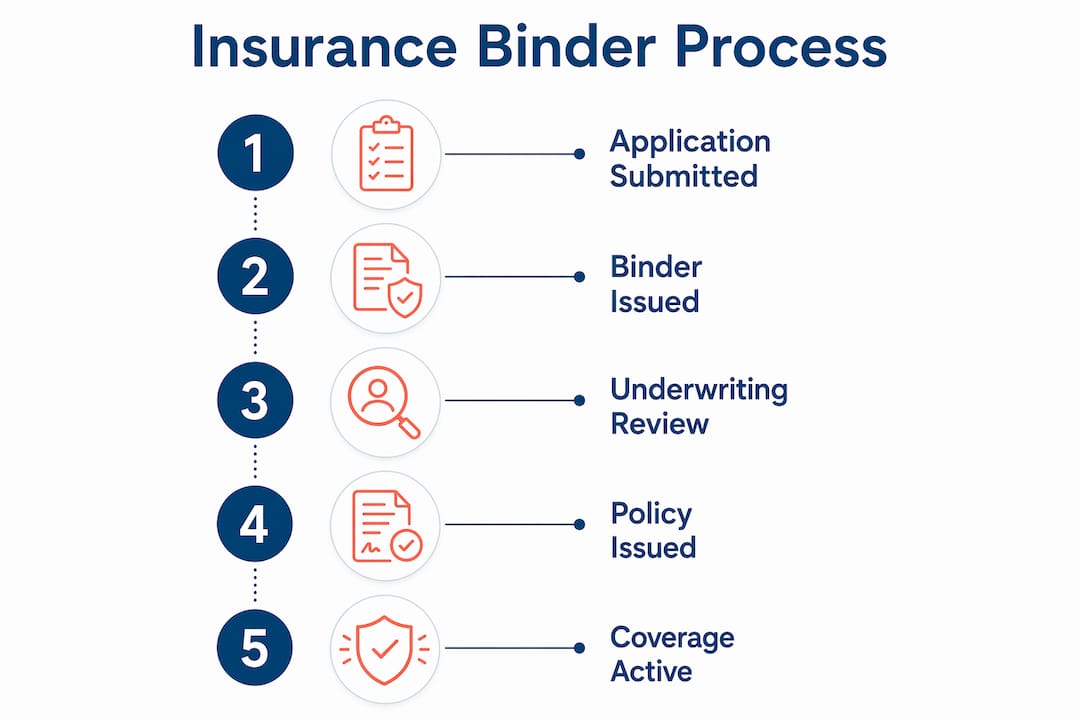
The process follows a clear sequence:
- You apply for coverage. Your agent submits your application to the insurer and requests a binder.
- Preliminary underwriting takes place. The insurer reviews basic risk factors such as property location, construction type, and prior claims history.
- The binder is issued. Your agent sends you a PDF or email copy that serves as your official proof of coverage.
- The binder period runs. Binders typically last 30 to 90 days, with 30 days being the most common duration in standard homeowners and renters transactions.
- The full policy replaces the binder. Once underwriting is complete and the policy is finalized, the binder is automatically superseded.
What happens if underwriting declines your application after the binder is already issued? The insurer can cancel the binder with notice before it expires, which means you could lose coverage before the formal policy ever arrives. This is not a rare edge case. Inspections, credit checks, and property condition reviews can all trigger a decline or a required change in terms.
Pro Tip: Ask your agent for the binder in writing the same day coverage is bound. Do not wait for the formal policy packet to arrive in the mail. Lenders and landlords need the binder document, not a verbal confirmation.
Underwriting delays can stretch from a few days to several weeks. The binder exists precisely to prevent coverage gaps during that window. Your job is to respond quickly to any underwriting requests so the formal policy is issued before the binder expires.

How does a binder compare to a quote or certificate of insurance?
These three documents are frequently confused, and the confusion can create serious problems during a real estate closing or lease signing.
| Document | What it is | Is it legally binding coverage? |
|---|---|---|
| Insurance quote | An offer showing estimated premium and coverage terms | No. A quote is a proposal, not a contract. |
| Insurance binder | A temporary coverage contract in force until the full policy is issued | Yes. Coverage is active and enforceable. |
| Certificate of insurance | A summary document showing existing coverage for a third party | No. It summarizes coverage but does not create or modify it. |
.
The key distinction is legal enforceability. A quote commits neither party to anything. A certificate of insurance, often called a COI, tells a landlord or lender what coverage already exists on an active policy. A binder, by contrast, is the document that creates coverage from a specific date and time.
Common misconceptions worth correcting:
- A quote is not coverage. Receiving a favorable quote does not mean you are insured. Coverage begins only when the binder is issued.
- A certificate of insurance is not a binder. A COI references an existing policy. A binder creates temporary coverage before a policy exists.
- Binder terms are not always identical to final policy terms. The binder document includes named insured, property description, effective and expiry dates, major coverages, limits, and deductibles, but underwriting may adjust those terms before the formal policy is issued.
Understanding these distinctions between binders, quotes, and certificates prevents you from presenting the wrong document at closing or assuming you have coverage when you do not. You can also review the insurance glossary at Hettler Insurance for plain-language definitions of these and other common terms.
Why do you need an insurance binder when buying or renting a home?
Binders are required in real estate closings and rentals because lenders and landlords need immediate, documented proof of insurance before the transaction can legally proceed. A mortgage lender will not fund a loan without confirmation that the property is insured. Many landlords will not hand over keys without the same confirmation.
The binder serves this purpose because the formal policy can take days or weeks to arrive. Waiting for the printed policy to close on a home purchase is not practical. The binder fills that gap with a legally enforceable document that satisfies lender requirements on the day of closing.
Here is what a standard binder document includes:
- Named insured. Your full legal name as it appears on the mortgage or lease.
- Property description. The full address and sometimes the construction type of the covered property.
- Effective and expiry dates. The exact date and time coverage begins and when the binder expires.
- Coverage types. Dwelling coverage, personal property, liability, and any additional coverages requested.
- Limits and deductibles. The maximum payout for each coverage category and your out-of-pocket deductible.
- Insurer and policy number. The carrier’s name and a preliminary policy number for reference.
Real-world scenarios where binders are required include closing on a new home purchase in Texas, moving into an apartment where the landlord requires renters insurance, and refinancing an existing mortgage when the lender requests updated proof of coverage.
Pro Tip: Verify that the named insured on the binder matches exactly what your lender or landlord requires. A name mismatch, such as using a nickname instead of your legal name, can delay closing or trigger a request for a corrected document.
If a loss occurs during the binder period, coverage is afforded under the binder terms. A fire, theft, or storm damage event that happens before your formal policy is issued is still a covered claim. This is one of the most practically important facts about binders that many homeowners and renters do not know until they need it.
Common risks and mistakes with insurance binders
Many mistakes arise from treating a binder as a final policy or from failing to complete underwriting requirements on time. These errors can leave you without coverage at the worst possible moment.
Watch for these specific risks:
- Binder expiration before policy issuance. If underwriting is delayed and you do not follow up, the binder can expire before the formal policy is issued. You would then have a gap in coverage with no protection in place.
- Underwriting decline after binder issuance. The insurer can cancel the binder if the property inspection reveals issues such as a damaged roof, outdated electrical, or prior claims. You must address these conditions or find a new carrier quickly.
- Assuming binder terms are final. The insurer may adjust coverage limits, add exclusions, or change deductibles when the formal policy is issued. Comparing binder coverage limits, deductibles, named insured, and property details with the full policy helps catch discrepancies before they affect a claim.
- Not verifying binder accuracy at issuance. Errors in the named insured, property address, or coverage amounts on the binder can cause problems at closing and during claims. Review the document the same day you receive it.
- Failing to track the binder expiration date. Set a calendar reminder for one week before the binder expires. If the formal policy has not arrived, contact your agent immediately to request an extension or confirm the policy status.
A binder does not guarantee that underwriting issues have been permanently resolved. Treat it as a starting point, not a finish line. Proactive communication with your agent throughout the underwriting process is the single most effective way to prevent a coverage lapse.
What I have learned from watching homeowners navigate binders
After working with Texas homeowners and renters through hundreds of closings and move-ins, one pattern stands out. Most coverage problems do not start with a bad policy. They start with a binder that nobody read carefully.
Clients receive the binder PDF, forward it to their lender, and consider the job done. Then the formal policy arrives weeks later with a higher deductible or a modified coverage limit, and they never notice the change. That discrepancy sits quietly until a hail storm hits or a pipe bursts, and suddenly the claim settlement is not what they expected.
The other mistake I see regularly is passivity during underwriting. A client submits the application, gets the binder, and assumes everything is on track. The insurer sends a request for a roof inspection or a photo of the electrical panel, the client misses the email, and the binder gets canceled. Now they are scrambling to find coverage the day before closing.
My advice is direct: read the binder the same day it arrives. Compare every line to what your agent quoted you. If anything looks different, call before you sign anything at closing. And stay in contact with your agent throughout the underwriting process. A quick check-in every few days costs you nothing. A coverage gap at the wrong moment costs you everything.
— Ron Hettler
Get the right coverage from day one with Hettler Insurance

Hettler Insurance Agency has served Texas homeowners and renters since 1992, with Ron Hettler and Meghan Hettler both holding the Certified Insurance Counselor (CIC) credential. As an independent agency representing over 30 top-rated carriers, Hettler shops your coverage across the market to find the right fit at the right price. Whether you need a binder issued today for a closing tomorrow or want to review your existing homeowners or renters policy, the Hettler team handles it without pressure or extra fees. If you are also evaluating your broader coverage needs, the guide on minimum insurance coverage is a practical starting point. Call Hettler Insurance or visit hettlerinsurance.com to get started.
Recommended
About the Author
Ronald J. Hettler, CIC is a Certified Insurance Counselor (CIC) [the gold-standard credential in the independent insurance industry]. Ron has over 46 years of real-world experience in the insurance industry. He is the owner/president of Hettler Insurance Agency in Lubbock, Texas and is licensed by the Texas Department of Insurance (License #666862). (Why Trust Hettler Insurance Agency? It’s a Local independent insurance agency representing multiple carriers. Hettler Insurance Agency has established business roots going back to it’s predecessor in the late 1800’s. Local expertise in Lubbock Texas and West Texas risks. Focused on clarity before a claim occurs.) Ron and his daughter Meghan, also a CIC, lead a team that represents 30+ carriers and serves clients across Texas.
Ron specializes in helping individuals, families, and small business owners understand complex insurance concepts in clear, practical terms so they can make informed decisions about their coverage. He specializes in helping individuals and families understand coverage gaps, deductible structures, and real-world claim outcomes before a loss occurs. Ron helps you to understand how insurance policies respond in real-world claim situations.
License verification available through the Texas Department of Insurance.
Frequently Asked Questions ?
Q1 ?: What is an insurance binder in simple terms?
Q2 ?: How long does an insurance binder last?
Q3 ?: Is an insurance binder the same as a policy?
Q4 ?: Can a claim be filed during the binder period?
Q5 ?: Why would an insurance binder be canceled?
— Life Insurance Instant Quote and Apply Tool @ GetLifePolicy.com > * Quick self-service term life insurance quote. With or without medical exam.
— Call us about Auto, Home, Business, Life, or Health insurance. * Click to Call (806) 798-7800, Mon-Fri 8:30am-5pm (lunch closed Noon-1pm)
— Come see us @ our new address 4720 S Loop 289 Lubbock, TX 79414 (maps link), or get your online quote started at https://GetHettler.com