
TL;DR summary:
- Many Texas homeowners and renters overpay for coverage because they lack skills in comparing insurance quotes effectively. Proper comparison requires matching coverage parameters and understanding region-specific risks like hail, wind, and flood zones. Regular re-shopping and working with local agents ensures you get comprehensive coverage at the best possible price.
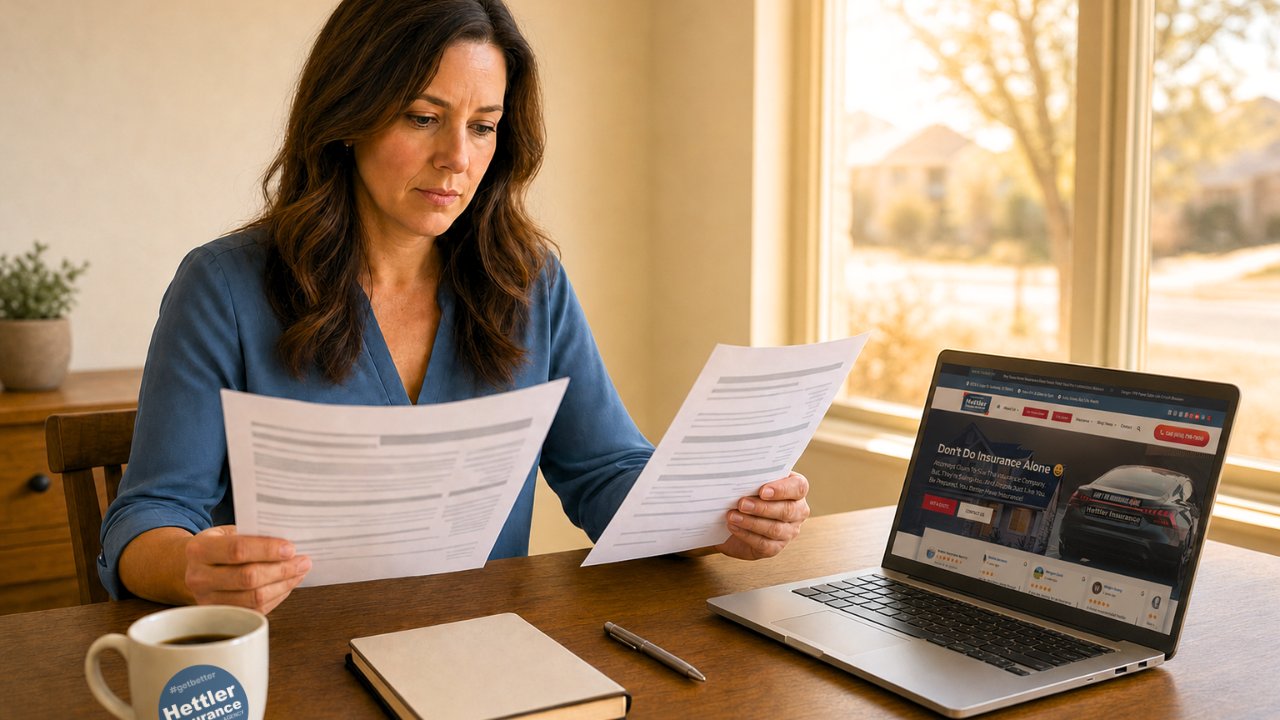
Many Texas homeowners and renters overpay for coverage every year, not because affordable options don’t exist, but because they never learned how to compare insurance quotes properly. Grabbing the cheapest number off a screen and calling it done is one of the most expensive mistakes you can make. The right quote comparison is about matching price to protection. This guide walks you through exactly how to do it, step by step, with Texas-specific factors built in so you’re not working from generic advice that ignores hail season, flood zones, or the West Texas wind.
Table of Contents
- Using online tools and direct quotes effectively
- Common mistakes when comparing insurance quotes
- Verifying your final quote before you commit
- Texas-specific factors that affect your comparison
- My take on why most people get this wrong
- How Hettler Insurance helps you compare and choose
- FAQ
Key takeaways
| Point | Details |
|---|---|
| Preparation prevents errors | Gather accurate property details, policy history, and personal data before requesting a single quote. |
| Consistent inputs are required | Use identical deductibles and liability limits across every quote or your comparison is meaningless. |
| Price alone misleads | The cheapest premium often comes with exclusions, high deductibles, or weak claims handling. |
| Texas risks change the math | Hail, windstorm, and flood deductibles are separate line items in many Texas policies and must be reviewed. |
| Regular re-shopping saves money | Insurers quietly raise rates over time. Comparing quotes at every renewal or major life event protects you. |
How to compare insurance quotes: start with the right information
You cannot get an accurate quote without accurate data. Most people skip this step, rush to a comparison site, and end up with quotes that don’t reflect their actual situation. That creates surprises after purchase, which is the opposite of what insurance is supposed to do.
Before you request a single quote, pull together the following:
| Category | Documents and details needed |
|---|---|
| Personal information | Full legal name, date of birth, Social Security number, current address |
| Property details | Year built, square footage, construction type, roof age and material |
| Current policy | Coverage limits, deductibles, endorsements, policy expiration date |
| Claims history | Prior claims within the last 3 to 5 years, including amounts paid |
| Vehicle info (if bundling) | VIN, mileage, driver history, current liability limits |
.
For renters, your list is shorter, but still critical. Know the square footage of your unit, the approximate value of your personal belongings, and your current liability limit. Many renters underestimate their personal property value, which causes them to buy too little coverage and face a gap at claim time.
Small errors in mileage or driver history can trigger rate adjustments after your policy issues because insurers verify your details through third-party reports. Getting it right the first time keeps your quote accurate and your expectations realistic.
Pro Tip: Pull your current declarations page before you start. It lists your existing coverage limits, deductibles, and endorsements in one place and gives you a baseline for comparison.
Using online tools and direct quotes effectively
The best way to compare insurance is not one method. It is a combination of two.
Start with a comparison marketplace to get broad market visibility fast. Modern digital platforms let you view real-time quotes from dozens of carriers in minutes without triggering spam calls. That broad view helps you understand the price range you’re working with before you dig deeper.

Then take your shortlist of two or three competitive quotes and go direct. Call those carriers or work through an independent agent to get a full policy document, not just a premium number.
| Method | Pros | Cons |
|---|---|---|
| Online comparison marketplace | Fast, broad view of market rates, no commitment | Quotes may not reflect final underwritten rates |
| Direct carrier quotes | Precise, reflects actual underwriting, full policy terms | Time-consuming, limited to that carrier’s options |
| Independent agent | Shops multiple carriers for you, explains coverage gaps | Requires a conversation, not instant |
.
The critical rule when using any method: use identical coverage parameters across every quote you request. That means the same dwelling limit, the same liability limit, and the same deductible. Differences in these inputs alone can create premium variances of hundreds of dollars for the exact same risk profile, making you think one insurer is cheaper when it has simply quoted less coverage.
Beyond price, check these details on every quote you receive:
- Exclusions: What specific events or damage types does the policy not cover?
- Replacement cost vs. actual cash value: Replacement cost pays to rebuild or replace. Actual cash value deducts depreciation, leaving you short.
- Claims handling reputation: Look at independent ratings and consumer reviews, not the carrier’s own marketing.
- Financial strength: AM Best ratings reflect an insurer’s ability to pay claims. An A or better rating matters.
Telematics and usage-based programs can offer real savings on auto coverage but require you to review the data-sharing terms carefully before enrolling. Some programs track braking and late-night driving, which may raise your rate if your habits don’t match the ideal profile.
Pro Tip: Watch for introductory rates. Some carriers quote aggressively to win your business, then apply standard underwriting at renewal. Ask specifically whether the quoted rate is subject to change after the first term.
Common mistakes when comparing insurance quotes
Most coverage gaps and overpayments trace back to a short list of preventable mistakes. Knowing them ahead of time costs you nothing. Finding out at claim time costs a great deal more.
- Choosing based on price alone. Lowest-price-focused shoppers frequently discover hidden gaps, including inadequate liability limits or poor claims responsiveness. The premium is what you pay. The coverage is what you actually own.
- Ignoring deductible differences. A quote with a $500 deductible and one with a $2,500 deductible are not comparable at face value. The lower premium on the second quote disappears the moment you file a claim.
- Assuming identical dwelling limits mean identical coverage. Water damage exclusions, roof settlement terms, and cosmetic damage coverage differ significantly between insurers even when the dollar limits look the same on paper.
- Not shopping at life milestones. Rates shift after moves, new vehicles, and renewals. Staying with your current carrier by default, without checking alternatives, almost always costs you money over time.
- Skipping the insurer’s financial strength check. Claims responsiveness and financial strength ratings are long-term factors that matter far more than a $10 monthly savings. An insurer who delays or underpays claims is a liability, not an asset.
Pro Tip: Many insurers practice price walking, quietly raising premiums for long-term customers who never re-shop. Switching providers resets this cycle entirely. That alone can save hundreds per year.
Verifying your final quote before you commit
Getting a quote is not the same as buying a policy. Before you sign anything, run through a verification process to confirm what you think you’re buying is actually what you’re getting.
- Request the full policy document, not just the quote sheet. The declarations page summarizes your coverage. The policy itself contains the exclusions and conditions. Read both.
- Check every coverage limit against your actual needs. Is your dwelling limit high enough to fully rebuild at current local construction costs? Is your personal liability limit sufficient to protect your assets?
- Confirm all discounts are applied. Ask specifically about bundling discounts if you’re combining home and auto policies, security system credits, and loyalty pricing.
- Verify the policy start date and cancellation terms. If you’re switching carriers, the new policy must be active before you cancel the old one. A single day without coverage can create a coverage lapse that affects your future rates.
- Confirm the insurer’s complaint ratio. Your state insurance department publishes complaint ratios by carrier. A high number of complaints relative to policy volume is a warning sign worth taking seriously.
- Ask about renewal terms. Price transparency and policy clarity now rank as the top factors in consumer insurance satisfaction. Ask your carrier how and when they notify you of rate changes before you commit.
Bundling home and auto coverage with the same carrier is one of the most effective ways to reduce total premium costs without reducing coverage. Most carriers offer meaningful multi-policy discounts, and managing one relationship for both policies simplifies claims when both are involved in the same incident, like a storm that damages both your home and your vehicle.
Texas-specific factors that affect your comparison

Comparing Texas insurance carriers is not the same as shopping insurance in most other states. Texas has a unique regulatory environment and a weather profile that changes the pricing math in ways that catch out-of-state comparison tools off guard.
Here is what you need to account for:
- Hail and windstorm deductibles are often separate. In many Texas policies, particularly in West Texas and the Panhandle, your wind and hail deductible is a percentage of your dwelling value, not a flat dollar amount. A 2% deductible on a $300,000 home means you pay $6,000 out of pocket before your insurer pays anything on a hail claim. Local weather risks like hail and windstorm deductibles are among the most overlooked cost factors in Texas home insurance.
- Flood coverage is not included in standard homeowners policies. Texas sits in one of the most flood-active states in the country. If your property is near a floodplain or prone to heavy rain accumulation, a separate flood policy through the National Flood Insurance Program or a private carrier is worth evaluating.
- Wildfire and drought exposure varies by region. West Texas properties face elevated wildfire risk during dry months. Some carriers apply surcharges or exclusions in these zones, which changes your effective coverage even if the premium looks competitive.
- Texas is not a rate-regulated state in the same way as others. Carriers have more pricing flexibility here, which means the spread between the highest and lowest quotes for the same property can be significant. That is exactly why comparison shopping in Texas pays off more than in heavily regulated markets.
- Local independent agents understand regional pricing. A Lubbock-based agent knows which carriers treat West Texas hail risk favorably and which exclude it quietly in the fine print. That local knowledge is genuinely valuable and cannot be replicated by a national online tool.
My take on why most people get this wrong
I’ve worked with Texas homeowners long enough to know the real reason most people compare quotes poorly. It’s not laziness. It’s a false sense of familiarity. You’ve had the same carrier for eight years, you’ve never had a major claim, and the renewal comes in a little higher but not shockingly so. You pay it without checking alternatives.
What you don’t know is that carriers practice systematic rate increases on loyal customers who stop shopping. That $40 annual bump, compounded over five years, adds up to real money. And in that same time, the coverage terms may have quietly shifted in ways that leave you underprotected on the next big hailstorm.
What I tell people is this: treat your insurance renewal the same way you treat your mortgage rate. You wouldn’t keep a 7% mortgage if 5.5% was available. The same logic applies here. Re-shopping at renewal is not disloyal. It’s financially responsible.
The other thing I see constantly is people focusing on the premium number before they understand what that number covers. Comparison is not just about the cheapest price but about understanding the coverage that price includes. A $900 annual premium with a 2% wind/hail deductible and an actual cash value roof settlement is a worse deal than a $1,100 policy with a flat deductible and replacement cost coverage. You will not know that without reading both policies side by side.
— Ron Hettler
How Hettler Insurance helps you compare and choose

At Hettler Insurance, we do the comparison work for you. As an independent agency representing over 30 top-rated carriers, we shop your coverage across the market and present you with real, apples-to-apples options, not a single carrier’s best pitch. Our team in Lubbock has served Texas homeowners and renters since 1992, and we know exactly how West Texas hail, windstorm deductibles, and regional flood exposure affect your rates and coverage terms.
Whether you need homeowners or renters coverage, want to bundle home and auto for a discount, or simply want a second opinion on your current policy, we’re here to walk you through it at no extra fee. Call us, use our online tools, or stop by our Lubbock office. Get Hettler, Get Better.
FAQ
What should I look for when comparing insurance quotes?
Look beyond the premium. Compare deductibles, coverage limits, exclusions, replacement cost terms, and the insurer’s financial strength rating. Price transparency and policy clarity now rank as the top factors consumers should evaluate when reviewing quotes.
How often should I compare insurance quotes in Texas?
Compare quotes at every policy renewal and after major life events like moving, buying a vehicle, or making home improvements. Insurers raise rates on long-term customers who don’t re-shop, and comparing at key milestones maximizes your savings.
Can I compare car insurance rates and home insurance at the same time?
Yes, and you should. Bundling home and auto coverage with the same carrier typically earns a multi-policy discount and simplifies claims management. Ask each carrier for a combined quote alongside individual quotes to see the actual savings.
Why do identical coverage limits produce different premiums?
Carriers use different underwriting models, risk assessments, and pricing formulas for the same property and driver profile. That spread is exactly why comparing multiple carriers matters. Staying with one carrier without checking alternatives almost always costs you money.
What makes comparing Texas insurance carriers different?
Texas has separate wind and hail deductibles, no standard flood coverage in homeowners policies, and a less regulated pricing environment than many other states. These factors mean the gap between the best and worst quotes for the same Texas property can be hundreds of dollars annually.
About the Author
Ronald J. Hettler, CIC is a Certified Insurance Counselor (CIC) [the gold-standard credential in the independent insurance industry]. Ron has over 46 years of real-world experience in the insurance industry. He is the owner/president of Hettler Insurance Agency in Lubbock, Texas and is licensed by the Texas Department of Insurance (License #666862). (Why Trust Hettler Insurance Agency? It’s a Local independent insurance agency representing multiple carriers. Hettler Insurance Agency has established business roots going back to it’s predecessor in the late 1800’s. Local expertise in Lubbock Texas and West Texas risks. Focused on clarity before a claim occurs.) Ron and his daughter Meghan, also a CIC, lead a team that represents 30+ carriers and serves clients across Texas.
Ron specializes in helping individuals, families, and small business owners understand complex insurance concepts in clear, practical terms so they can make informed decisions about their coverage. He specializes in helping individuals and families understand coverage gaps, deductible structures, and real-world claim outcomes before a loss occurs. Ron helps you to understand how insurance policies respond in real-world claim situations.
License verification available through the Texas Department of Insurance.
Enhanced Frequently Asked Questions ?
Q1 ?: What should I look for when comparing insurance quotes?
Q2 ?: How often should I compare insurance quotes in Texas?
Q3 ?: Can I compare car insurance rates and home insurance at the same time?
Q4 ?: Why do identical coverage limits produce different premiums?
Q5 ?: What makes comparing Texas insurance carriers different from other states?
— Life Insurance Instant Quote and Apply Tool @ GetLifePolicy.com > * Quick self-service term life insurance quote. With or without medical exam.
— Call us about Auto, Home, Business, Life, or Health insurance. * Click to Call (806) 798-7800, Mon-Fri 8:30am-5pm (lunch closed Noon-1pm)
— Come see us @ our new address 4720 S Loop 289 Lubbock, TX 79414 (maps link), or get your online quote started at https://GetHettler.com