TL;DR summary:
- Standard homeowners and renters policies limit what they pay for jewelry, art, and similar items. According to the Insurance Information Institute, the theft limit for jewelry is generally about $1,500.
- Scheduling an item on a personal articles floater lists it by name at an agreed value, and floaters typically cover losses a homeowners policy will not, such as accidentally losing a ring.
- Endorsements raise category limits, blanket coverage covers a group of items up to a set total, and stand-alone policies suit serious collectors.
- Photos, receipts, a professional appraisal, and a current home inventory make both quoting and claims faster. Reappraise every few years.
- An independent agent can compare how multiple carriers handle scheduled items, sublimits, and valuation before you choose.
Insuring valuables starts with a hard truth about your homeowners or renters policy: it was not built to fully cover an engagement ring, a coin collection, or a piece of fine art. The Texas Department of Insurance (TDI) says home policies “limit what they’ll pay for things like jewelry and art,” and recommends talking with your agent about adding more coverage if you own expensive items. The Insurance Information Institute (Triple-I) puts a number on it: the standard policy’s limit for jewelry theft is “generally about $1,500.”
If a single item, or a collection, is worth more than your policy’s limit, you have options: schedule it on a floater, add an endorsement, or use blanket or stand-alone coverage. This guide explains how each one works, what is and is not covered, what drives the cost, and how to document your items so a claim goes smoothly.
Here’s what you can do this week:
- Photograph and describe the item now, before anything happens to it.
- Find your appraisal or dealer invoice, and note how old it is.
- Call your agent and ask specifically about your policy’s sublimits and your options for scheduling or adding an endorsement.
Table of Contents
- Key Takeaways
- What Counts as a Valuable for Insuring Purposes?
- Which Coverage Option Fits Your Situation?
- What Does Valuables Coverage Actually Cover?
- How Much Does It Cost to Insure Valuables?
- How Do You Actually Insure a Valuable Item?
- What Happens When You File a Claim on a Valuable Item?
- How Do You Pick the Right Insurer or Agent?
- How Hettler Insurance Agency Helps You Insure Valuables
- What We’ve Learned Watching Clients Get This Wrong
- How to Get Help Insuring Your Valuables From Hettler Insurance Agency
- Sources
- Frequently Asked Questions
Key Takeaways
Scheduling high-value items with an agreed value, backed by current appraisals and documentation, is the most reliable way to insure valuables against capped or disputed claims.
| Point | Details |
|---|---|
| Check your sublimits first | Standard homeowners and renters policies cap jewelry theft at a low amount, generally about $1,500 according to Triple-I. |
| Document before you insure | Photos, receipts, a professional appraisal, and a home inventory speed up both quoting and future claims. |
| Schedule high-value items | A floater lists each item at an agreed value and typically covers accidental loss that a homeowners policy will not. |
| Reappraise regularly | Values shift over time, and outdated appraisals can slow claims and leave you underinsured. |
| Compare carriers | Hettler Insurance Agency compares how 30+ top-rated carriers handle scheduled items, sublimits, and valuation. |
What Counts as a Valuable for Insuring Purposes?
Not every nice possession needs its own line on your policy, but certain categories consistently exceed standard limits. These are the items agents usually flag first:
- Engagement and wedding rings
- Fine jewelry and watches
- Fine art and antiques
- Stamp, coin, and collectible card collections
- Wine collections
- Musical instruments
- Firearms
- Designer handbags and furs
- Cameras and collectible electronics
According to Triple-I, a standard homeowners policy covers jewelry and other precious items for the perils in the policy, such as fire, windstorm, theft, and vandalism, but applies special limits to certain items. Because jewelry is easy to steal, the standard limit for jewelry theft is generally about $1,500. That cap often sits well below what a single engagement ring is worth.
A good rule of thumb: if one item is worth more than your policy’s sublimit for its category, or your combined collection is worth more than you could comfortably replace out of pocket, it’s time to talk to your agent. Items you regularly take away from home, like a camera or an instrument you play at gigs, deserve extra attention, since coverage away from home can be narrower. New purchases and gifts may get limited automatic coverage for a short window, so ask your carrier how long you have to add them by name.
For a broader look at how your belongings are covered, see our guide to personal property coverage for Texas homes.
Which Coverage Option Fits Your Situation?
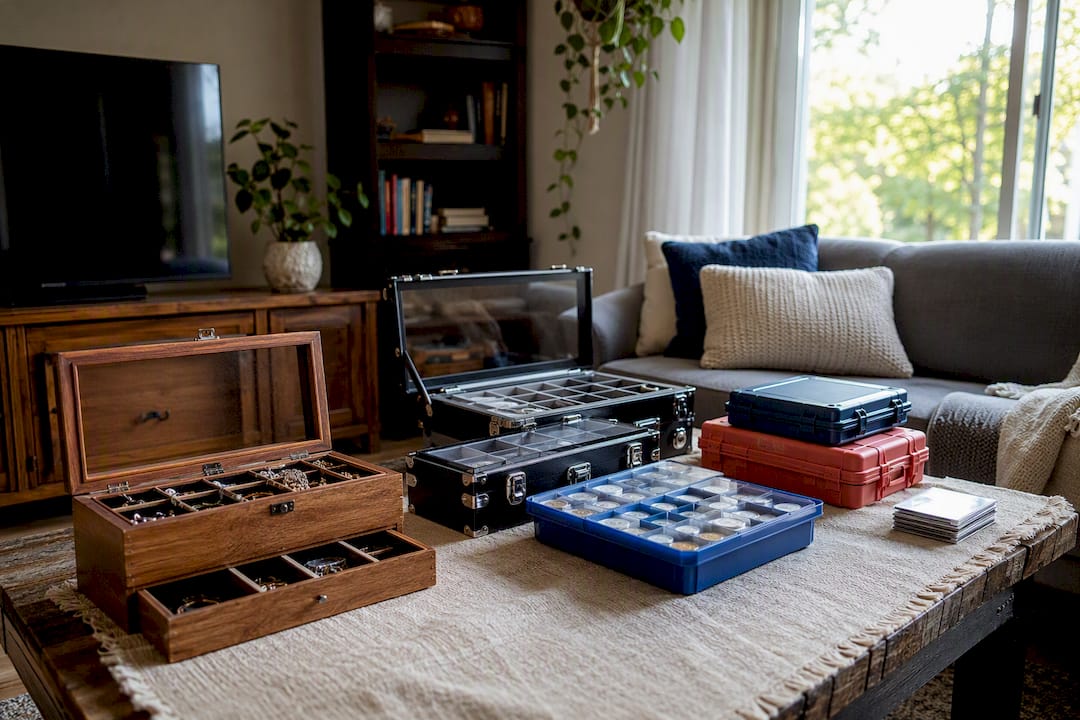
Insurers offer four main paths. The right one depends on how many valuables you own and how much each one is worth. Triple-I describes the trade-off simply: raising your policy limits is “the less expensive option,” but the amounts are still limited per piece and overall, while a floater is “more costly” but “offers the broadest protection for valuables.”
| Option | How It Works | Best For |
|---|---|---|
| Scheduled personal property (personal articles floater) | Each item is listed individually at an agreed value, usually after a professional appraisal. | Single high-value pieces, such as an engagement ring, a fine watch, or a rare instrument |
| Endorsement or rider | Raises the sublimit for a category on your existing homeowners or renters policy. Per-item and total limits still apply. | Moderate collections where no single piece is worth a lot |
| Blanket coverage | Covers a class of items up to a set total without listing each one, often with a per-item cap. | Many lower-value items, such as everyday jewelry or a modest wine collection |
| Stand-alone valuables or collections policy | A separate policy designed for high-value collections, often with broader terms. | Serious art, coin, wine, or memorabilia collectors |
Each option trades off differently. Scheduling gives you precise, agreed-value protection but requires appraisals and periodic updates. Blanket coverage is easier to set up, but per-item caps can shortchange you on a single valuable piece, and settlement terms vary by carrier. Endorsements sit in between: simple to add but limited in scope. The TDI Home Guide lists jewelry, fine arts, and electronics among the most common endorsements, noting that your policy “provides some coverage, but it might not be enough to cover expensive items.” Our guide to must-have home insurance endorsements covers other common add-ons.
Pro Tip: Schedule anything worth more than your policy’s sublimit individually, and let an endorsement or blanket coverage handle your lower-value items as a group.
What Does Valuables Coverage Actually Cover?
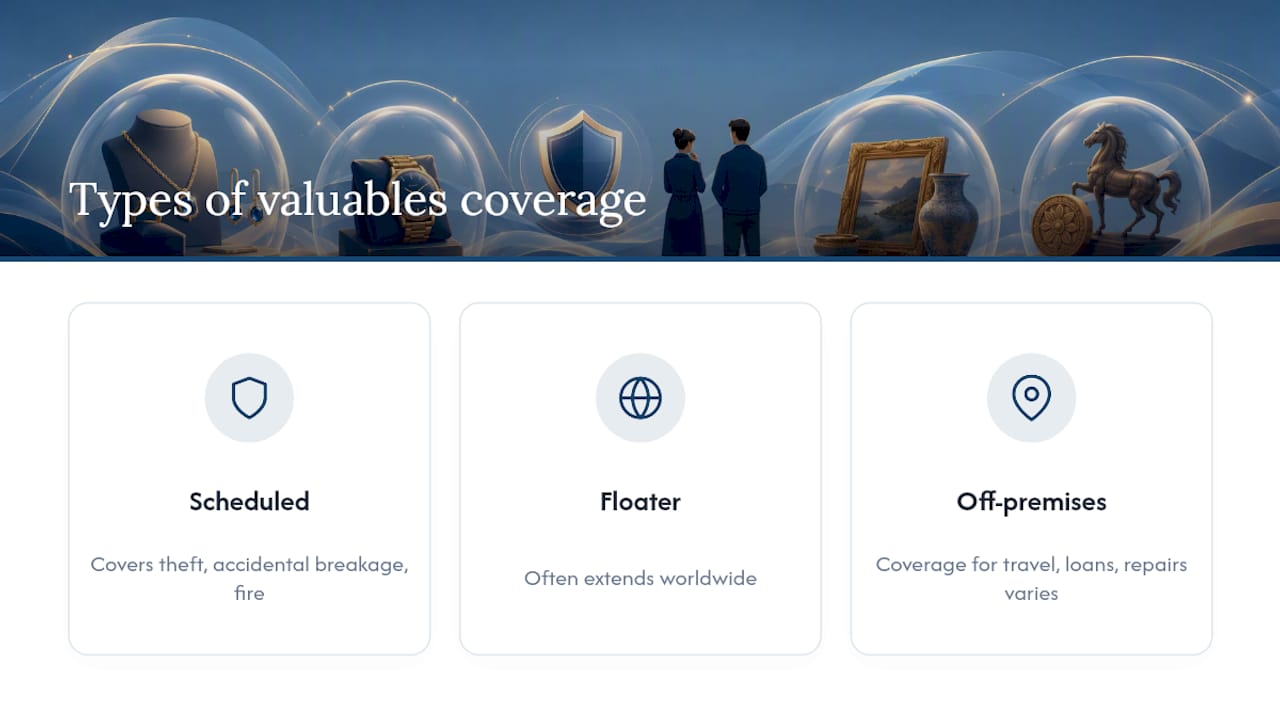
Under a standard homeowners policy, your jewelry is covered only for the perils the policy lists, and theft is capped. A floater works differently. Triple-I explains that floaters “cover losses of any type, including those your homeowners insurance policy will not cover, such as accidental losses,” like dropping a ring down the kitchen sink drain or leaving an expensive watch in a hotel room. Many floaters also extend coverage worldwide, which matters if you travel with jewelry or lend a piece to a gallery.
That does not mean everything is covered. Common exclusions include:
- Gradual wear and tear, deterioration, and normal aging
- Damage from repair, restoration, or cleaning work, under some policies
- Insects, vermin, and inherent defects
- War and nuclear hazards
- Intentional acts
Flood, earthquake, and mysterious disappearance are where policy wording matters most. Some floaters cover them broadly, while others limit or exclude them. Read the floater itself, not just the quote summary. If you are not sure how “all-risk” language works, our article on open peril vs named peril explains the difference.
Agreed value coverage settles a claim at the amount you and the insurer agreed on when the item was scheduled. Actual cash value settles at the item’s value minus depreciation, which can be lower and is more often disputed. Replacement cost pays what it takes to buy an equivalent item today. For anything that is hard to replace, agreed value removes the guesswork.
If you loan a piece to a museum, take it on a trip, or drop it off for repair, confirm how your floater handles coverage away from home before you hand it over. Many policies cover it, but the terms differ enough that a five-minute call to your agent is worth it.
How Much Does It Cost to Insure Valuables?
There is no single price for valuables coverage. Premiums depend on the item, the carrier, and the choices you make. The biggest factors include:
- The item’s appraised value and category (art, instruments, and jewelry are often priced differently)
- Valuation method, such as agreed value or actual cash value
- Deductible amount
- Home security, such as a safe or monitored alarm
- Where the item is stored, such as a bank vault or at home
- Your claims history
- Your location
Raising your category limits with an endorsement generally costs less than scheduling, while scheduling costs more but provides broader protection, according to Triple-I. Some carriers offer credits for safes, alarms, or vault storage, and adding a floater with the carrier that writes your home policy can sometimes simplify billing and claims. Ask your agent to quote the same items more than one way, so you can compare the cost of each option against the protection it provides.
Valuables coverage works best when the rest of your policy is sized correctly too. See our guide to how much home insurance is enough.
How Do You Actually Insure a Valuable Item?
- Inventory and photograph the item from multiple angles, including any hallmarks, signatures, or serial numbers.
- Collect receipts, dealer invoices, certificates, or provenance documents.
- Get a professional appraisal. Triple-I notes that items must be professionally appraised before you purchase a floater, and you can ask your insurance professional to recommend a reputable appraisal firm.
- Choose your coverage option, based on the item’s value relative to your policy’s sublimits.
- Confirm it in writing. Make sure the scheduled item or endorsement appears correctly on your declarations page.
- Note the appraisal date and set a calendar reminder to reappraise.
Look for an appraiser who is credentialed and, ideally, specializes in the item type. Ask what the value is based on, what comparable sales support it, and whether it reflects current replacement cost. For diamonds and major gemstones, carriers may also ask for a gem lab grading report.
A home inventory supports every step. The Texas Department of Insurance’s home inventory tips warn that “not having a home inventory could delay your claims payment,” and recommend storing your inventory away from home, with a family member or in cloud storage, and updating it whenever you make big purchases. Our post on how to secure property insurance in Texas covers documentation in more detail.
What Happens When You File a Claim on a Valuable Item?
Claims move faster when your paperwork is already in order. Insurers generally want:
- Photos and receipts proving ownership
- A current appraisal or valuation document
- A police report, for theft claims
- Repair estimates or prior service records, if the item is damaged rather than lost
Settlement usually comes as repair, replacement, or a cash payment. If you scheduled the item at an agreed value, that amount generally sets the payout for a total loss, though some policies give the insurer the option to repair or replace the item instead. Losing one earring from a matched pair can be tricky: some policies pay to restore the set, while others pay only a portion of its value. Ask your agent how your policy handles partial-set losses before it becomes a problem. Our guide on how to read your insurance policy can help you find these terms.
Pro Tip: Keep your appraisal current. An adjuster who sees an old valuation on an item whose value has risen is more likely to ask for more documentation or an independent reappraisal, which slows everything down.
How Do You Pick the Right Insurer or Agent?
Not every carrier handles valuables the same way, and the differences show up most at claim time, not at sign-up. Focus on:
- Valuation method offered (agreed value is usually best for items that are hard to replace)
- How scheduling works and how quickly new items can be added
- Coverage away from home and worldwide coverage terms
- How the carrier handles mysterious disappearance, flood, and earthquake
- Credits for vault storage or monitored security
- How often the carrier requires reappraisal
Watch for red flags: vague answers about appraisal requirements, a carrier that won’t state the valuation method in writing, or unclear language about coverage while an item is traveling, on loan, or in for repair.
When you talk to an agent, ask directly:
- How do you handle newly acquired items, and how long do I have to add them?
- What deductible options exist for scheduled items?
- How do you settle a partial loss, like one item from a set?
- How often do I need to reappraise?
- What’s the claims process for a total loss versus a repairable item?
Working with an independent agent means you’re comparing real options instead of hearing one carrier’s pitch. That matters here, because valuation language and scheduling flexibility vary from one carrier to the next.
How Hettler Insurance Agency Helps You Insure Valuables
Ron Hettler, CIC (Certified Insurance Counselor), agency founder and president with 45+ years of insurance industry experience, and Meghan Harris, CIC, who co-leads the agency with Ron, help Texas homeowners and renters find coverage that fits the things they value most. As an independent agency representing 30+ top-rated carriers, we can compare how different companies handle jewelry sublimits, scheduled items, and valuation, so you are not stuck with one company’s fine print.
- Compare how multiple carriers handle scheduled items, endorsements, and valuation
- Help add scheduled items or endorsements to your homeowners or renters policy
- Review your appraisals and documentation to see what carriers are likely to ask for
- Recommend reputable appraisers when you need one
- Walk you through the claims process if you ever need to file
Bring your appraisals, receipts, and a list of what you want covered. We’ll walk through your options, explain how each carrier values scheduled items, and point out any coverage gaps. We do not charge extra fees for our service, ID cards, or certificates.
“The best independent insurance agents don’t just find you a policy. They find you the right insurance policy and then make sure it stays right as your life changes.” — Ron Hettler, CIC (Certified Insurance Counselor), Hettler Insurance Agency
What We’ve Learned Watching Clients Get This Wrong
The biggest mistake isn’t skipping valuables coverage on purpose. It’s assuming a standard policy already covers enough. Too many homeowners discover their jewelry sublimit in the middle of a claim, when it’s too late to fix.
The top three mistakes we see:
- Under-documenting items (no photos, no receipts, no appraisal)
- Assuming the homeowners or renters policy covers full value automatically
- Skipping reappraisal for years while values change
If you own several valuables, start with the item you would lose sleep over, then work down the list. Life changes, like an engagement, an inheritance, or a new collection, are good times to review your coverage. Renters face the same sublimit issue as homeowners; see our renters insurance guide. We have been reminding clients that jewelry is special for a long time, and the advice still holds.
How to Get Help Insuring Your Valuables From Hettler Insurance Agency
You don’t need every appraisal in hand before you call. We’ll tell you what carriers are likely to need and help you sort out what’s missing, whether it’s a coin collection you inherited or a ring you just bought.

Hettler Insurance Agency is one of the few family-owned agencies in Texas where both principals carry the high level certification of CIC (Certified Insurance Counselor). Fewer than 2% of licensed insurance professionals in the U.S. have earned the CIC designation.
Bring whatever you have: receipts, old appraisals, photos, or even a rough list of what you own. If you are reviewing your full homeowners coverage at the same time, we can look at both together. Contact Hettler Insurance Agency, call (806) 798-7800, or visit 4720 S Loop 289, Lubbock, TX 79414. Get Better. Get Hettler.
This article provides general information and is not a substitute for advice from a licensed insurance professional. Coverage, exclusions, valuation methods, and appraisal requirements vary by carrier and policy, so review your own policy or talk with a licensed agent before making decisions.
Sources
- Special coverage for jewelry and other valuables | Insurance Information Institute
- Home insurance guide | Texas Department of Insurance
- A home inventory: Why you need it and how to do it | Texas Department of Insurance
Frequently Asked Questions ?
Q1 ?: Does homeowners insurance cover jewelry and other valuables?
Q2 ?: What is the difference between scheduling an item and adding an endorsement?
Q3 ?: Does a personal articles floater cover lost jewelry?
Q4 ?: What documents do I need to insure a valuable item?
Q5 ?: How often should I get my valuables reappraised?
Recommended
About the Author
Ronald J. Hettler, CIC is a Certified Insurance Counselor (CIC) [the gold-standard credential in the independent insurance industry]. Ron has over 46 years of real-world experience in the insurance industry. He is the owner/president of Hettler Insurance Agency in Lubbock, Texas and is licensed by the Texas Department of Insurance (License #666862). (Why Trust Hettler Insurance Agency? It’s a Local independent insurance agency representing multiple carriers. Hettler Insurance Agency has established business roots going back to it’s predecessor in the late 1800’s. Local expertise in Lubbock Texas and West Texas risks. Focused on clarity before a claim occurs.) Ron and his daughter Meghan, also a CIC, lead a team that represents 30+ carriers and serves clients across Texas.
Ron specializes in helping individuals, families, and small business owners understand complex insurance concepts in clear, practical terms so they can make informed decisions about their coverage. He specializes in helping individuals and families understand coverage gaps, deductible structures, and real-world claim outcomes before a loss occurs. Ron helps you to understand how insurance policies respond in real-world claim situations.
License verification available through the Texas Department of Insurance.
— Life Insurance Instant Quote and Apply Tool @ GetLifePolicy.com > * Quick self-service term life insurance quote. With or without medical exam.
— Call us about Auto, Home, Business, Life, or Health insurance. * Click to Call (806) 798-7800, Mon-Fri 8:30am-5pm (lunch closed Noon-1pm)
— Come see us @ our new address 4720 S Loop 289 Lubbock, TX 79414 (maps link), or get your online quote started at https://GetHettler.com