
TL;DR summary:
- Reading your insurance policy, starting with the declarations page, helps you understand coverage details, limits, and exclusions before a claim arises.
- Texas policies often have specialized deductibles for wind and hail, emphasizing the need for careful review of endorsements and property values annually.
- Thoroughly understanding policy language and maintaining regular reviews can prevent surprises, especially during storm and claim seasons in Texas.
Reading your insurance policy is the process of interpreting your declarations page and policy sections to understand your coverage, deductibles, premiums, exclusions, and endorsements. Most Texas families never open their policy until a claim is denied, and by then the damage is done. Knowing how to interpret insurance policy language before a storm hits, a car gets totaled, or a medical bill arrives is the difference between a covered loss and an out-of-pocket disaster. This guide walks you through every section of your policy, with Texas-specific details that generic insurance policy basics articles skip entirely.
Table of Contents
- How to read your insurance policy: start with the declarations page
- How to interpret coverage types, limits, and exclusions
- Understanding deductibles, premiums, and cost sharing
- Step-by-step approach to reviewing your policy documents
- Key takeaways
- What 30+ years of Texas policies taught me about reading the fine print
- Get expert help reviewing your Texas insurance policy
- Frequently Asked Questions
Key takeaways
Reading your insurance policy requires starting with the declarations page, then working through coverage types, exclusions, deductibles, and endorsements to confirm your protection matches your actual risk.
| Point | Details |
|---|---|
| Declarations page first | Review it annually and compare to prior years to catch quiet coverage changes. |
| Exclusions define real gaps | Flood, earthquake, and sewer backup are commonly excluded from Texas homeowners policies. |
| Texas deductibles are different | Wind and hail deductibles are often a percentage of dwelling value, not a flat dollar amount. |
| Endorsements must be verified | If an endorsement is not on your declarations page, assume the coverage does not exist. |
| Deductible and premium tradeoff | Higher deductibles reduce premiums but increase out-of-pocket costs when you file a claim. |
How to read your insurance policy: start with the declarations page
The declarations page, often called the “dec page,” is the single most useful document in your entire policy package. Texas TDI recommends keeping it handy because it helps you file claims, renew policies, and shop for new coverage. Think of it as your policy’s control panel: one or two pages that summarize everything that matters.
Your declarations page contains the following key elements:
- Policy number and policy period: The dates your coverage is active and the unique identifier for your contract.
- Named insured and property details: Your name, address, and the specific vehicle or property being covered. Errors here, such as a wrong vehicle VIN or incorrect square footage, can lead to uncompensated losses if they affect how a claim is evaluated.
- Coverage types and limits: A line-by-line breakdown of what is covered and the maximum dollar amount your insurer will pay.
- Deductibles: The amount you pay out of pocket before your insurance kicks in. In Texas, you may see more than one deductible listed.
- Endorsements: Any additions or modifications to your base policy, listed by name or form number.
- Premium: Your total cost for the coverage period.
Texas homeowners policies frequently list separate deductibles for wind and hail versus other perils. That distinction matters enormously in West Texas, where hail storms are a seasonal reality, not a rare event. Verify every line on your declarations page against your actual property details before you file anything.
Pro Tip: Review your declarations page every year at renewal. Compare it side by side with last year’s version to catch any coverage changes, limit reductions, or new exclusions your insurer may have added quietly.
How to interpret coverage types, limits, and exclusions
Coverage types define what your insurer agrees to pay for. Limits define the maximum payout. Exclusions define everything your insurer will not pay for, regardless of what happened. Understanding all three together is how you interpret insurance policy language accurately.
Common coverage categories across home, auto, and health policies include:
- Dwelling coverage (homeowners): Pays to repair or rebuild the structure of your home.
- Personal property coverage: Covers your belongings inside the home.
- Liability coverage: Pays if someone is injured on your property or you cause damage to others.
- Collision and comprehensive (auto): Collision covers your vehicle in an accident; comprehensive covers theft, weather, and non-collision events.
- Medical payments or PIP (auto): Covers medical costs regardless of fault.
One of the most consequential distinctions in any homeowners policy is whether personal property is covered at replacement cost value (RCV) or actual cash value (ACV). ACV subtracts depreciation, meaning a five-year-old laptop worth $1,200 new might pay out $300. RCV pays what it actually costs to replace the item today. That difference can add up to thousands of dollars after a major loss.
Exclusions are where most claim disputes originate. Standard homeowners policies in Texas typically exclude flood damage, earthquake damage, and sewer backup. If you live in a flood-prone area or a neighborhood with aging infrastructure, those exclusions represent real financial exposure. Endorsements modify base coverage by adding or removing protections. Common endorsements include a sewer backup rider, scheduled personal property for jewelry or art, and a home business coverage add-on. If an endorsement is not listed on your declarations page, that coverage is almost certainly not included in your policy.
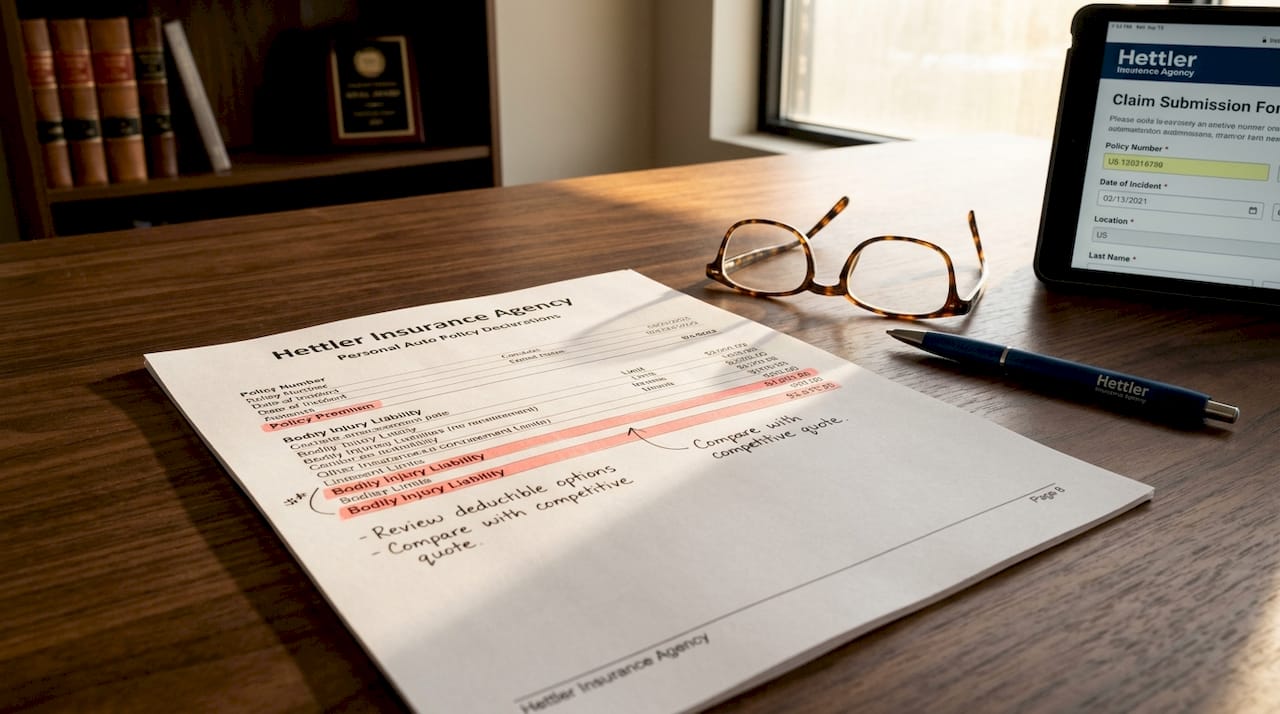
Pro Tip: Cross-check every endorsement listed on your declarations page against the endorsement forms in your full policy document. The name on the dec page and the actual form language must match. If they do not, call your agent before you need to file a claim.
Understanding deductibles, premiums, and cost sharing
A deductible is the fixed amount you pay toward a covered loss before your insurance company pays anything. A premium is what you pay monthly or annually to keep the policy active. These two numbers move in opposite directions: higher deductibles lower your premium but increase what you owe at claim time.
Texas homeowners face a deductible structure that surprises many first-time buyers. Wind and hail deductibles on Texas policies are often calculated as a percentage of dwelling coverage rather than a flat dollar amount. On a $300,000 home with a 2% wind/hail deductible, you owe $6,000 before your insurer pays a single dollar toward storm damage. That is not a typo. For more detail on how these deductibles work in practice, the Texas deductible guide from Hettler Insurance breaks down the numbers clearly.
For health insurance, the cost-sharing structure works in phases. You pay your monthly premium to keep coverage active. Then, when you use care, you pay out of pocket until you meet your deductible. After that, you share costs with your insurer through copays and coinsurance until you hit your annual out-of-pocket maximum. For 2026, out-of-pocket maximums are set at $10,600 for individuals and $21,200 for families on ACA-compliant plans. Preventive services are covered at 100% even before you meet your deductible when you use in-network providers.
The ACA Marketplace metal tiers, Bronze, Silver, Gold, and Platinum, represent cost-sharing structures, not just price levels. Many consumers treat them as a simple cheap-to-expensive scale, which leads to costly mistakes.
| Plan tier | Monthly premium | Deductible level | Best for |
|---|---|---|---|
| Bronze | Lowest | Highest | Healthy individuals with low expected care use |
| Silver | Moderate | Moderate | Those eligible for cost-sharing reductions |
| Gold | Higher | Lower | Frequent care users who want predictable costs |
| Platinum | Highest | Lowest | High utilizers who want maximum insurer cost share |
.
Pro Tip: Do not choose a plan based on premium alone. Add up your expected annual medical costs, then calculate total out-of-pocket exposure under each tier. A Gold plan often costs less overall for families with regular prescriptions or specialist visits.
Step-by-step approach to reviewing your policy documents
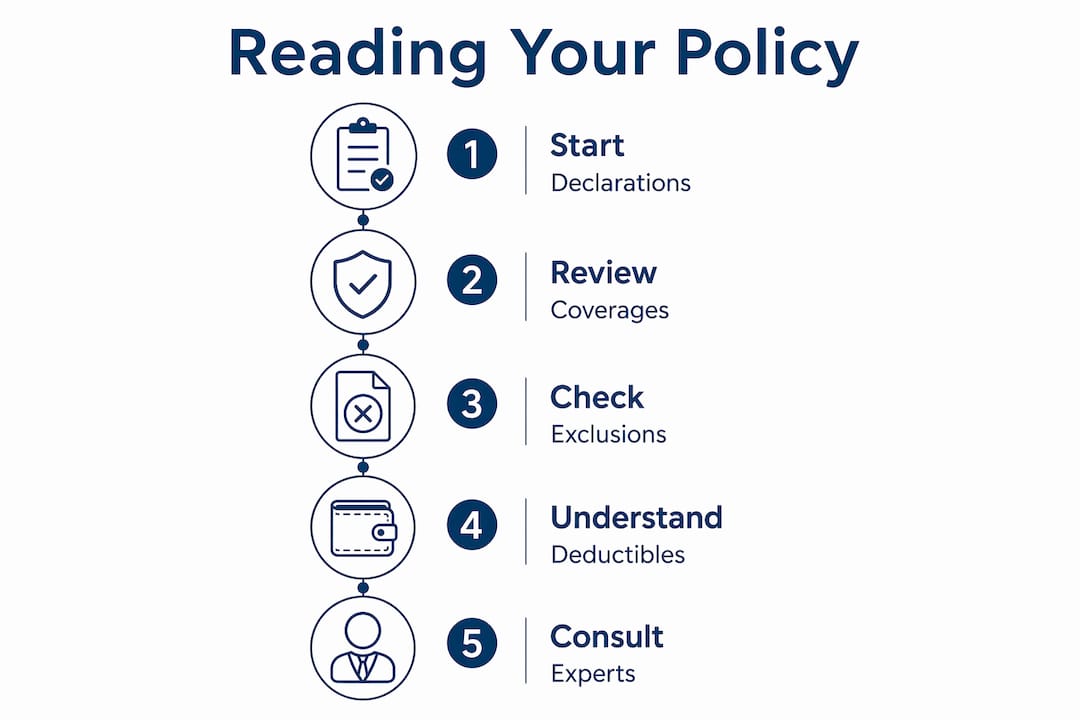
A systematic review of your policy takes less than an hour and protects you from the kind of surprises that cost families thousands of dollars. Follow this process every year at renewal and any time you make a major life change, such as a home renovation, a new vehicle, or a change in household members.
- Gather your documents. Pull your current declarations page and the full policy contract. If you have prior year declarations pages, keep them nearby for comparison.
- Verify personal and property information. Confirm your name, address, vehicle VIN, property description, and any listed mortgagees or lienholders are accurate. Errors on the declarations page can result in denied or reduced claims, particularly in Texas where storm-related claims are common.
- Compare current and prior declarations pages. Look for changes in coverage limits, deductibles, or endorsements. Insurers can adjust terms at renewal, and those changes may not come with a prominent notice.
- Review coverage limits against current values. If you have renovated your home or purchased significant personal property since your last review, your dwelling and personal property limits may be inadequate. Check whether your policy uses replacement cost or actual cash value.
- Read the exclusions section. This is the section most policyholders skip. Read it in full. Note any perils that are excluded and consider whether an endorsement or separate policy, such as a flood policy through the National Flood Insurance Program, is warranted.
- Check endorsements against your needs. Confirm that every endorsement you expect to have is listed on the declarations page and that the form language matches what you were sold.
- Contact your agent with any discrepancies. Do not wait. Report errors or missing coverage immediately. Annual reviews with your agent maximize your policy’s value and protect your interests before a claim arises.
For auto policy specifics, the auto insurance checklist for Texas drivers covers the declarations page elements unique to vehicle coverage. For homeowners concerned about coverage gaps, the step-by-step homeowner guide from Hettler Insurance provides a detailed walkthrough.
What 30+ years of Texas policies taught me about reading the fine print
After working with Texas policyholders across Lubbock, Midland-Odessa, and the surrounding region, I can tell you that the single most common source of claim frustration is not fraud or bad faith. It is a policyholder who never read their declarations page and assumed their coverage was broader than it was.
The wind and hail deductible issue catches people off guard every single storm season. A family in West Texas buys a home, pays their premium faithfully for years, and then a hail storm rolls through. They file a claim expecting a check. What they get instead is a letter explaining that their 2% wind/hail deductible means they owe $7,000 before the insurer contributes anything. That number was on their declarations page the whole time. Nobody pointed it out at closing.
The other pattern I see constantly is missing endorsements. A policyholder assumes they have replacement cost coverage on personal property because they remember discussing it with an agent years ago. But the endorsement was never added, or it was dropped at a renewal they did not review. When they file a claim for stolen electronics, they receive actual cash value payouts that cover maybe half the replacement cost.
My advice is direct: treat your declarations page as a contract you signed, because you did. Read it. Compare it every year. Call your agent when something looks wrong or unclear. The policy language exists to protect both parties, and knowing it protects you.
— Ron Hettler
Get expert help reviewing your Texas insurance policy

Understanding your declarations page and policy documents is straightforward when you have an experienced agent walking you through it. Hettler Insurance Agency in Lubbock has served Texas families since 1992, and Ron Hettler’s Certified Insurance Counselor (CIC) credential means you are getting guidance from someone who knows policy language at a professional level. Whether you need help reviewing your homeowners deductibles, confirming your endorsements, or choosing the right coverage limits, the Hettler team shops across more than 30 top-rated carriers to find the right fit at the right price. Review the coverage minimums guide to understand baseline protection, then contact Hettler Insurance for a personalized policy review. Get Hettler, Get Better.
Recommended
About the Author
Ronald J. Hettler, CIC is a Certified Insurance Counselor (CIC) [the gold-standard credential in the independent insurance industry]. Ron has over 46 years of real-world experience in the insurance industry. He is the owner/president of Hettler Insurance Agency in Lubbock, Texas and is licensed by the Texas Department of Insurance (License #666862). (Why Trust Hettler Insurance Agency? It’s a Local independent insurance agency representing multiple carriers. Hettler Insurance Agency has established business roots going back to it’s predecessor in the late 1800’s. Local expertise in Lubbock Texas and West Texas risks. Focused on clarity before a claim occurs.) Ron and his daughter Meghan, also a CIC, lead a team that represents 30+ carriers and serves clients across Texas.
Ron specializes in helping individuals, families, and small business owners understand complex insurance concepts in clear, practical terms so they can make informed decisions about their coverage. He specializes in helping individuals and families understand coverage gaps, deductible structures, and real-world claim outcomes before a loss occurs. Ron helps you to understand how insurance policies respond in real-world claim situations.
License verification available through the Texas Department of Insurance.
Frequently Asked Questions ?
Q1 ?: What is a declarations page in an insurance policy?
Q2 ?: Why does my Texas homeowners policy have two deductibles?
Q3 ?: What is the difference between an exclusion and an endorsement?
Q4 ?: How do I know if my endorsements are active?
Q5 ?: What does the health insurance metal tier system mean for my costs?
— Life Insurance Instant Quote and Apply Tool @ GetLifePolicy.com > * Quick self-service term life insurance quote. With or without medical exam.
— Call us about Auto, Home, Business, Life, or Health insurance. * Click to Call (806) 798-7800, Mon-Fri 8:30am-5pm (lunch closed Noon-1pm)
— Come see us @ our new address 4720 S Loop 289 Lubbock, TX 79414 (maps link), or get your online quote started at https://GetHettler.com