
Most Texas homeowners assume their property insurance policy (homeowners insurance) covers everything that could go wrong. One bad hailstorm, one flooded living room, or one tornado later, they find out that assumption was wrong. Property insurance is a broad term covering financial protection against damage, theft, and liability for structures and contents, but the details buried in your policy determine whether you actually get paid. In Texas, where weather can shift from drought to flash flood in hours, understanding exactly what your policy covers is not optional. It is essential.
Table of Contents
- What is property insurance and why is it essential for Texas homeowners?
- Standard property insurance coverage: What’s included and what’s not
- Special limits, payout types, and hidden gaps: Navigating your property policy
- Extra protection for extreme weather: Flood, windstorm, and the Texas coastal solution
- Personalizing your property insurance: Key steps for Texas homeowners
- Get expert guidance for Texas property insurance
- Frequently asked questions
Key Takeaways
| Point | Details |
|---|---|
| Broad coverage, specific exclusions | Property insurance covers many risks but excludes floods, earthquakes, and some weather events in Texas. |
| Check payout types | Replacement cost pays more than actual cash value, which subtracts depreciation from your claim. |
| Hidden limits for valuables | Standard policies limit coverage for items like jewelry and business property unless you add endorsements. |
| Extra policies for extreme weather | Flood and windstorm protection often require separate policies, especially for Texas coastal homes. |
| Local guidance is key | Working with an independent Texas agency ensures you get personalized property insurance for your needs. |
What is property insurance and why is it essential for Texas homeowners?
Property insurance is not a single product. It is a category that includes several distinct policy types, each designed for different risks and living situations. Understanding the differences helps you avoid buying the wrong coverage or leaving dangerous gaps.
Property insurance covers homeowners, renters, flood, and earthquake policies, among others. Each type protects different assets and different risks. Here is a quick breakdown of the main types:
- Homeowners insurance: Covers your home’s structure, personal belongings, liability, and additional living expenses if you are displaced.
- Renters insurance: Protects your personal property inside a rented space. Learn more about renters insurance coverage and why it matters even for short-term renters.
- Flood insurance: A separate policy required to cover water damage from rising water sources like rivers, storms, or overland flooding.
- Earthquake insurance: Rarely purchased in Texas but available as a separate policy for earth movement damage.
Texas presents a unique risk profile that generic, off-the-shelf policies often fail to address. The state ranks among the highest in the country for hail damage claims, tornado activity, and hurricane-related flooding. West Texas homeowners face intense windstorms and hail. Coastal homeowners deal with hurricane-force winds and storm surge. Central Texas faces flash flooding. No single standard policy covers all of these risks automatically.
You may also be surprised by some unusual insurance types that can fill specific gaps standard policies miss entirely.
Standard property insurance coverage: What’s included and what’s not
Knowing what a standard homeowners policy actually covers prevents costly surprises at claim time. Most standard policies cover a defined list of perils, which are specific causes of loss.
Commonly covered perils include:
- Fire and smoke damage
- Windstorm and hail
- Theft and vandalism
- Lightning strikes
- Damage from vehicles or aircraft
- Weight of ice, snow, or sleet
However, standard policies exclude flood, earthquake, earth movement, mold, and wear and tear. These exclusions catch many homeowners off guard, especially after a major Texas weather event.
| Peril | Covered by standard policy? |
|---|---|
| Fire | Yes |
| Windstorm and hail | Yes (inland) |
| Theft | Yes |
| Flood | No, separate policy needed |
| Earthquake | No, separate policy needed |
| Mold | No |
| Wear and tear | No |
| Coastal windstorm | No, TWIA required |
For Texas coastal homeowners, windstorm coverage is a separate issue entirely. The Texas Windstorm Insurance Association, known as TWIA, provides windstorm and hail policies for properties in designated coastal counties where private insurers often will not write this coverage. If you own a home near the Gulf Coast, TWIA may be your only option for windstorm protection.
Pro Tip: Read your policy’s exclusions section before a storm season starts, not after a loss. Most Texas homeowners discover gaps only when they file a claim. Review your homeowners insurance details annually to stay ahead of coverage changes.
Also, pay attention to how your policy defines insurance exclusions. The language matters more than you think when a claim is disputed.
Special limits, payout types, and hidden gaps: Navigating your property policy
Even when a peril is covered, your payout may be less than you expect. This is where policy details get critical.
Personal property special limits are dollar caps on specific categories of belongings, regardless of their actual value. Common categories with sub-limits include:
- Jewelry and watches (often capped at $1,500)
- Firearms (often capped at $2,500)
- Business property kept at home
- Cash and precious metals
- Electronics in some policies
If you own valuable jewelry, a separate endorsement or floater policy may be necessary. Read more about insurance for jewelry and how to protect high-value items properly.
The second major gap involves how your insurer calculates your payout. There are two main methods:
| Payout type | How it works | Impact on your claim |
|---|---|---|
| Actual cash value (ACV) | Pays replacement cost minus depreciation | Lower payout, especially for older items |
| Replacement cost value (RCV) | Pays full cost to replace at today’s prices | Higher payout, closer to real repair cost |
.
The difference between ACV and RCV can mean thousands of dollars on a single claim. A 10-year-old roof replaced after a hailstorm will pay out far less under ACV than RCV. Understanding replacement cost coverage before you buy a policy is one of the smartest moves you can make.
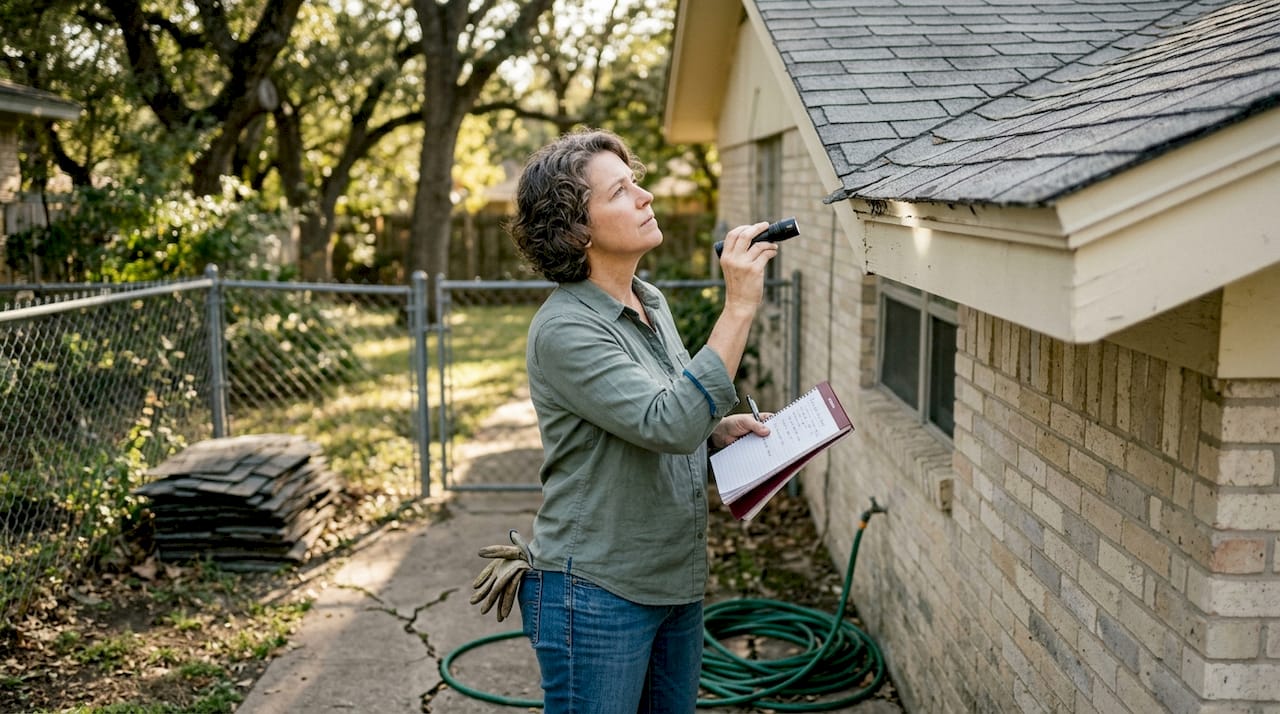
Important: Functional hail damage means damage that affects how your roof performs, not just how it looks. Many insurers only pay for functional damage, not cosmetic dents or dings. Know which standard your policy uses before hail season.
Finally, maintenance neglect is never covered. If your roof leaks because it was not maintained, your insurer will deny the claim. Regular upkeep is not just good practice. It is a coverage requirement.
Pro Tip: Ask your agent specifically whether your policy pays ACV or RCV for both the structure and personal property. These can be different within the same policy.
Extra protection for extreme weather: Flood, windstorm, and the Texas coastal solution
Standard property insurance leaves two major weather risks completely uncovered: flooding and coastal windstorms. In Texas, both are real and recurring threats.
Flood insurance facts for Texas homeowners:
- Standard homeowners policies do not cover flood damage from any external water source.
- The National Flood Insurance Program (NFIP), managed by FEMA, is the most common source of flood coverage.
- Private flood insurance sometimes offers broader coverage limits and faster claims processing than the NFIP.
- Even homes outside designated flood zones can flood. In fact, roughly 25% of NFIP claims come from low-to-moderate risk areas.
Windstorm insurance facts for coastal Texas:
- TWIA is often a last-resort windstorm policy for Texas coastal homeowners when private insurers decline to write coverage.
- TWIA covers wind and hail damage for properties in 14 designated coastal counties and parts of Harris County.
- You cannot purchase TWIA coverage after a named storm is already threatening. Apply early.
For West Texas homeowners, windstorm risk is different but still real. Dust storms, severe thunderstorms, and straight-line winds cause significant damage every year. Review wildfire insurance tips as well, since West Texas wildfire risk has grown in recent years.
Pro Tip: Purchase or review your flood and windstorm policies before June 1, the official start of hurricane season. Waiting until a storm is named means you cannot buy new coverage in time. Also consider how climate change affects insurance in Texas and what that means for your future premiums and coverage options.
Personalizing your property insurance: Key steps for Texas homeowners
Knowing what coverage you need is one thing. Getting the right policy at the right price requires a deliberate process. Here are the steps that matter most.
- Assess your property and risk profile. Consider your location, home age, construction type, and proximity to flood zones or the coast. A home in Lubbock faces different risks than one in Galveston.
- Compare quotes across multiple carriers. Rates and coverage terms vary significantly between insurers. An independent agent can shop dozens of carriers at once, saving you time and money.
- Work with a local independent agent. A local agent understands Texas-specific risks and can recommend coverage options a national call center agent may overlook. Review tips on choosing a Texas-based insurance carrier before making a decision.
- Review your policy limits, exclusions, and endorsements every year. Home values change. Renovation projects increase replacement costs. Personal property accumulates. Your coverage should keep pace.
- Ask about endorsements for specific risks. Endorsements are add-ons that expand your base policy. They can cover scheduled personal property, water backup, equipment breakdown, and more.
Property insurance requires careful customization, especially in Texas where weather risks are diverse and severe. A policy that worked three years ago may leave you underinsured today, particularly if your home’s value has increased or you have made improvements. Read about homeowners policy increase factors to understand what drives premium changes and how to respond.
Pro Tip: Schedule your annual insurance review at least 60 days before your renewal date. This gives you time to compare options and make changes without a coverage gap.
Get expert guidance for Texas property insurance
Navigating property insurance in Texas is not something you should do alone, especially with so many exclusions, payout types, and weather-specific risks to consider. Getting the right coverage means working with someone who knows Texas, knows the carriers, and knows how to match your specific situation to the right policy.

At Hettler Insurance Agency, we have been helping Texas homeowners protect their properties since 1992. As an independent agency representing over 30 top-rated carriers, we shop and compare options so you get real choice, not just one company’s product. Whether you need local homeowner insurance advice, want to understand replacement cost insurance, or need a full policy review before storm season, our team is ready to help. Call us or request a quote online today. Get Hettler, Get Better!
Frequently asked questions
Does property insurance cover flood damage in Texas?
Standard property insurance excludes flood damage entirely. You need a separate flood policy, either through the NFIP or a private insurer, to protect against water-related losses.
What is the difference between replacement cost and actual cash value?
Replacement cost pays for a new item or repair at today’s prices, while actual cash value deducts depreciation, which means a lower payout for older items or structures.
Is windstorm insurance mandatory for Texas coastal homeowners?
Windstorm insurance is often required by mortgage lenders for coastal Texas homes. TWIA provides coverage in designated coastal counties when private insurers will not write the policy.
How do I insure valuables like jewelry under my property policy?
Standard policies cap payouts for jewelry and other valuables at relatively low dollar limits. You may need a scheduled personal property endorsement or a separate floater policy for full protection.
Can neglect or lack of maintenance void my property insurance claim?
Yes. Maintenance neglect is excluded from property insurance coverage. Keeping your home in good repair is not just smart homeownership. It is a condition of your coverage.
Recommended
- Choosing a Texas Insurance Carrier | Hettler Insurance Agency
- When a Homeowners Policy Increases – Hettler Insurance Agency
- Tips About Auto Insurance From Lubbock Texas [Infographic] – Hettler Insurance Agency
- How Will Climate Change Affect Insurance in Texas? | Hettler Insurance Agency
———————
About the Author
Ronald J. Hettler, CIC is a Certified Insurance Counselor (CIC) with over 46 years of real-world experience in the insurance industry. He is the owner/president of Hettler Insurance Agency in Lubbock, Texas and is licensed by the Texas Department of Insurance (License #666862). (Why Trust Hettler Insurance Agency? It’s a Local Independent insurance agency representing multiple carriers. Local expertise in Lubbock Texas and West Texas risks. Focused on clarity before a claim occurs.)
Ron specializes in helping individuals, families, and small business owners understand complex insurance concepts in clear, practical terms so they can make informed decisions about their coverage. He specializes in helping individuals and families understand coverage gaps, deductible structures, and real-world claim outcomes before a loss occurs. Ron helps you to understand how insurance policies respond in real-world claim situations.
License verification available through the Texas Department of Insurance.
— Life Insurance Instant Quote and Apply Tool @ GetLifePolicy.com > * Quick self-service term life insurance quote. With or without medical exam.
— Call us about Auto, Home, Business, Life, or Health insurance. * Click to Call (806) 798-7800, Mon-Fri 8:30am-5pm (lunch closed Noon-1pm)
— Come see us @ our new address 4720 S Loop 289 Lubbock, TX 79414 (maps link), or get your online quote started at https://GetHettler.com