TL;DR summary:
- Classic car insurance requirements in Texas:
- Texas classifies vehicles as antique, classic, or replica, affecting registration and insurance eligibility.
- Antique exemptions require strict use limitations; improper use can deny claims and lead to fines.
- Specialized classic car policies offer agreed value, limited mileage, and extra protections for vintage vehicles.
Owning a classic car in Texas is a point of pride, but protecting it legally and financially requires careful navigation of rules that often confuse even experienced enthusiasts. Texas law distinguishes between antique, classic, and replica vehicles, and each category carries different insurance obligations. Get the classification wrong, and you could face fines, denied claims, or worse, no coverage at all when you need it most. This guide walks you through every step: how Texas defines these vehicles, what the law requires, what specialty policies offer, and how to choose the right protection for your investment. Find out the classic car insurance requirements in Texas.
Table of Contents
- Key definitions: What counts as a classic, antique, or replica in Texas
- State requirements: Liability, exemptions, and common pitfalls
- Choosing a classic car insurance policy: Coverage basics and added protections
- Comparing top Texas providers: Coverage, eligibility, and unique features
- Expert perspective: Navigating gray areas and protecting your investment
- Protect your classic car with expert help
- Frequently asked questions
Key Takeaways
| Point | Details |
|---|---|
| Vehicle classification matters | The way Texas classifies your car determines insurance requirements and eligibility. |
| Exemptions have risks | Antique exemptions offer savings but strict limits that can expose you to fines or denied claims if misused. |
| Coverage beats minimums | Specialty classic car insurance gives stronger protection and more flexibility than minimum state liability. |
| Provider policies vary | Always compare insurers’ rules on usage, mileage, and extras to maximize value and compliance. |
| Expert advice is key | Consulting with a specialized Texas agent helps protect your investment and avoid costly mistakes. |
Key definitions: What counts as a classic, antique, or replica in Texas when discussing classic car insurance requirements in Texas
Let’s begin by explaining how Texas classifies vintage vehicles, because the foundation for understanding your insurance needs starts here. The terms “antique,” “classic,” and “replica” are not interchangeable under Texas law, and using the wrong label can affect your registration, your plates, and your insurance eligibility.
Antique vehicles are generally defined as passenger cars or trucks that are 25 years old or older and maintained in, or restored to, their original condition. The emphasis on originality is important. Significant modifications can disqualify a vehicle from antique status, which directly impacts whether you can access special registration benefits.
Classic vehicles are also age-based, but Texas applies this term with slightly more flexibility in terms of use and condition. Classic plates are typically available to vehicles of a certain age that may not meet the strict originality standard required for antique classification.
Replicas and street rods are a separate category entirely. A replica is a vehicle built to resemble a specific historic model but constructed from modern components. A street rod is a pre-1949 vehicle that has been substantially modified. Both categories are treated differently under Texas registration rules, and neither qualifies for the same exemptions available to true antiques.
Why does this matter for qualifying your vehicle for specialty insurance? Because insurers use these same definitions to determine eligibility. A vehicle that doesn’t meet the legal definition of an antique may not qualify for antique-specific policies, which often offer the most favorable terms for low-mileage, show-only cars.
Here is a quick breakdown of the three categories:
- Antique: 25+ years old, original or restored condition, limited use
- Classic: Age-based, may allow broader use, condition requirements vary by insurer
- Replica/street rod: Modern-built or heavily modified, excluded from most antique exemptions
- Usage matters: Vehicle restrictions tied to each category can limit when and how you drive
Pro Tip: Always double-check your vehicle’s classification with the Texas DMV before applying for special plates or a specialty insurance policy. A quick phone call can save you from an expensive mistake later. It’s important to remember classic car insurance requirements in Texas.

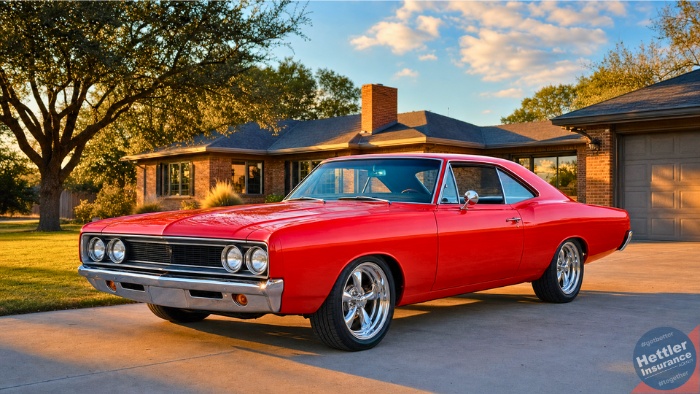
Classic Chevy Impala owner and car on a Lubbock Texas street
State requirements: Liability, exemptions, and common pitfalls
Understanding definitions is step one. Now, here’s how Texas law turns those categories into concrete requirements and pitfalls you need to avoid.
Texas generally requires all registered vehicles to carry minimum liability insurance. However, antique vehicles 25+ years old may qualify for a liability exemption under specific conditions. This exemption is not automatic. You must file a signed affidavit stating that the vehicle will only be used for exhibitions, club activities, parades, and similar events, and not for general transportation.
Here’s the step-by-step process for using the liability exemption correctly:
- Confirm your vehicle qualifies as an antique under Texas law (25+ years old, original or restored).
- Complete the required affidavit affirming limited, event-only use.
- Submit the affidavit with your registration application to the Texas DMV.
- Obtain your antique plates and keep a copy of your affidavit in the vehicle.
- Strictly limit use to parades, shows, exhibitions, and club events only.
Important: Misusing antique plates for daily driving can result in fines, registration penalties, and outright denial of any insurance claim tied to that incident.
Replicas and street rods face additional hurdles. Legal edge cases for replicas mean these vehicles are excluded from antique exemptions and are subject to standard liability requirements under Texas law. Track-use vehicles also face exclusions under most standard and classic policies, so read your policy terms carefully if your car ever sees a racing circuit.
Check the Texas minimum liability limits before assuming the exemption applies to you. Many owners are surprised to learn that one unplanned drive to the grocery store in their antique-plated car technically violates the affidavit they signed.
Pro Tip: When in doubt, opt for classic plates and a proper classic car insurance policy. The broader use flexibility is worth the modest additional cost, and you won’t have to second-guess every drive.
Choosing a classic car insurance policy: Coverage basics and added protections
With a clear view of requirements, let’s move into how to select the right classic car policy for your situation. Let’s discuss why classic car insurance requirements in Texas make a difference.
Standard auto insurance policies are not designed for classic cars. They calculate value based on depreciation, which means a 1969 Mustang fastback insured under a standard policy could be paid out at a fraction of its actual market value after a total loss. Classic car insurance solves this problem with specialized coverage features.

The most important distinction is agreed value vs. stated value. Agreed value means you and the insurer agree upfront on the vehicle’s worth. If it’s totaled, you receive that full “agreed” amount, no depreciation deducted. And then, there’s “stated” value as a ceiling, not a guarantee. The insurer may pay the stated value or the actual cash value at the time of loss, whichever is lower. Always push for agreed value coverage.
Many insurers offer classic car policies with features like agreed value, limited mileage, and roadside assistance tailored specifically for vintage vehicles. Review auto insurance tips for Texas owners to understand how these features interact with state requirements for classic car insurance requirements in Texas.
Key coverage features to look for:
- Agreed value coverage: Full payout at pre-agreed amount, no depreciation
- Mileage allowances: Policies may limit annual mileage (typically 1,000 to 7,500 miles per year)
- Spare parts coverage: Protects hard-to-find original components stored separately
- Roadside assistance: Specialized towing for vintage vehicles that require careful handling
- Travel coverage: Reimbursement for lodging and meals if your car breaks down far from home
Don’t overlook windshield coverage tips for classic cars, especially in West Texas where road debris is a real concern. Original glass on a vintage vehicle can be extremely costly to replace.
| Coverage feature | Classic car policy | Standard auto policy |
|---|---|---|
| Valuation method | Agreed value | Actual cash value |
| Depreciation applied | No | Yes |
| Spare parts coverage | Often included | Rarely included |
| Mileage restrictions | Yes (limited) | No |
| Roadside (specialty tow) | Available | Basic only |
Comparing top Texas providers: Coverage, eligibility, and unique features
Now let’s see how Texas’ top classic car insurance options compare side-by-side.
Hagerty has the broadest eligibility among classic car insurers, and providers differ significantly on minimum vehicle age, coverage limits, and specialty rider offerings. Understanding those differences helps you make a smarter choice for choosing a Texas insurance carrier that fits your specific vehicle and use habits.
Here is how major classic car insurance providers generally compare for Texas owners:
| Provider | Min. vehicle age | Agreed value | Spare parts | Mileage limit | Household-only drivers |
|---|---|---|---|---|---|
| Hagerty | Flexible | Yes | Yes | Negotiable | No |
| Grundy | 25+ years | Yes | Yes | Unlimited | No |
| American Collectors | 25+ years | Yes | Optional | Varies | No |
| State Farm Classic | 10+ years | Stated value | Limited | Varies | No |
| Nationwide Classic | 10+ years | Agreed value | Optional | Varies | Yes |
When picking a provider, consider these factors:
- How often you drive: If you attend multiple shows per season, look for a policy with a higher or flexible mileage allowance.
- Modifications: If your vehicle has been customized, confirm the provider covers modified components at full value.
- Storage situation: Some insurers offer discounts or expanded coverage when vehicles are stored in a secured, enclosed garage.
- Driver eligibility: Certain policies restrict coverage to household residents only, which matters if you ever let a fellow club member drive your car.
- Roadside towing: Confirm towing is handled by specialty haulers, not standard flatbed services that may not be equipped for vintage vehicles.
An independent agency with access to multiple carriers, like a Lubbock-based independent insurance agent, can compare these options for you across all providers without charging extra for the service. Your independent insurance agent can give you expert advice for classic car insurance requirements in Texas.
Expert perspective: Navigating gray areas and protecting your investment
Having compared your options, here’s a candid view from inside Texas’ classic car insurance world.
The liability exemption sounds appealing. Skip the insurance, file the affidavit, save money. We’ve seen this logic from enthusiasts across West Texas, and it works fine, until it doesn’t. The antique exemption creates real risk if you misjudge your use habits, and many owners quietly opt for classic insurance as a safety net precisely because the line between “event use” and “casual drive” is easy to blur.
Here’s what we’ve learned: one unplanned trip, a quick drive to meet a buyer, a detour on the way home from a show, is all it takes to void your exemption status for that incident. If an accident occurs during that trip, you could face personal liability with zero insurance backing you up. The financial exposure on a serious accident far exceeds any premium savings.
A classic car policy with agreed value coverage costs a fraction of what it would take to repair or replace a well-maintained vintage vehicle out of pocket. If your car is worth $30,000 or more, the math strongly favors proper coverage. Our recommendation: treat the exemption as what it actually is, a narrow, specific provision for true show vehicles that never leave a trailer except at events. If your car gets driven more than that, get proper coverage. It’s the smarter, safer call every time.
Protect your classic car with expert help
Ready to put this knowledge to work? The next step is straightforward.
Navigating Texas’ classic car rules on your own takes time, and the cost of getting it wrong can be significant. At Hettler Insurance, we work with over 30 top-rated carriers to find the right classic car policy for your specific vehicle, usage, and budget. Our team, led by Certified Insurance Counselors with over 40 years of combined experience, can clarify whether your car qualifies for antique exemption, recommend the best agreed value policy available, and make sure you’re fully covered no matter where the road takes you.
Call us today for a no-pressure quote review. There’s no extra fee for our service, just real expertise and real options tailored to Texas classic car owners like you.
Frequently asked questions
What is the difference between classic and antique plates in Texas?
Antique plates have strict usage rules and apply only to vehicles used exclusively for shows and events, while classic plates allow more flexible day-to-day use and may be a better fit if you drive your vehicle beyond sanctioned events.
Can I drive my antique-plated car daily in Texas?
No. Misusing antique plates for regular transportation violates Texas law and puts you at risk of fines, registration issues, and denied insurance claims if an accident occurs.
Do replicas or street rods qualify for the antique insurance exemption?
No. Replicas and street rods are excluded from antique exemptions under Texas law and require standard or classic car insurance coverage to remain legally protected.
What are the most important coverages to consider for a classic car in Texas?
Classic car policies often include agreed value payouts, spare parts protection, and mileage-based terms. Prioritize agreed value coverage above all else to ensure your vehicle’s true worth is protected after a total loss.
Recommended
About the Author
Ronald J. Hettler, CIC is a Certified Insurance Counselor (CIC) [the gold-standard credential in the independent insurance industry]. Ron has over 46 years of real-world experience in the insurance industry. He is the owner/president of Hettler Insurance Agency in Lubbock, Texas and is licensed by the Texas Department of Insurance (License #666862). (Why Trust Hettler Insurance Agency? It’s a Local independent insurance agency representing multiple carriers. Hettler Insurance Agency has established business roots going back to it’s predecessor in the late 1800’s. Local expertise in Lubbock Texas and West Texas risks. Focused on clarity before a claim occurs.) Ron and his daughter Meghan, also a CIC, lead a team that represents 30+ carriers and serves clients across Texas.
Ron specializes in helping individuals, families, and small business owners understand complex insurance concepts in clear, practical terms so they can make informed decisions about their coverage. He specializes in helping individuals and families understand coverage gaps, deductible structures, and real-world claim outcomes before a loss occurs. Ron helps you to understand how insurance policies respond in real-world claim situations.
License verification available through the Texas Department of Insurance.
Expanded Frequently Asked Questions ?
Q1 ?: What is the difference between antique, classic, and replica vehicles under Texas law?
Q2 ?: Can I drive my antique-plated car daily in Texas?
Q3 ?: Why is “agreed value” coverage so important for a classic car?
Q4 ?: What special features should a classic car policy include?
Q5 ?: Is the antique liability exemption worth using to save money?
— Life Insurance Instant Quote and Apply Tool @ GetLifePolicy.com > * Quick self-service term life insurance quote. With or without medical exam.
— Call us about Auto, Home, Business, Life, or Health insurance. * Click to Call (806) 798-7800, Mon-Fri 8:30am-5pm (lunch closed Noon-1pm)
— Come see us @ our new address 4720 S Loop 289 Lubbock, TX 79414 (maps link), or get your online quote started at https://GetHettler.com