TL;DR summary:
- Liability coverage pays for injuries and damage you cause to others. It never pays to fix your own car.
- “Full coverage” usually means liability plus collision and comprehensive, but exclusions like mechanical breakdown and custom parts still apply.
- The 10% rule: if your car is worth less than 10 times what you pay each year for collision and comprehensive, that coverage may not be cost effective.
- If you still owe money on your car, your lender will require collision and comprehensive, no matter what the 10% rule says.
- Texas requires 30/60/25 liability at minimum, but your limits should match what you own, not just what the law requires.
- Review your coverage when your loan is paid off, your car ages, or your assets grow.
Liability vs full coverage comes down to whose property your policy protects. Liability insurance pays for damage and injuries you cause to someone else. It never pays to fix your own car. Full coverage typically means liability plus collision and comprehensive, which protect your vehicle from wrecks, theft, hail, and vandalism. The quick rule: if your car is financed, new, or worth a lot, keep full coverage. If it’s older, paid off, and you have savings to replace it, and your yearly collision and comprehensive cost is more than about 10% of the car’s value, liability-only may be the smarter call for Lubbock and West Texas drivers.
Table of Contents
- Key Takeaways
- Liability vs Full Coverage: What Liability Actually Pays For
- What “Full Coverage” Really Includes, and Where It Falls Short
- Liability vs Full Coverage: How the 10% Rule Works
- How Lenders and Leases Shape Your Coverage Decision
- Setting Limits, Choosing Deductibles, and Adding an Umbrella Policy
- How Hettler Insurance Agency Reviews Your Coverage and Assets
- Sources
- Frequently Asked Questions
Key Takeaways
Liability-only and full coverage protect very different things. These are the points that decide which one fits your car and your finances.
| Point | Details |
|---|---|
| Liability protects other people | It pays for injuries and property damage you cause. It does not repair or replace your own vehicle. |
| Full coverage adds your car | Collision covers wrecks, and comprehensive covers theft, fire, flood, vandalism, hail, and other non-collision damage. |
| Use the 10% rule | If your car is worth less than 10 times your collision and comprehensive premium, that coverage may not be cost effective. |
| Lenders decide for you | If you still owe money on your car, your lender will require collision and comprehensive. |
| Lapses get expensive | A lender can force-place coverage that protects only the lender and usually costs a lot more. |
| Texas minimum is 30/60/25 | That satisfies the law, but a serious crash can exceed those limits and reach your personal assets. |
| Deductibles change the math | Raising a $200 deductible to $500 can cut collision and comprehensive cost by 15 to 30 percent. |
Liability vs Full Coverage: What Liability Actually Pays For
Liability coverage is the part of your auto policy that Texas law requires, and it exists to protect other people, not you. It splits into two parts: bodily injury liability, which pays for another person’s medical bills and lost wages when you’re at fault, and property damage liability, which covers the other car, a fence, or a storefront you hit. According to the Texas Department of Insurance (TDI), Texas law requires at least $30,000 of coverage for injuries per person, up to $60,000 per accident, and $25,000 for property damage, known as 30/60/25 coverage. Hettler’s guide to minimum car insurance in Texas walks through what those limits actually cover.
You’ll see liability limits written as three numbers, like 100/300/100. Here’s what that means:
- The first number ($100,000) is the most paid per person for bodily injury.
- The second number ($300,000) is the most paid per accident for all bodily injury combined.
- The third number ($100,000) is the most paid for property damage per accident.
If you’re at fault in a crash that leaves the other driver with $150,000 in medical bills, a 100/300/100 policy caps your payout at $100,000 for that one person. You could be on the hook for the rest personally, which is why matching auto liability limits to your assets matters more than most drivers realize.
Liability also won’t pay your own medical bills. In Texas, that’s the job of personal injury protection (PIP). TDI notes that all auto policies in Texas include PIP coverage, and if you don’t want it, you must tell the company in writing. Insurers must also offer uninsured/underinsured motorist coverage, which you can only decline in writing.
Here’s how the two approaches compare:
| Feature | Liability-Only | Full Coverage |
|---|---|---|
| Injuries and damage you cause to others | Covered up to your limits | Covered up to your limits |
| Damage to your car in a wreck | Not covered | Covered by collision, minus your deductible |
| Theft, hail, fire, flood, vandalism | Not covered | Covered by comprehensive, minus your deductible |
| Allowed on a financed or leased car | No, lenders require collision and comprehensive | Yes |
| Best fit | Older, paid-off car you could replace with savings | Newer, financed, or higher-value car |
What “Full Coverage” Really Includes, and Where It Falls Short
“Full coverage” isn’t an official insurance term. It’s shorthand that usually bundles liability with collision and comprehensive, and what’s actually included can shift depending on the insurer and your lender’s requirements.
TDI explains that collision coverage pays to repair or replace your car after an accident, and comprehensive pays if your car is stolen or damaged by fire, flood, vandalism, or something other than a collision. In Lubbock, comprehensive is often what pays for hail damage to your car. Both coverages carry a deductible, the amount you pay out of pocket before insurance kicks in. A lower deductible means smaller claims cost you less upfront but your premium runs higher. A higher deductible does the reverse.
Even a robust full-coverage policy leaves gaps. Common exclusions include:
- Mechanical breakdown or normal wear and tear (that’s a warranty issue, not insurance)
- Racing or intentional damage
- Using your personal vehicle for commercial delivery work without the right endorsement
- Custom parts or aftermarket equipment above stated limits
Pro Tip: Pull your policy’s declarations page before you assume you’re covered. “Full coverage” from one carrier can look meaningfully different from another’s, and the only way to know for sure is to read the coverages and exclusions, not the marketing brochure.
Liability vs Full Coverage: How the 10% Rule Works
The decision comes down to math, not gut feeling. The Insurance Information Institute (Triple-I) suggests considering dropping collision and/or comprehensive on older cars: if your car is worth less than 10 times the premium, purchasing the coverage may not be cost effective. Here’s how to apply it:
- Find your car’s actual cash value. Use Kelley Blue Book or ask a dealer or your bank for a realistic number, not what you paid new.
- Find the cost of collision and comprehensive only. Your declarations page lists the premium for each coverage separately.
- Compare the two. If that yearly cost is more than about 10% of the car’s value, dropping to liability-only starts making financial sense, assuming the car is paid off.
- Check your savings. Could you repair or replace the car tomorrow without hardship? If not, keep the coverage.
- Consider West Texas weather. Hail-prone areas like Lubbock can tilt the math toward keeping comprehensive even on an older car.
Here’s a hypothetical example. Say your paid-off sedan is worth $6,000 and collision plus comprehensive costs you $700 a year. Ten percent of the car’s value is $600, so you’re paying more than the rule suggests, and liability-only may make sense if you have savings to cover a loss. A financed pickup worth $35,000 is a different story. The lender requires full coverage, and a single total loss would cost far more than years of premiums.
How Lenders and Leases Shape Your Coverage Decision
If you’re still paying off your car, this section matters more than any personal preference. According to TDI, if you still owe money on your car, your lender will require you to have collision and comprehensive coverage. Leasing companies typically require the same, because the vehicle is their collateral, not just your property.
Loan and lease agreements commonly specify:
- Collision and comprehensive for the life of the loan or lease
- A maximum deductible, so check your agreement before raising yours
- Continuous coverage, with no lapses allowed
Drop required coverage and your lender can buy force-placed insurance on the vehicle. The Consumer Financial Protection Bureau (CFPB) explains that this insurance protects only the lender, not you, but the lender will charge you for it, and it’s usually a lot more expensive than a policy you could find yourself.
Two optional add-ons are worth asking about when you’re financing: GAP insurance, which covers the difference between what you owe and the car’s value after a total loss, and new-car replacement coverage, which pays toward a new equivalent vehicle rather than the depreciated value of the one you lost. Availability and terms vary by carrier.
Setting Limits, Choosing Deductibles, and Adding an Umbrella Policy
Protecting your assets starts with knowing what’s actually at risk.
- List your assets: home equity, savings, investments, and future wages. This total is what a lawsuit could realistically come after.
- Match liability limits to that number. The Texas 30/60/25 minimum satisfies the law. Drivers with a home, savings, or other assets often choose higher limits such as 100/300/100 or more.
- Pick your deductible deliberately. According to Triple-I, increasing your deductible from $200 to $500 could reduce your collision and comprehensive cost by 15 to 30 percent, and going to $1,000 can save 40 percent or more. Only raise it if you have that amount set aside. Hettler’s Texas deductible guide explains the tradeoffs.
- Add umbrella coverage once your net worth outgrows your auto and homeowners liability limits. Umbrella policies extend liability coverage above what your underlying policies pay, and insurers generally require minimum liability limits on those underlying policies before the umbrella applies.
Other ways to lower your premium without giving up protection include bundling your home and auto policies and asking about safe-driver, good-student, or low-mileage discounts.
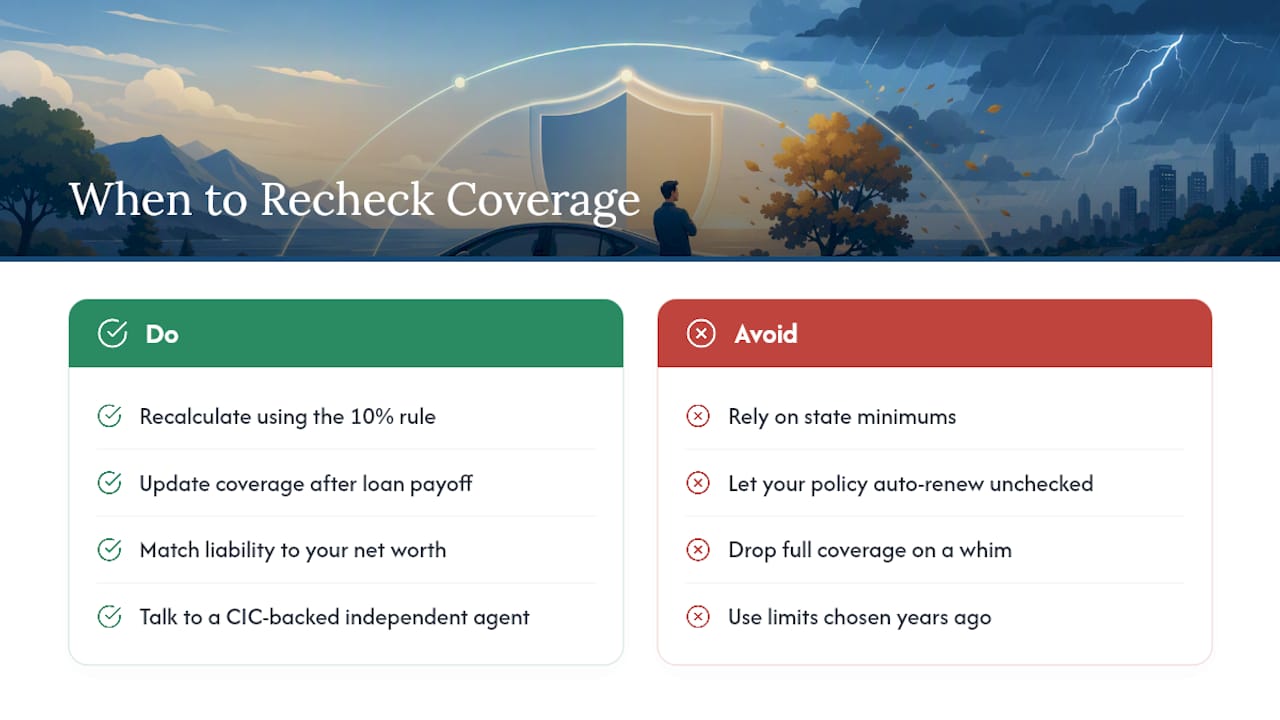
Pro Tip: Recheck your coverage when your loan is paid off, when your car’s value drops, and when your net worth grows. A regular auto policy review catches the changes that a policy left on auto-renew never will.
“The best independent insurance agents don’t just find you a policy. They find you the right insurance policy and then make sure it stays right as your life changes.” — Ron Hettler, CIC (Certified Insurance Counselor), Hettler Insurance Agency
How Hettler Insurance Agency Reviews Your Coverage and Assets
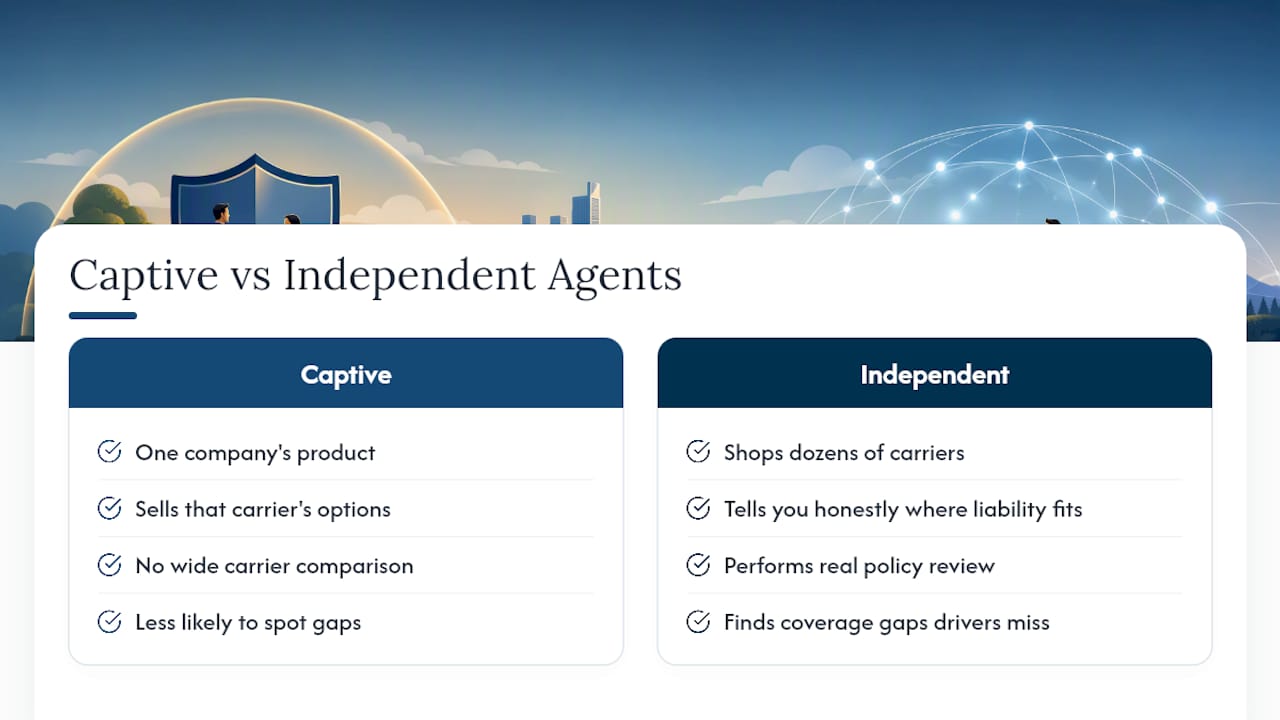
A captive agent sells one company’s products. An independent insurance agency shops your coverage across multiple carriers and can show you side by side where liability-only makes sense and where full coverage protects more than your car. That comparison, plus a real review of your policy’s exclusions, is where many drivers discover coverage gaps they didn’t know existed.
Hettler Insurance Agency compares your liability limits, deductibles, and full-coverage needs across 30+ top-rated carriers, so you’re not guessing whether 100/300/100 is enough or whether a higher deductible actually saves you money once a claim hits. We do not charge extra fees for ID cards or certificates of insurance. Ron calls it a fundamental customer service.

Hettler Insurance Agency has served Lubbock and drivers across Texas since 1992 and is licensed statewide. Ron Hettler, CIC (Certified Insurance Counselor), agency founder and president with 45+ years of insurance industry experience, and Meghan Harris, CIC, who co-leads the agency with Ron, help drivers check their policy against their financing terms, their assets, and their actual risk. The agency carries a 4.5-star Google rating, an A+ BBB rating, and recognition from Three Best Rated® and Expertise.com.
Hettler Insurance Agency is one of the few family-owned agencies in Texas where both principals carry the high level certification of CIC (Certified Insurance Counselor). Fewer than 2% of licensed insurance professionals in the U.S. have earned the CIC designation.
Before you call, have your current declarations page, a rough asset total, and your loan or lease terms on hand. If you’re weighing whether to drop collision on a car you now own outright, that’s a conversation worth having before your renewal date, not after a claim exposes the gap. Call (806) 798-7800, visit 4720 S Loop 289, Lubbock, TX 79414, or start your quote at Hettler Insurance Agency. Get Better. Get Hettler.
This article provides general information and is not a substitute for advice from a licensed insurance professional. Coverage, exclusions, deductibles, and lender requirements vary by insurer, policy, and loan agreement. Review your policy and consult a licensed insurance professional before changing or dropping coverage.
Sources
- Texas Department of Insurance: Auto Insurance Guide
- Insurance Information Institute: Nine Ways to Lower Your Auto Insurance Costs
- Consumer Financial Protection Bureau: What Is Force-Placed Insurance?
Frequently Asked Questions ?
Q1 ?: What is the difference between liability vs full coverage?
Q2 ?: What is the 10% rule for dropping full coverage?
Q3 ?: Does my lender require full coverage in Texas?
Q4 ?: What happens if I drop full coverage on a financed car?
Q5 ?: Is Texas minimum liability coverage enough?
Recommended
About the Author
Ronald J. Hettler, CIC is a Certified Insurance Counselor (CIC) [a gold-standard credential in the independent insurance industry that less than 2% earn]. Ron has over 46 years of real-world experience in the insurance industry. He is the owner/president of Hettler Insurance Agency in Lubbock, Texas and is licensed by the Texas Department of Insurance (License #666862). (Why Trust Hettler Insurance Agency? It’s a Local independent insurance agency representing multiple carriers. Hettler Insurance Agency has established business roots 100+ years going back to it’s predecessor in the late 1800’s. Local expertise in Lubbock Texas and West Texas risks. Focused on clarity before a claim occurs.) Ron and his daughter Meghan, also a CIC, lead a team that represents 30+ carriers and serves clients across Texas.
Ron specializes in helping individuals, families, and small business owners understand complex insurance concepts in clear, practical terms so they can make informed decisions about their coverage. He specializes in helping individuals and families understand coverage gaps, deductible structures, and real-world claim outcomes before a loss occurs. Ron helps you to understand how insurance policies respond in real-world claim situations.
License verification available through the Texas Department of Insurance.
— Life Insurance Instant Quote and Apply Tool @ GetLifePolicy.com > * Quick self-service term life insurance quote. With or without medical exam.
— Call us about Auto, Home, Business, Life, or Health insurance. * Click to Call (806) 798-7800, Mon-Fri 8:30am-5pm (lunch closed Noon-1pm)
— Come see us @ our new address 4720 S Loop 289 Lubbock, TX 79414 (maps link), or get your online quote started at https://GetHettler.com