
TL;DR summary:
- An insurance lapse occurs when a policy ends due to missed payments, non-renewal, or unmet conditions, leaving coverage gaps. Such lapses expose homeowners and renters in Texas to liability, higher costs, and long-term premium increases, with coverage expiring at 12:01 a.m. on the expiration date. To prevent lapses, it is essential to track policy dates, set reminders, and pay premiums before deadlines, ensuring continuous coverage and stability.
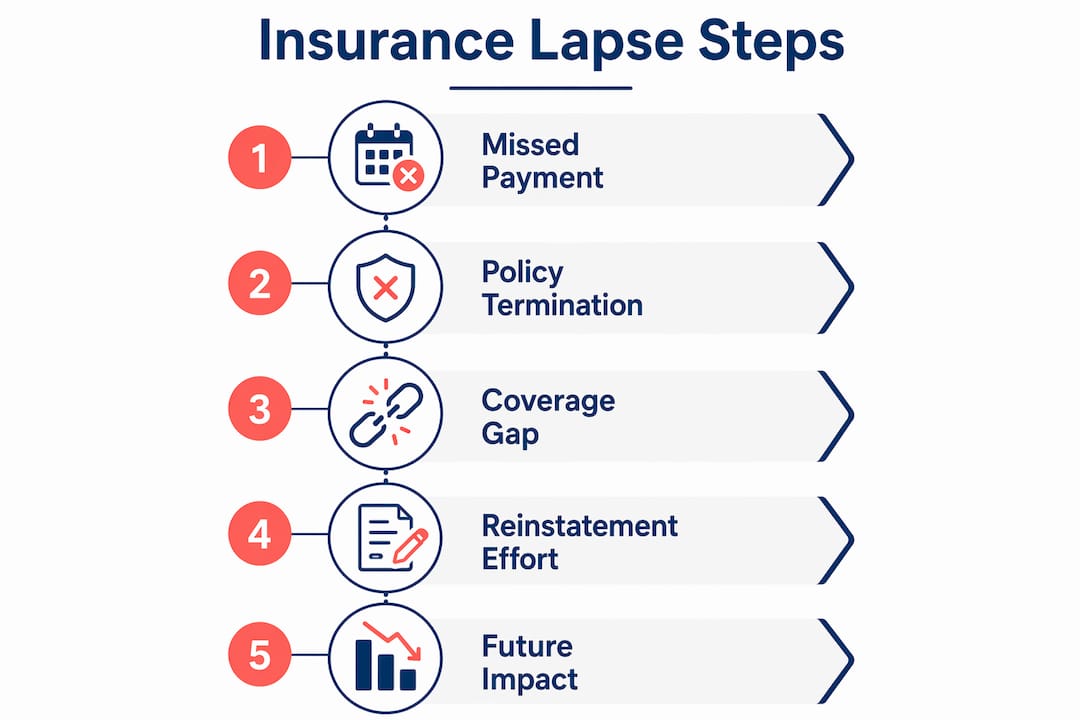
An insurance lapse is defined as the termination of an active policy due to a missed premium payment, failure to renew, or an unmet contractual condition, creating an immediate break in coverage. For Texas homeowners and renters, that gap is not just an inconvenience. It exposes you to personal liability, mortgage penalties, and long-term premium increases that can follow you for years. A lapse differs from a cancellation: a cancellation is initiated by the insurer or policyholder mid-term, while a lapse results from inaction at or after the policy’s expiration date. Hettler Insurance Agency has helped Texas families understand and prevent these gaps since 1992, and this guide covers everything you need to know.
“The best independent insurance agents don’t just find you a policy. They find you the right insurance policy and then make sure it stays right as your life changes.” — Ron Hettler, CIC (certified insurance counselor), Hettler Insurance Agency
Table of Contents
- Key Takeaways
- What is insurance lapse and what causes it?
- What are the consequences of an insurance lapse for Texas homeowners and renters?
- How can you reinstate a lapsed insurance policy in Texas?
- What practical steps can Texas homeowners and renters take to avoid insurance lapses?
- The real cost of a lapse is not what most people expect
- Hettler Insurance Agency is here to protect your coverage
- Frequently Asked Questions
Key Takeaways
A lapsed insurance policy creates an immediate coverage gap that exposes Texas homeowners and renters to personal liability, force-placed insurance costs, and long-term premium increases that persist for years after reinstatement.
| Point | Details |
|---|---|
| Definition of a lapse | A lapse occurs when a policy terminates due to missed payment or non-renewal, ending all coverage immediately. |
| 12:01 a.m. expiration risk | Policies expire at 12:01 a.m. on the expiration date, not at the end of the day, creating unintended gaps. |
| Force-placed insurance cost | Lender-placed insurance costs two to three times more than a standard policy and excludes personal property coverage. |
| Reinstatement requires back payment | Reinstating a lapsed policy requires paying all missed premiums plus interest, and may require a new inspection. |
| Prevention is the best strategy | Set calendar reminders, use autopay, and renew at least 24 hours before expiration to maintain continuous coverage. |
.
What is insurance lapse and what causes it?
An insurance lapse occurs the moment your policy’s coverage period ends without a valid renewal or payment in place. The industry term for this event is a “coverage lapse,” and it is distinct from a mid-term cancellation. Understanding the precise triggers helps you avoid the situation entirely.
Common causes of a coverage lapse
- Missed premium payment. Your carrier does not receive payment by the due date, and your policy suspends or terminates. Texas homeowners policies often have shorter grace periods than life insurance, meaning coverage can suspend immediately after a missed payment.
- Failure to renew. Your policy reaches its expiration date and you take no action. Renewal notices typically arrive 30–60 days in advance, but waiting for physical mail is risky.
- Unmet underwriting conditions. A carrier may non-renew your policy if you fail to complete required repairs or provide updated documentation.
- Returned or bounced payment. Electronic payments that fail due to insufficient funds count as non-payment, even if you believed the transaction went through.
The 12:01 a.m. rule you need to know
Policy expiration occurs at 12:01 a.m. on the expiration date, not at midnight the night before or at the end of the business day. Many homeowners mistakenly assume coverage runs through the full calendar day. That misunderstanding creates an unintended 24-hour gap. If a hailstorm hits West Texas at 6:00 a.m. on your expiration date and you have not yet renewed, you have no coverage for that loss.
Your declarations page is the most reliable document for tracking your exact effective date, expiration date, and renewal date. Review it at the start of every policy term and set a calendar reminder at least 30 days before expiration.
What are the consequences of an insurance lapse for Texas homeowners and renters?
The consequences of an insurance lapse reach further than most policyholders expect. The financial and legal fallout can compound quickly, especially in Texas where severe weather events make continuous coverage critical.
Financial and legal impacts
- Personal liability for losses. Without active coverage, you pay out of pocket for any damage to your home or belongings during the gap. A single hail event in Lubbock can cause tens of thousands of dollars in roof damage.
- Force-placed insurance. Mortgage lenders detect coverage gaps through automated data feeds and respond by placing their own policy on your property. Force-placed insurance costs two to three times more than a standard homeowners policy and excludes personal property and liability protection.
- Premium surcharges. Carriers classify policyholders with lapses as high-risk. Drivers with an auto insurance gap of 30 days or less see an average premium increase of 8%. Longer gaps cost even more and eliminate continuous coverage discounts.
- SR-22 requirements. If your auto insurance lapses in Texas, the state may require an SR-22 filing for up to three years, locking you into high-risk insurance classification.
- Government fines. First-offense fines for driving without insurance range from $150 to $500. Repeat offenses exceed $1,000.
- Collections risk. Unpaid balances from a lapsed policy sent to collections can affect your credit score and make future coverage harder to obtain.
A lapse signals payment instability to every carrier you approach afterward. Insurance companies use proprietary data systems to track coverage gaps as predictors of future risk. That record follows your insurability profile for years, not just months.
The most under-appreciated consequence is the long-term damage to your insurability. Even after you reinstate or obtain a new policy, the lapse history remains visible to underwriters. That visibility translates into higher premiums across all your insurance lines, not just the one that lapsed.
How can you reinstate a lapsed insurance policy in Texas?
Reinstatement is the process of restoring a lapsed policy to active status without applying for entirely new coverage. It is faster than starting over, but it comes with conditions and a limited window.
Steps to reinstate your policy
- Contact your agent immediately. Time is the most critical factor. Automated policy systems have little discretion to forgive lapses once recorded. The sooner you call, the more options remain available.
- Pay all back premiums plus interest. Reinstatement typically requires you to pay every missed premium, plus any interest or fees the carrier charges. Partial payment is rarely accepted.
- Provide evidence of insurability if required. For longer lapses, carriers may require a new inspection of your property or updated underwriting information before reinstating coverage.
- Confirm the reinstatement date in writing. Do not assume coverage is active until you receive written confirmation. Verbal assurances are not binding.
- Review the reinstated policy terms. Some carriers reinstate with modified terms, higher deductibles, or exclusions added during the gap period. Read the updated declarations page carefully.
Reinstatement vs. a new policy
Reinstatement restores your original policy number and history, which can preserve loyalty discounts and avoid a new underwriting review. Applying for a new policy after a lapse means full underwriting, which often results in higher rates because the lapse appears in your coverage history. If your carrier denies reinstatement, Hettlerinsurance can shop across more than 30 carriers to find the most competitive new policy available.

The duration of the lapse matters significantly. Short gaps of a few days are usually resolved with back payment. Gaps exceeding 30 days often require full underwriting and may result in denial from your original carrier.
Pro Tip: Call your agent before the grace period ends, not after. Carriers are far more willing to work with you during the grace period than after the policy has fully lapsed. Even a brief call can preserve your options.
What practical steps can Texas homeowners and renters take to avoid insurance lapses?
Prevention is far less costly than recovery. A few consistent habits eliminate most lapse risk entirely.
- Treat your expiration date as a hard deadline. Replacement coverage must begin at least 24 hours before your old policy ends. Do not wait until the morning of expiration to renew.
- Track your key policy dates proactively. Record your effective date, expiration date, and renewal deadline in your phone calendar with a 30-day advance alert. Your declarations page is the authoritative source for these dates.
- Use electronic payment with immediate confirmation. Set up autopay through your carrier’s portal and save the confirmation email for every transaction. A payment you believe went through is not the same as a payment that cleared.
- Update your contact information with your carrier. Renewal notices sent to an old address or email never reach you. Carriers are not required to chase you down.
- Call your agent the moment a payment issue arises. If you know a payment will be late, contact your agent before the due date. Many carriers will work with you during the grace period if you communicate early.
- Review your policy annually. An annual review with your agent confirms your coverage is still appropriate, your payment method is current, and your renewal date is on your radar.
- Avoid insurance coverage gaps between carriers. When switching insurers, confirm the new policy’s start date aligns exactly with the old policy’s end date. Even a one-day gap counts as a lapse.
Pro Tip: If you are switching carriers, ask your new carrier to confirm the exact start time of your new policy in writing before canceling the old one. The 12:01 a.m. rule applies to new policies too.
Texas weather does not wait for administrative delays. A hailstorm, tornado, or flash flood can occur any day of the year. Continuous coverage is not optional for homeowners in this state. It is the baseline protection your property and finances require.
The real cost of a lapse is not what most people expect
Most homeowners think of an insurance lapse as a temporary administrative problem. Pay what you owe, get reinstated, and move on. That view underestimates what actually happens inside a carrier’s underwriting system.
Carriers do not treat a lapse as a one-time mistake. They treat it as a data point that predicts future behavior. That classification persists in your insurability profile and affects every quote you receive going forward. I have seen clients reinstated within days of a lapse still face premium increases at their next renewal because the gap was recorded.
The second thing most people miss is how quickly automated systems close the window on your options. Once a lapse is recorded, the system flags your account. Getting a human underwriter to override that flag requires documentation, time, and often a formal appeal. Early communication with your agent is the only reliable way to stay ahead of the system.
Proactive coverage management is not complicated. It requires tracking two or three dates per year and setting up a reliable payment method. The homeowners who avoid lapses are not doing anything extraordinary. They are simply treating their policy expiration date with the same seriousness they give a mortgage payment deadline.
— Ron Hettler, CIC (certified insurance counselor), Hettler Insurance Agency
Hettler Insurance Agency is here to protect your coverage
Texas homeowners and renters deserve coverage that stays active, not policies that slip through the cracks. Hettler Insurance has served Texas families since 1992, and our team of Certified Insurance Counselors knows exactly how to keep your coverage continuous and your premiums competitive.

Whether you need to review your current policy dates, reinstate a lapsed policy, or find better homeowners or renters coverage across our network of more than 30 top-rated carriers, we are ready to help. Explore your Texas insurance coverage options and get a no-pressure review from a team that has been protecting West Texas families for over three decades. Call Hettler Insurance Agency today or visit hettlerinsurance.com to get started.
Recommended
About the Author
Ronald J. Hettler, CIC is a Certified Insurance Counselor (CIC) [the gold-standard credential in the independent insurance industry]. Ron has over 46 years of real-world experience in the insurance industry. He is the owner/president of Hettler Insurance Agency in Lubbock, Texas and is licensed by the Texas Department of Insurance (License #666862). (Why Trust Hettler Insurance Agency? It’s a Local independent insurance agency representing multiple carriers. Hettler Insurance Agency has established business roots going back to it’s predecessor in the late 1800’s. Local expertise in Lubbock Texas and West Texas risks. Focused on clarity before a claim occurs.) Ron and his daughter Meghan, also a CIC, lead a team that represents 30+ carriers and serves clients across Texas.
Ron specializes in helping individuals, families, and small business owners understand complex insurance concepts in clear, practical terms so they can make informed decisions about their coverage. He specializes in helping individuals and families understand coverage gaps, deductible structures, and real-world claim outcomes before a loss occurs. Ron helps you to understand how insurance policies respond in real-world claim situations.
License verification available through the Texas Department of Insurance.
Frequently Asked Questions ?
Q1 ?: What is insurance lapse in simple terms?
Q2 ?: How long do I have to reinstate a lapsed homeowners policy in Texas?
Q3 ?: Does a lapsed policy affect my future insurance rates?
Q4 ?: What happens if my mortgage lender finds out my homeowners insurance lapsed?
Q5 ?: Can I avoid a lapse if I know my payment will be late?
— Life Insurance Instant Quote and Apply Tool @ GetLifePolicy.com > * Quick self-service term life insurance quote. With or without medical exam.
— Call us about Auto, Home, Business, Life, or Health insurance. * Click to Call (806) 798-7800, Mon-Fri 8:30am-5pm (lunch closed Noon-1pm)
— Come see us @ our new address 4720 S Loop 289 Lubbock, TX 79414 (maps link), or get your online quote started at https://GetHettler.com