

TL;DR summary:
- Texas families must follow specific steps to ensure their life insurance policies are properly funded and protected. Accurate application answers and timely premium payments are essential to avoid claim denials within the two-year contestability window.
Life insurance steps for families are a defined sequence of decisions and actions that result in a funded policy protecting your household’s income, mortgage, and future. Texas families with young children face a specific risk: Texas law allows insurers to contest and deny claims during the first two years after a policy is issued if the application contained misrepresentations. Getting the process right from the start is not optional. This guide walks you through every step, from gathering your financial information to paying your first premium, with Texas-specific rules built in at every stage.
Table of Contents
- What are the life insurance steps for families before you apply?
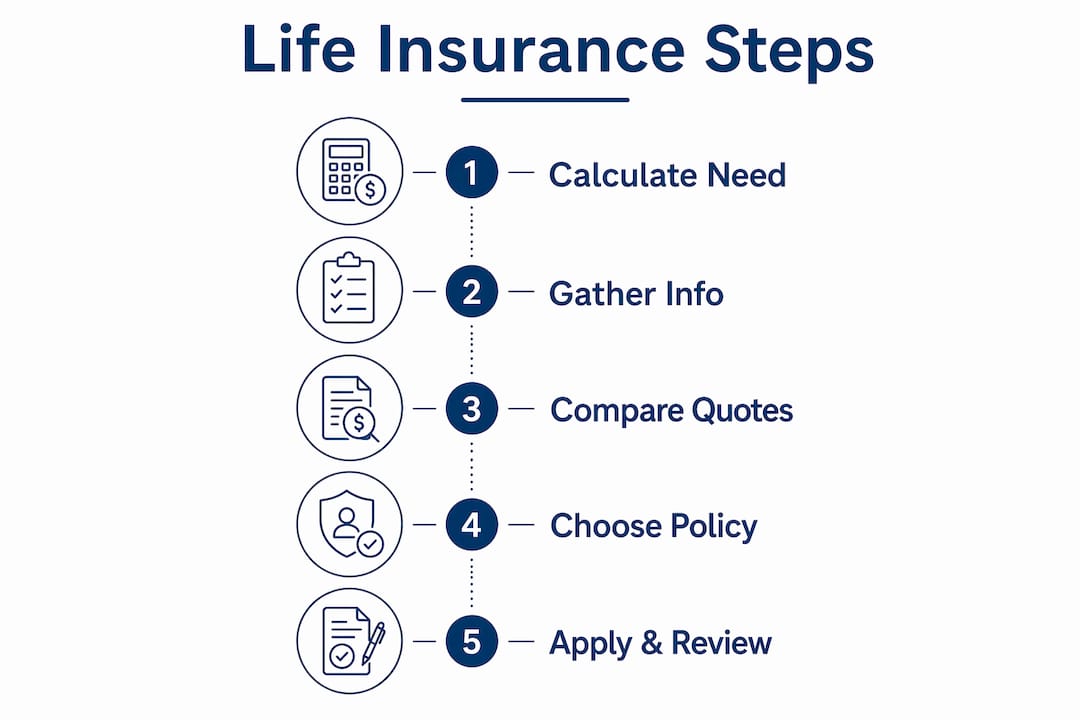
- How do you buy life insurance step by step?
- How do you choose the right coverage and riders for your family?
- What mistakes should Texas families avoid when buying life insurance?
- What I’ve learned about life insurance for Texas families with young children
- How Hettler Insurance Agency helps Texas families secure the right coverage
- Frequently Asked Questions
Key Takeaways
Securing family life insurance in Texas requires accurate applications, correct coverage sequencing, and consistent premium payments to protect your household from day one.
| Point | Details |
|---|---|
| Prepare before you apply | Calculate total financial exposure including income, mortgage, childcare, and education before requesting quotes. |
| Apply young and healthy | Age and health are the primary premium drivers; delaying costs more and risks insurability. |
| Sequence coverage correctly | Fund strong adult term coverage first, then add child riders for final expense protection. |
| Answer every question honestly | Texas’s two-year contestability period means misrepresentations can void a claim when your family needs it most. |
| Update beneficiaries after life changes | Texas law revokes former spouse designations at divorce; review after every major family event. |
.
What are the life insurance steps for families before you apply?
Preparation determines how smoothly the rest of the process goes. Before you speak with an agent or request a single quote, you need a clear picture of your household’s financial exposure.
Start by calculating what your family would need if the primary income earner died today. That number typically includes:
- Income replacement: Multiply your annual income by the number of years until your youngest child reaches financial independence.
- Mortgage balance: The full payoff amount, not the monthly payment.
- Childcare and education costs: Daycare in Texas averages several hundred dollars per week per child. Add projected college costs if that is a goal.
- Outstanding debts: Auto loans, personal loans, and credit card balances your family would inherit.
Next, gather the personal details every insurer will ask for: your age, height, weight, health history, prescription medications, tobacco use, and any hazardous hobbies like skydiving or motorcycle riding. Incomplete answers slow underwriting and can trigger the contestability window if errors surface later.
Term life insurance is typically the best option for most young families because it is affordable and aligns coverage with the years of highest financial responsibility, such as raising children and paying down a mortgage. Permanent life insurance products like whole life or universal life carry higher premiums and serve different long-term goals. Most Texas families with young children should start with term.

Pro Tip: Write down your family’s total financial exposure as a single dollar figure before your first agent call. Agents who see a prepared client give sharper, faster quotes.
How do you buy life insurance step by step?
The buying process for family life insurance follows a predictable sequence. Knowing each stage prevents surprises and keeps your application clean.
- Speak with a licensed agent. Work with an independent agent who represents multiple carriers. Independent agents compare rates across dozens of insurers rather than steering you toward one company’s products.
- Request and compare quotes. Provide your age, health status, desired coverage amount, and preferred term length. Compare at least three quotes before deciding.
- Complete the application. Answer every health and lifestyle question accurately. Underwriting decisions are based on age, health, medical history, and lifestyle, and they determine your eligibility, coverage limits, and premium.
- Undergo the medical exam if required. A fully underwritten policy requires a paramedical exam, typically a blood draw, urine sample, and blood pressure reading. This exam is free to you and usually completed at your home or office.
- Wait for underwriting review. Standard underwriting takes two to four weeks. Simplified issue policies skip the exam but carry higher premiums.
- Review the policy offer. Read the declarations page carefully. Confirm the death benefit amount, term length, premium, and named beneficiaries before signing.
- Accept the policy and pay the first premium. Coverage does not begin until the first premium is paid. The contestability period starts on the issue date.
- File your policy documents safely. Store a physical copy and share the location with your spouse or a trusted family member.
| Stage | What happens | Typical timeline |
|---|---|---|
| Application submitted | Insurer reviews health and lifestyle data | Day 1 |
| Medical exam | Paramedical visits your home or office | Days 3–7 |
| Underwriting review | Insurer evaluates risk and sets premium | Weeks 1–4 |
| Policy offer issued | You review and accept or decline | Days 28–35 |
| First premium paid | Coverage begins; contestability clock starts | Day 35+ |
.
Pro Tip: Apply while you are young and healthy. Age and health status are the primary drivers of premium price, and locking in a rate at 32 costs significantly less than waiting until 42.
How do you choose the right coverage and riders for your family?
Coverage selection is where most families make their biggest mistakes. The sequence matters as much as the dollar amount.
Secure strong coverage on the primary income earner first. That policy should cover income replacement, the mortgage balance, childcare costs, and education expenses. Fully underwritten policies provide the best rates because the insurer has a complete health picture. Simplified and guaranteed issue policies exist for higher-risk applicants but cost more for the same death benefit.
Once adult coverage is in place, consider a child rider. Child riders do not require a medical exam, provide guaranteed coverage from 15 days old up to age 25 or until the policyholder reaches age 65, and some include convertibility options that let the child purchase their own policy later without a health exam. The benefit amount is smaller, typically designed to cover funeral and final expenses rather than income replacement.
Here is how child riders compare to separate child policies:
| Feature | Child rider on parent’s policy | Separate child life policy |
|---|---|---|
| Medical exam required | No | Sometimes |
| Cost | Low add-on premium | Separate full premium |
| Coverage purpose | Final expense protection | Final expense or cash value |
| Portability | Convertible at rider end | Standalone from day one |
| Best for | Most families | Families wanting permanent child coverage |
.
Advisors recommend securing strong adult coverage before adding child riders, because child riders cover smaller benefits and serve specific needs like funeral expenses rather than replacing lost income. For families considering final expense planning, resources like Bravo Family Mortuary provide useful context on realistic funeral cost estimates.
Choose a term length that matches your financial obligations. A 20-year term covers a newborn through college. A 30-year term covers a mortgage and childcare for a young family starting out. Align the term end date with the year your last major financial obligation disappears.
What mistakes should Texas families avoid when buying life insurance?
The most costly mistakes in the life insurance process are preventable. Each one below has a direct financial consequence for your family.
- Misrepresenting your health on the application. Under Tex. Ins. Code § 1101.006, Texas insurers can contest and rescind a policy during the first two years after issue if the application contained material misrepresentations. After that two-year window closes, the policy becomes incontestable. Every answer on your application must be accurate.
- Skipping the medical exam to save time. Fully underwritten policies with a medical exam consistently produce lower premiums than simplified issue policies. The exam takes about 30 minutes and costs you nothing.
- Underinsuring the primary income earner. A $250,000 policy sounds like a large number until you subtract the mortgage balance, childcare costs, and years of lost income. Run the full calculation before choosing a coverage amount.
- Neglecting beneficiary designations. Texas law automatically revokes a former spouse’s beneficiary designation upon divorce unless the policyholder re-executes the designation after the divorce is final. Review your beneficiaries after every major life event: marriage, divorce, birth, or death.
- Letting the policy lapse. Nonpayment of premiums can cause a policy to lapse, which voids the death benefit entirely. Set up automatic payments to prevent this.
- Waiting too long to apply. Every year you delay, your premium increases and your insurability may decrease. A health diagnosis that arrives before you apply can raise your rate or disqualify you entirely.
“The two-year contestability window is the single most misunderstood rule in Texas life insurance. Families who answer every question honestly never need to worry about it. Those who don’t may leave their children with nothing.” — Hettler Insurance
For families who are also self-employed or running a small business, reviewing your case study examples from Hettler Insurance shows exactly how application errors have led to real claim denials.
What I’ve learned about life insurance for Texas families with young children
After years of working with Texas families, one pattern stands out: parents consistently underestimate how much coverage they actually need, and they overestimate how complicated the process is.
The math is straightforward. Take your annual household income, multiply it by the number of years until your youngest child is financially independent, add the mortgage payoff, and add projected childcare and education costs. That total is your starting point. Most families land between $500,000 and $1,000,000 in needed coverage. Term life at those amounts is more affordable than most parents expect, especially when you apply in your late 20s or early 30s.
The Texas contestability rule is the detail I stress most. Two years sounds like a long time, but it is not. Families who rush through applications, forget to mention a prescription, or underreport tobacco use are gambling with their children’s financial security. The fix is simple: answer every question completely and call your agent if you are unsure how to answer something. That one phone call can prevent a claim denial years later.
My consistent advice is to secure term life coverage on the adults first, size it to your real financial obligations, and treat child riders as a secondary add-on rather than the main event. Child riders serve a real purpose, but they do not replace the income your family depends on. Get the adult coverage right, and the rest of the plan falls into place.
— Ron
How Hettler Insurance Agency helps Texas families secure the right coverage
Texas families deserve an agent who knows the state’s rules, shops multiple carriers, and gives straight answers without pressure.

Hettler Insurance agency is a family-owned independent agency based in Lubbock, Texas, serving Texans since 1992. Ron Hettler and his daughter Meghan are both Certified Insurance Counselors (CIC), the gold standard credential in the industry. The agency represents over 30 top-rated carriers, which means you get real comparisons across the market, not a single company’s product line. Whether you need a 20-year term policy to cover your mortgage and young children or want to understand how riders fit your situation, Hettler Insurance provides a personalized coverage analysis at no extra fee. Texas families who are also entrepreneurs can start with the minimum coverage guide to understand their baseline needs before scaling up. Visit Hettler Insurance Agency to request a quote or speak with an advisor today.
Recommended
About the Author
Ronald J. Hettler, CIC is a Certified Insurance Counselor (CIC) [the gold-standard credential in the independent insurance industry]. Ron has over 46 years of real-world experience in the insurance industry. He is the owner/president of Hettler Insurance Agency in Lubbock, Texas and is licensed by the Texas Department of Insurance (License #666862). (Why Trust Hettler Insurance Agency? It’s a Local independent insurance agency representing multiple carriers. Hettler Insurance Agency has established business roots going back to it’s predecessor in the late 1800’s. Local expertise in Lubbock Texas and West Texas risks. Focused on clarity before a claim occurs.) Ron and his daughter Meghan, also a CIC, lead a team that represents 30+ carriers and serves clients across Texas.
Ron specializes in helping individuals, families, and small business owners understand complex insurance concepts in clear, practical terms so they can make informed decisions about their coverage. He specializes in helping individuals and families understand coverage gaps, deductible structures, and real-world claim outcomes before a loss occurs. Ron helps you to understand how insurance policies respond in real-world claim situations.
License verification available through the Texas Department of Insurance.
Frequently Asked Questions ?
Q1 ?: What is the contestability period in Texas life insurance?
Q2 ?: How much life insurance does a Texas family with young children need?
Q3 ?: Is term life insurance better than whole life for young families?
Q4 ?: Do child riders require a medical exam?
Q5 ?: What happens if I miss a premium payment in Texas?
— Life Insurance Instant Quote and Apply Tool @ GetLifePolicy.com > * Quick self-service term life insurance quote. With or without medical exam.
— Call us about Auto, Home, Business, Life, or Health insurance. * Click to Call (806) 798-7800, Mon-Fri 8:30am-5pm (lunch closed Noon-1pm)
— Come see us @ our new address 4720 S Loop 289 Lubbock, TX 79414 (maps link), or get your online quote started at https://GetHettler.com