
TL;DR summary:
- Most insurance payments aim to restore your financial position after a loss rather than provide a profit, preventing moral hazard.
- Understanding valuation methods, claim deadlines, and the difference between indemnity and contractual indemnity is crucial before filing a claim.
Most people assume their insurance will pay out whatever they lost and maybe a little extra for the trouble. That assumption is wrong, and it costs policyholders real money every year. What is insurance indemnity? At its core, it is the legal principle that insurance restores you to your financial position before a loss. Nothing more. The industry term for this is the indemnity principle, and it governs nearly every property, liability, and professional insurance policy you own. Understanding how it works before you file a claim is not optional. It is the difference between being made whole and walking away short.
Key Takeaways
| Point | Details |
|---|---|
| Indemnity means restoration, not profit | Insurance pays to restore your pre-loss financial position, never to generate a gain from a covered event. |
| ACV vs. RCV affects your payout | Actual cash value pays less upfront; replacement cost value releases full payment after you prove repairs are complete. |
| Deadlines are non-negotiable | Missing the window to submit repair proof can permanently forfeit the depreciation holdback portion of your claim. |
| Insurance indemnity differs from contractual indemnity | These are two separate legal mechanisms that businesses need to understand and use together, not interchangeably. |
| Know which type you have | Property, liability, professional, and health indemnity policies each calculate and pay claims differently. |
What insurance indemnity means and why it matters
Insurance indemnity means compensating a policyholder to restore their financial position before the loss occurred, not to allow any profit from the claim. That one sentence is the foundation of how most insurance in the United States is structured. If a hailstorm destroys your roof valued at $8,000, you receive enough to repair or replace that roof. You do not receive $10,000 because you negotiated well.
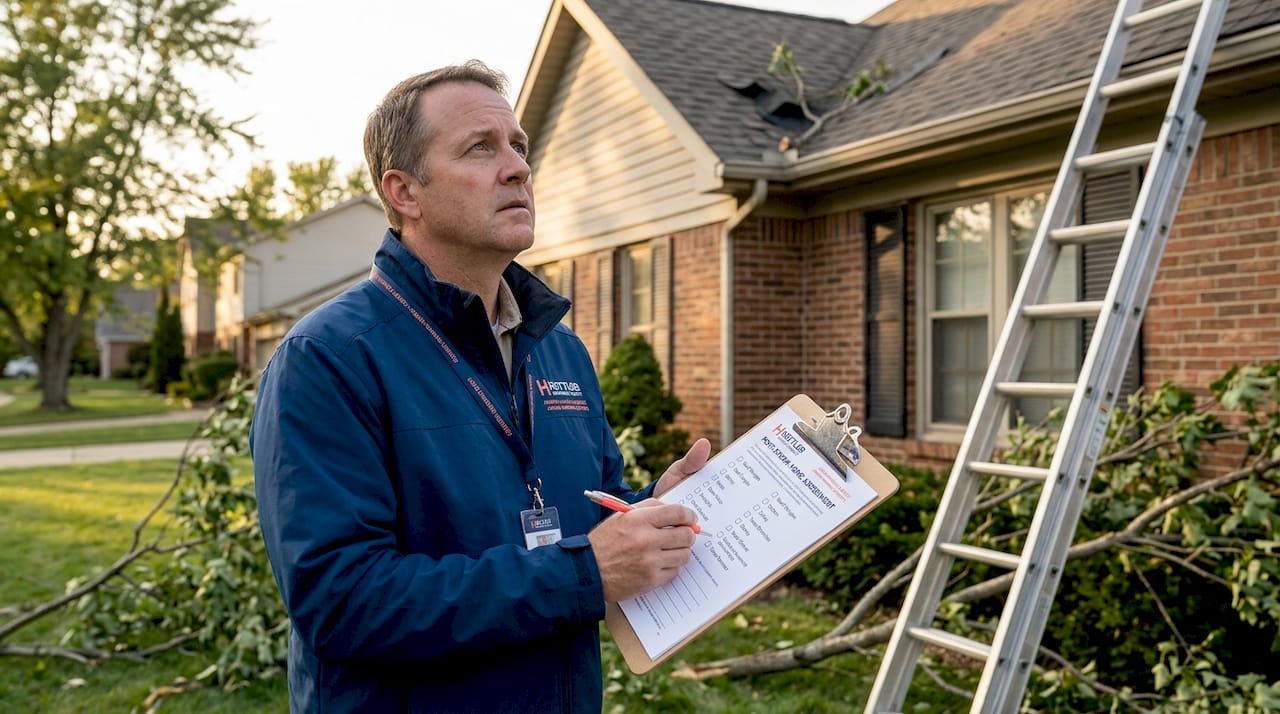
This principle exists for a very specific reason. Without it, insurance would create what economists call moral hazard. People would have a financial incentive to let covered property deteriorate or even manufacture losses. The indemnity principle prevents this by tying every payment to actual, documented losses with policy limits and deductibles applied.
Here is what the indemnity principle shapes in practical terms:
- Policy limits cap your maximum recovery, regardless of how large your actual loss is.
- Deductibles reduce your payout by the amount you agreed to self-insure.
- Valuation methods (actual cash value or replacement cost) determine the dollar amount tied to your loss.
- Proof of loss requirements obligate you to document and verify the damage before payment is finalized.
The distinction between indemnity and fixed benefit products is also worth noting here. Life insurance, for example, pays a set benefit regardless of your financial loss at the time of death. That is a fixed benefit product, not an indemnity product. Indemnity insurance requires proof of actual economic loss before any recovery is made.
Pro Tip: Always read your policy’s valuation language before a loss occurs. Knowing whether you have actual cash value or replacement cost coverage changes how you budget for disasters and what you can expect to receive.
How indemnity claims are calculated and paid
This is where most policyholders get surprised. Understanding the payment mechanics of an indemnity claim protects you from leaving money on the table.
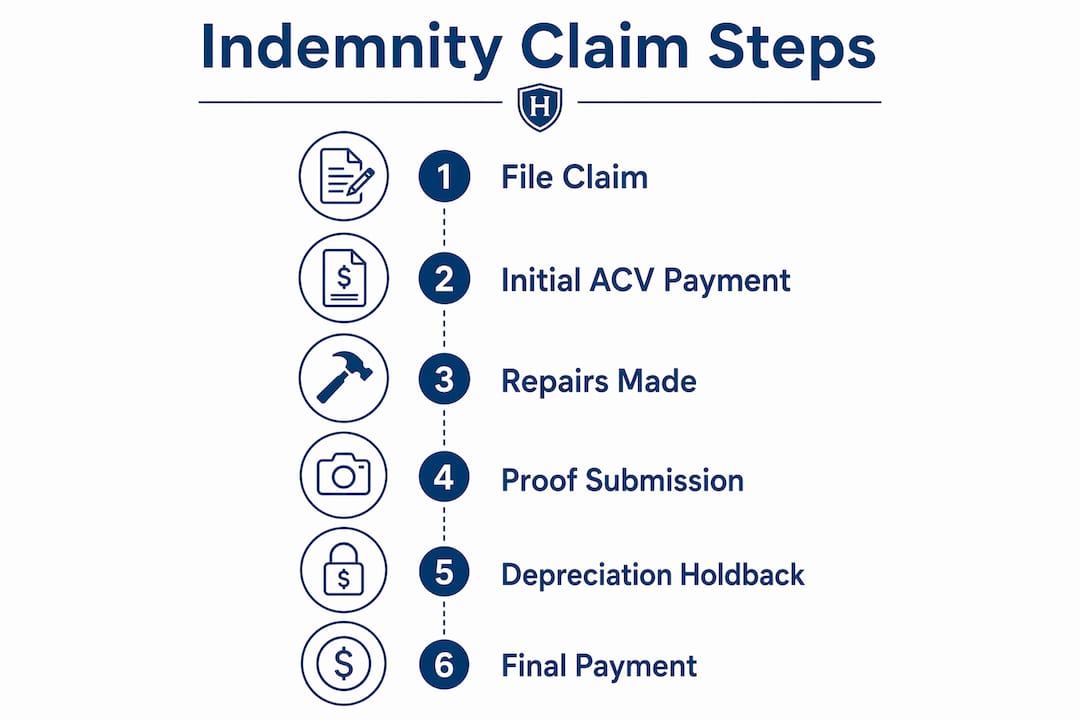
Property claims typically work in two steps: the insurer pays the actual cash value first, minus your deductible, and then releases the withheld depreciation after you submit proof that repairs are complete.
Here is how those two main valuation methods compare:
| Valuation Method | What It Pays | When Full Amount Is Released |
|---|---|---|
| Actual Cash Value (ACV) | Depreciated value of property at time of loss | At initial claim settlement, no holdback |
| Replacement Cost Value (RCV) | Full cost to repair or replace with like kind | After proof of completed repairs is submitted |
.
The numbered sequence below shows what a typical replacement cost property claim looks like from start to finish:
- You report the covered loss and file your claim.
- The insurer sends an adjuster to assess damage and calculate the replacement cost.
- You receive an initial payment equal to the actual cash value (replacement cost minus depreciation), less your deductible.
- You complete the repairs and retain all receipts and contractor invoices.
- You submit your proof of repair documentation to the insurer within the required deadline.
- The insurer releases the withheld depreciation, bringing your total recovery up to the replacement cost.
Missing step five has permanent consequences. Missed repair deadlines can forfeit the entire depreciation holdback, which means you walk away with only the ACV payment even if your policy entitled you to full replacement cost. That window is typically six months to two years depending on your policy and carrier.
Pro Tip: The moment you receive your initial ACV check, write the repair submission deadline on your calendar. Treat it like a legal deadline, because it is.
Insurance indemnity vs. contractual indemnity
The terminology overlap here causes more confusion than almost any other concept in insurance. These two mechanisms operate differently, serve different purposes, and both matter if you own a business.
Insurance indemnity is a promise from your insurer to pay covered losses on your behalf in exchange for premiums. Contractual indemnity clauses create payment obligations between business parties entirely independent of any insurance policy. One is a policy right; the other is a contract right.
Here is how they compare side by side:
| Feature | Insurance indemnity | Contractual indemnity |
|---|---|---|
| Who makes the promise | Insurance carrier | Contracting party (vendor, contractor, client) |
| Source of obligation | Insurance policy | Contract or agreement |
| Trigger | Covered loss event | Breach, negligence, or agreed condition |
| Payment flow | Insurer pays claimant or insured | One party pays the other directly |
| Limit | Policy limit | Contract terms |
.
Contractual indemnity clauses often appear as hold harmless agreements, where one party agrees to absorb liability that might otherwise fall on another. A general contractor, for example, might require subcontractors to hold them harmless from injuries caused by the subcontractor’s crew. That clause shifts the legal obligation. But if the subcontractor has no assets, that clause means nothing without insurance backing it.
This is why relying on one without the other creates real exposure for businesses. The contractual clause tells you who is responsible. The insurance policy funds that responsibility. You need both working together.
- A business with a strong indemnity clause but no insurance coverage may win the legal argument and still be unable to pay.
- A business with solid insurance but no contractual indemnity clause may end up absorbing losses that should have been another party’s problem.
- Reviewing contracts before signing is non-negotiable. Call your agent before you agree to any indemnity or hold harmless language in a client contract.
Types of insurance that use indemnity principles
Indemnity principles show up across several major insurance categories, each applying the “make whole” concept differently.
Property insurance is the most direct application. When a covered peril damages your building, vehicle, or personal property, the insurer calculates your loss and pays to repair or replace it. In business insurance, this means the insurer pays repair costs and settlements rather than the insured paying out of pocket and seeking reimbursement.
Liability insurance works differently. Liability indemnity pays claims or judgments to third parties up to your policy limits rather than reimbursing your out-of-pocket expenses directly. If a customer slips and falls at your business and wins a judgment against you, your general liability policy pays that judgment. You never write the check yourself.
Professional indemnity insurance (also called errors and omissions, or E&O) covers financial losses caused by professional mistakes, negligent advice, or failure to deliver contracted services. Consultants, accountants, real estate agents, and technology firms commonly carry this coverage. It reimburses the actual financial harm caused by the professional error, which makes it a pure indemnity product.
Indemnity health plans are worth understanding separately. Some hospital indemnity and indemnity health plans pay fixed dollar benefits directly to the insured rather than to the healthcare provider. These blur the line between fixed benefit and true indemnity coverage because the benefit amount may not reflect actual medical costs. Read the plan details carefully before you assume you are fully covered.
The single biggest mistake people make with indemnity coverage is assuming all insurance types pay the same way. They do not. Property policies reimburse losses. Liability policies pay third parties. Professional policies cover errors. Each has its own claim trigger, payment process, and documentation requirement.
Filing an indemnity claim the right way
You can have the right coverage and still collect less than you deserve by making avoidable errors in the claim process. Here is what to do from the moment a loss occurs.
- Document everything immediately. Take photos and video of damage before any cleanup or temporary repairs begin. A timestamped visual record is your strongest evidence.
- Get multiple repair estimates. A single contractor quote may not reflect market rates. Multiple estimates protect you if the insurer disputes the amount.
- Track every expense. Temporary repairs, hotel stays, and equipment rentals may be reimbursable under your policy. Save every receipt.
- Know your submission deadlines. Ask your adjuster in writing what the deadline is for submitting proof of completed repairs. Document loss proof deadlines in writing and meet them without exception.
- Work carefully with adjusters. Adjusters represent the insurer’s interests. You can work with them professionally while also protecting your own. If a settlement offer seems low, request an itemized breakdown and compare it to your repair estimates. Resources like dealing with insurance adjusters can help you understand the process and your rights.
- Get legal or professional advice when needed. If your claim is large, disputed, or involves contractual indemnity issues, consult a public adjuster or attorney before accepting any settlement.
Pro Tip: Never sign a release or accept a final settlement payment until you are certain all damages have been identified and all repair costs are known. Once you sign, recovery for that claim is typically closed.
My take on why most people mishandle indemnity claims
I have seen policyholders leave thousands of dollars behind simply because they did not understand how their policy calculated what they were owed. The most common issue is not fraud or bad faith by the insurer. It is policyholders who do not know the difference between actual cash value and replacement cost, accept the first check, and never submit proof of repairs.
What I have learned after working with insurance for years is this: the indemnity system is actually fair when you understand its rules. It is designed to protect both sides. Insurers are protected from paying more than the actual loss, which keeps premiums manageable for everyone. Policyholders are protected from absorbing covered losses out of their own pockets.
The real problem is that most people only read their policy after something goes wrong. By then, the deadlines and valuation terms feel like traps rather than the agreed-upon terms they signed. Proactive education, knowing whether you have ACV or RCV, understanding your deductibles, and learning how contractual indemnity clauses interact with your insurance, changes everything. I genuinely believe that one conversation with your agent before you need to file a claim is worth more than any amount of research afterward.
— Ron Hettler
Get the right indemnity coverage for your situation
Whether you are a homeowner dealing with storm damage, a small business owner reviewing vendor contracts, or an entrepreneur building out your first commercial policy, having proper indemnity coverage structured correctly from the start matters far more than most people realize.

At Hettlerinsurance, Ron and Meghan Hettler have spent decades helping Texans understand exactly what their policies cover and why. As independent agents licensed across Texas and representing over 30 carriers, they can compare property, liability, and professional coverage options to find the right fit for your specific exposure. If you are a business owner, the minimum coverage for entrepreneurs is a good starting point to understand what indemnity-based policies you actually need. Contact Hettlerinsurance today and get coverage that works the way you expect it to.
Recommended
About the Author
Ronald J. Hettler, CIC is a Certified Insurance Counselor (CIC) [the gold-standard credential in the independent insurance industry]. Ron has over 46 years of real-world experience in the insurance industry. He is the owner/president of Hettler Insurance Agency in Lubbock, Texas and is licensed by the Texas Department of Insurance (License #666862). (Why Trust Hettler Insurance Agency? It’s a Local independent insurance agency representing multiple carriers. Hettler Insurance Agency has established business roots going back to it’s predecessor in the late 1800’s. Local expertise in Lubbock Texas and West Texas risks. Focused on clarity before a claim occurs.) Ron and his daughter Meghan, also a CIC, lead a team that represents 30+ carriers and serves clients across Texas.
Ron specializes in helping individuals, families, and small business owners understand complex insurance concepts in clear, practical terms so they can make informed decisions about their coverage. He specializes in helping individuals and families understand coverage gaps, deductible structures, and real-world claim outcomes before a loss occurs. Ron helps you to understand how insurance policies respond in real-world claim situations.
License verification available through the Texas Department of Insurance.
Frequently Asked Questions ?
Q1 ?: What does indemnity mean in insurance?
Q2 ?: What is the difference between ACV and replacement cost?
Q3 ?: Is indemnity insurance the same as liability insurance?
Q4 ?: How long do I have to submit proof of repairs?
Q5 ?: Do I need both insurance indemnity and a contractual indemnity clause?
— Life Insurance Instant Quote and Apply Tool @ GetLifePolicy.com > * Quick self-service term life insurance quote. With or without medical exam.
— Call us about Auto, Home, Business, Life, or Health insurance. * Click to Call (806) 798-7800, Mon-Fri 8:30am-5pm (lunch closed Noon-1pm)
— Come see us @ our new address 4720 S Loop 289 Lubbock, TX 79414 (maps link), or get your online quote started at https://GetHettler.com