

TL;DR summary:
- Understanding Texas surety bonds requires recognizing their various types, such as license, contract, bonded title, and bail bonds, each with distinct purposes and regulations. Contractors should treat bond procurement as a project milestone, engaging licensed agents early to ensure accuracy and timely delivery, thereby avoiding delays and rejections. Partnering with authorized Texas surety carriers and following proper procedures ensures compliance, signals professionalism, and supports successful project execution.
If you’re a Texas contractor or small business owner trying to figure out what a Texas surety bond is, you’re not alone in feeling confused. The term covers several completely different bond types, each tied to its own regulations, parties, and procurement process. There is no single “Texas contractor bond” you can grab off a shelf. Getting the wrong bond type, the wrong obligee name, or the wrong surety carrier can cost you a contract, delay a permit, or trigger a rejection with no warning. This guide breaks it all down so you can move forward with clarity.
Table of Contents
- Beyond construction: other Texas surety bonds to know
- Common pitfalls in Texas surety bond procurement and how to avoid them
- Practical steps for contractors to manage Texas surety bond compliance
- Why treating surety bonds as a project milestone transforms contractor success
- Ensure your Texas surety bond compliance with Hettler Insurance
- Frequently asked questions
Key Takeaways
| Point | Details |
|---|---|
| No single Texas bond type | Texas surety bonds vary by specific laws and contracts; there is no universal contractor bond. |
| Start early | Begin your surety bond process immediately after knowing the requirement to avoid delays. |
| Authorized sureties only | Use surety companies authorized in Texas to ensure bond acceptance and compliance. |
| Verify bond details | Accurate obligee name and bond type prevent costly processing delays and rejections. |
| Beyond construction | Texas surety bonds include bail bonds and bonded title bonds, not just construction-related bonds. |
Understanding Texas surety bonds: types and key parties
Before anything else, you need to know that Texas surety bonds vary by statute, contract, or permit. There is no single statewide general contractor license bond. That alone surprises most contractors who expect one standard document to cover everything.
A surety bond is a three-party agreement. Each party has a distinct role:
- Principal: The contractor or business owner required to obtain the bond.
- Surety: The licensed insurance or bonding company that issues the bond and backs the obligation financially.
- Obligee: The entity requiring the bond, such as a government agency, a private project owner, or a licensing authority.
The obligee sets the terms. If the principal fails to meet those terms, the obligee can file a claim against the bond. The surety pays out up to the bond’s penal sum, then seeks reimbursement from the principal. This is a key distinction from insurance. With insurance, you file a claim and your insurer absorbs the loss. With a surety bond, you are still on the hook to repay any claim paid on your behalf.
Texas surety bonds generally fall into four main categories:
- License and permit bonds: Required by state agencies or local governments before issuing a license or permit. Common for contractors in trades like plumbing, electrical, and HVAC.
- Contract and performance bonds: Required on construction projects to guarantee the contractor will complete the work and pay subcontractors and suppliers.
- Bonded title bonds: Used when a vehicle’s original title is missing and the owner needs to register it.
- Bail bonds: Posted by licensed bail agents to guarantee a defendant’s appearance in court.
Review your surety bonds options in Texas before you assume which category applies to your situation. The wrong bond type will not satisfy the obligee’s requirement, full stop.
How Texas contractors secure contract surety bonds: requirements and process
With an understanding of bond types, let’s dig into how contractors can effectively secure contract bonds in Texas.
Contract surety bonds are the most complex type and the most commonly required on mid-to-large construction projects. Underwriting for contract surety bonds typically takes two to four weeks, with some fast-track options available for bonds under $100,000.
Here is a step-by-step view of how the quoting process works:
- Identify the bond requirement. Pull the bid documents or permit application and locate the exact bond form required, the bond amount, and the obligee’s legal name.
- Contact a licensed Texas surety agent. Provide the agent with all bond details. Incomplete information causes delays.
- Submit underwriting materials. For contract bonds, this typically includes financial statements, a work-in-progress schedule, and contractor references.
- Await the underwriting decision. The surety evaluates your creditworthiness, experience, and project risk. Smaller bonds may qualify for a faster review.
- Receive and deliver the bond. Once approved, the bond is issued and delivered to the obligee before the contract deadline.
One rule that catches contractors off guard: sureties on public or private work must be authorized to write bonds in Texas, with additional federal qualification rules kicking in when the bond exceeds $100,000. This is not optional. An unauthorized surety voids the bond.
Working with Texas-authorized surety carriers from the start protects you from that risk entirely.

Pro Tip: Request the bid documents and bond forms the moment you decide to pursue a project. Do not wait until you win. Submitting underwriting materials during the bid phase means your bond can be ready to deliver within days of award, not weeks after.
Beyond construction: other Texas surety bonds to know
Knowing the contract bond process helps, but Texas surety bonds also cover other areas important to small businesses and individuals.
Not every search for a Texas surety bond involves a construction project. Texas uses bonded title surety bonds to register vehicles when the original title is missing, and defines bail bonds as cash deposits or surety guarantees ensuring a defendant’s court appearance. These are distinct legal instruments with their own rules and agents.
Here is a quick breakdown of these additional bond types:
- Bonded title bonds: Required by the Texas Department of Motor Vehicles when a vehicle title is lost, stolen, or was never issued. The bond protects any future claimant who surfaces with a legitimate ownership claim. The bond amount is typically set at 1.5 times the vehicle’s appraised value.
- Bail bonds: Posted through a licensed bail bondsman, not a standard insurance agent. The bond guarantees the defendant appears at all required court dates. If the defendant skips court, the bail bond is forfeited.
These bond types serve entirely different purposes than construction or license bonds. If you search “Texas surety bond” expecting a single answer, you will find confusing results because the term applies across all of these categories. Knowing which category applies to your situation immediately narrows your search and your agent conversation.
Common pitfalls in Texas surety bond procurement and how to avoid them
Understanding other bond types is helpful, but mistakes during procurement can jeopardize your bonding success. Here is how to avoid the most common ones.
Incorrect obligee names or bond forms cause delays or rejection, and using the wrong surety authorization risks bond invalidity entirely. These are not rare edge cases. They happen regularly to experienced contractors who move too fast.
Avoid these mistakes:
- Wrong obligee name: Copy the obligee name exactly as it appears in the bid documents or permit application. “City of Austin” and “City of Austin Public Works Department” are not interchangeable. One will be rejected.
- Wrong bond form: Many obligees require their own specific bond form. Do not substitute a generic form without written confirmation from the obligee.
- Unauthorized surety: Verify that your surety is admitted and authorized to issue bonds in Texas. Check the Texas Department of Insurance list before you commit.
- Skipping the $100,000 threshold check: If your bond amount exceeds $100,000, federal certification and reinsurance requirements apply. Your agent must verify this upfront.
- Starting too late: Submitting a bond application the week before contract execution is a setup for failure. Allow a minimum of two to four weeks for underwriting.
Pro Tip: Ask the obligee directly for their required bond form before you contact your agent. Some agencies post their forms online. Others require a written request. Either way, getting the right form first saves everyone time.
When selecting correct Texas surety bonds, match the bond type to the statutory or contractual requirement before anything else. And confirm your agent is working with authorized surety insurance carriers from the start.
Practical steps for contractors to manage Texas surety bond compliance
Avoiding pitfalls prepares you well. Now, let’s review a practical roadmap for managing your surety bond compliance from start to finish.
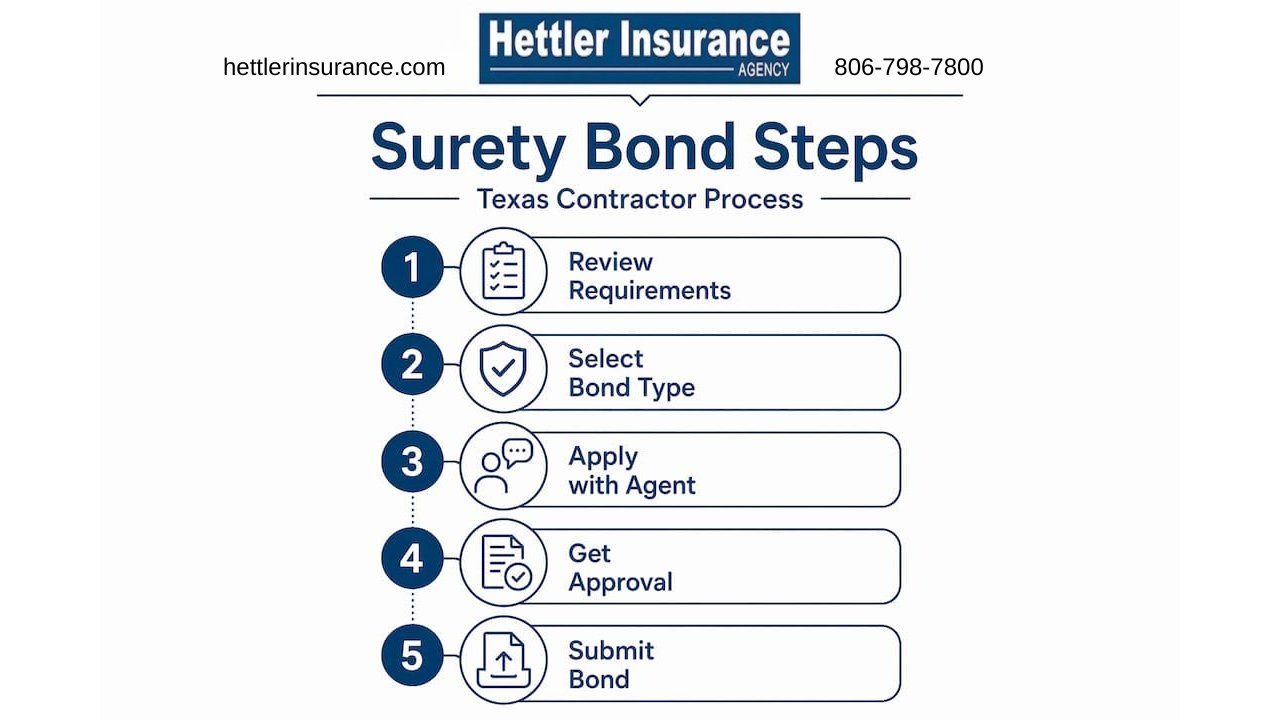
TDI recommends contacting your insurance agent promptly once the bond requirement is known, treating procurement like a project milestone. Here is that process in order:
-
- Identify the requirement early. Read every contract, permit application, and bid document for bond requirements before you commit to a project timeline.
- Consult a licensed Texas surety bond agent. Choose an agent licensed in Texas who has experience with the specific bond type you need.
- Clarify all bond details. Confirm the bond type, penal sum (the maximum amount the surety will pay), the obligee’s exact legal name, and any specific bond form requirements.
- Plan for underwriting time. Budget two to four weeks for standard bonds. Ask about fast-track options if your bond is under $100,000 and involves no hazardous materials.
- Track approval and delivery. Follow up with your agent weekly. Confirm the bond is in the obligee’s hands before your contract execution or permit deadline.
- Understand your financial exposure. Unlike insurance, a surety bond claim comes back to you. Know the penal sum and what triggers a claim.
Here is a quick comparison to clarify the financial difference between a cash deposit and a surety bond:
| Feature | Cash collateral | Surety bond |
|---|---|---|
| Upfront cost | Full bond amount in cash | Small premium (percentage of bond) |
| Capital impact | Ties up your working capital | Preserves cash flow |
| Claim recovery | Your cash is drawn down | Surety pays, then recovers from you |
| Common use | Low-risk, small obligations | Contracts, licenses, permits |
| Availability | Immediate | Requires underwriting |
.
For more on the insurance essentials for entrepreneurs beyond bonding, including general liability and workers’ compensation, review your complete coverage picture alongside your bond requirements.
Why treating surety bonds as a project milestone transforms contractor success
Most contractors think about surety bonds the way they think about a notarized form: something you get done after the real decisions are made. That approach creates predictable, avoidable problems.
Contractors should treat bond procurement like a project milestone, not as a post-bid afterthought, because underwriting takes two to four weeks and errors cost time and money. We see this pattern repeatedly: a contractor wins a bid, celebrates, signs the contract, and then discovers the bond application is going to take three weeks and requires financial documentation they have not pulled together. Now they are in breach of contract timeline before the first shovel hits the ground.
The contractors who avoid this are not more organized by nature. They made one mindset shift: they put the bond application on the project schedule, right next to “submit bid” and “award confirmation.” That one change eliminates almost every bonding delay we see.
Early engagement with a licensed Texas surety agent also means your agent can catch errors before they become expensive. A wrong obligee name caught during the application stage takes five minutes to fix. The same error discovered after contract execution can mean rebidding the bond, notifying the obligee, and potentially missing a start date.
There is also a less obvious benefit: showing a project owner that your bond is already in process when you win the award signals that you are a contractor who plans ahead. That kind of operational credibility matters, especially on repeat business and relationship-driven contracts. Get your surety bond advice before you need it, not after.
Ensure your Texas surety bond compliance with Hettler Insurance
Navigating Texas bond requirements on your own takes time you may not have. The right agent makes the process clear, fast, and accurate from the first conversation.

At Hettler Insurance Agency, our licensed Texas surety bond agents guide contractors and small business owners through every step of the Texas bonding process, from identifying the correct bond type to delivering a properly executed bond to your obligee on time. We work with over 30 top-rated, authorized carriers in Texas, which means we can match you with the right surety for your project size and credit profile. If you are also reviewing your minimum insurance for entrepreneurs, we can help you build that complete coverage picture, too. Call us before your next bid deadline. Get Hettler, Get Better.
Frequently asked questions
What exactly is a Texas surety bond?
A Texas surety bond is a three-party agreement where a surety company guarantees a contractor or business (the principal) will fulfill obligations to a third party (the obligee), as required by law, contract, or permit. It is not insurance for the principal; it is a financial guarantee to the obligee.
How long does it take to get a contract surety bond in Texas?
Obtaining a contract surety bond in Texas typically takes two to four weeks, though fast-track options may be available for bonds under $100,000 that do not involve hazardous materials. Start the process as early as possible.
Can I use any surety company for a bond in Texas?
No. The surety company must be authorized and admitted to issue bonds in Texas, and bonds exceeding $100,000 trigger additional federal certification and reinsurance requirements. An unauthorized surety makes the bond invalid.
Are surety bonds only for construction contractors in Texas?
No. Texas surety bonds cover license and permit bonds, bonded title bonds for vehicles, bail bonds, and contract bonds across many industries and legal situations, not just construction.
What happens if I provide the wrong obligee name on a surety bond?
Incorrect obligee names or bond types cause delays or outright rejection of the bond, which can jeopardize your contract execution or permit approval. Always copy the obligee name exactly from the bid or permit documents.
Recommended
About the Author
Ronald J. Hettler, CIC is a Certified Insurance Counselor (CIC) [the gold-standard credential in the independent insurance industry]. Ron has over 46 years of real-world experience in the insurance industry. He is the owner/president of Hettler Insurance Agency in Lubbock, Texas and is licensed by the Texas Department of Insurance (License #666862). (Why Trust Hettler Insurance Agency? It’s a Local independent insurance agency representing multiple carriers. Hettler Insurance Agency has established business roots going back to it’s predecessor in the late 1800’s. Local expertise in Lubbock Texas and West Texas risks. Focused on clarity before a claim occurs.) Ron and his daughter Meghan, also a CIC, lead a team that represents 30+ carriers and serves clients across Texas.
Ron specializes in helping individuals, families, and small business owners understand complex insurance concepts in clear, practical terms so they can make informed decisions about their coverage. He specializes in helping individuals and families understand coverage gaps, deductible structures, and real-world claim outcomes before a loss occurs. Ron helps you to understand how insurance policies respond in real-world claim situations.
License verification available through the Texas Department of Insurance.
Enhanced Frequently Asked Questions ?
Q1 ?: What exactly is a Texas surety bond?
Q2 ?: How long does it take to get a contract surety bond in Texas?
Q3 ?: Can I use any surety company for a bond in Texas?
Q4 ?: Are surety bonds only for construction contractors in Texas?
Q5 ?: What happens if I provide the wrong obligee name on a surety bond?
— Life Insurance Instant Quote and Apply Tool @ GetLifePolicy.com > * Quick self-service term life insurance quote. With or without medical exam.
— Call us about Auto, Home, Business, Life, or Health insurance. * Click to Call (806) 798-7800, Mon-Fri 8:30am-5pm (lunch closed Noon-1pm)
— Come see us @ our new address 4720 S Loop 289 Lubbock, TX 79414 (maps link), or get your online quote started at https://GetHettler.com