

TL;DR: summary
- Home insurance renewal involves reviewing your policy before it automatically continues each year. Verifying the declarations page and correcting any data errors prevents inaccurate premiums and coverage gaps. Starting quote comparisons 21 days before renewal helps you secure better rates and essential coverage updates. “The best independent insurance agents don’t just find you a policy. They find you the right insurance policy and then make sure it stays right as your life changes.” — Ron Hettler, CIC (certified insurance counselor), Hettler Insurance Agency
Home insurance renewal is defined as the annual process of reviewing, adjusting, and confirming your homeowners policy before it automatically continues for another term. Most policies carry a continuous renewal clause that keeps coverage active without any action from you. That sounds convenient, but it also means you can silently overpay, carry outdated limits, or miss coverage gaps that only surface when you file a claim. This home insurance renewal process guide walks Texas homeowners through every step, from reading your renewal notice to locking in better rates, so you stay protected and in control.
Table of Contents
- Key Takeaways
- What documents do you need for your home insurance renewal?
- How do you evaluate your existing coverage before renewal?
- When is the best time to compare quotes and find better rates?
- How do you handle policy changes and finalize your renewal?
- What I have learned from years of Texas insurance renewal seasons
- How Hettler Insurance Agency helps Texas homeowners at renewal
- Frequently Asked Questions
Key Takeaways
The most effective approach to home insurance renewal is to review your declarations page, update your coverage for current rebuild costs, and shop for quotes exactly 21 days before your expiration date.
| Point | Details |
|---|---|
| Review your declarations page | Check home details, coverage limits, deductibles, and endorsements for errors every year. |
| Insure to rebuild cost | Rebuild cost runs lower than market value; match your dwelling limit to actual construction costs. |
| Shop at 21 days out | Starting quote comparisons 21 days before renewal delivers the best pricing from carriers. |
| Report home improvements | Discounts for new roofs and security systems are not automatic; you must disclose upgrades. |
| Cancel in writing | Always send a formal email cancellation and get written confirmation to avoid auto-renewal disputes. |
.
What documents do you need for your home insurance renewal?
The declarations page is the single most important document in your renewal review. It summarizes your coverage limits, deductibles, endorsements, exclusions, and the key property details your insurer uses to calculate your premium. The Texas Department of Insurance recommends verifying declarations page data including your home’s age, square footage, construction type, and roof age, because errors in any of these fields can trigger incorrect premiums or outright claim denials.
Your renewal notice arrives 30–60 days before your policy expiration date. Read it alongside your declarations page, not instead of it. Insurers sometimes update coverage terms, raise deductibles, or add exclusions at renewal without a phone call to you.
Check these items on your declarations page every year:
- Home details: Age of the structure, square footage, construction type (frame, masonry, or mixed), and roof age
- Coverage limits: Dwelling coverage (Coverage A), personal property (Coverage C), loss of use (Coverage D), and liability (Coverage E)
- Deductibles: Separate wind and hail deductibles are common in Texas and can be significantly higher than your standard deductible
- Endorsements and exclusions: Scheduled personal property riders, water backup coverage, or any exclusions added since your last renewal
- Premium breakdown: Understand what you are paying for each coverage component
Pro Tip: Take a photo of your declarations page and save it to cloud storage. If your home is damaged in a storm, you will have instant access to your policy details even if your paper files are destroyed.
Inaccurate property data is more common than most homeowners realize. If your insurer has the wrong square footage or lists an older roof age than your actual roof, your premium calculation is wrong from the start. Call your agent to correct any errors before the renewal date, not after a loss.

How do you evaluate your existing coverage before renewal?
Coverage that was adequate three years ago may fall short today. Rising construction costs and severe weather events continue to push rebuilding expenses higher, meaning your dwelling limit needs regular adjustment to keep pace.
The most common mistake Texas homeowners make is confusing market value with rebuild cost. Rebuild cost runs 20–40% lower than market value on average because market value includes your land and location premium, neither of which burns down in a fire. Insuring to rebuild cost, not market value, gives you accurate protection without overpaying.
Follow these steps to evaluate your coverage before signing off on renewal:
- Calculate your current rebuild cost. Use a replacement cost estimator or ask your agent to run one. Factor in current labor rates and material costs in your area, both of which have increased sharply in West Texas over the past few years.
- Inventory your personal property. Walk through each room and document high-value items. Most policies cap single-item coverage on jewelry, electronics, and collectibles, so valuable possessions need scheduled endorsements or you risk a denied claim.
- Report home improvements. A new roof, updated electrical panel, security system, or major renovation changes your risk profile. Discounts for home improvements are not applied automatically. You must disclose upgrades to your insurer. Read more about which home renovation investments qualify for coverage adjustments and discounts.
- Review your liability limits. Standard policies carry $100,000 in liability coverage. If you have a pool, a trampoline, or frequent guests, consider increasing that limit or adding an umbrella policy.
- Check for coverage gaps. Flood damage is not covered under a standard homeowners policy. In Texas, where heavy rain events are common, a separate flood policy through the National Flood Insurance Program (NFIP) deserves serious consideration.
Pro Tip: Set a calendar reminder 60 days before your renewal date each year. That gives you time to gather receipts for any improvements, update your home inventory, and request quotes without rushing.
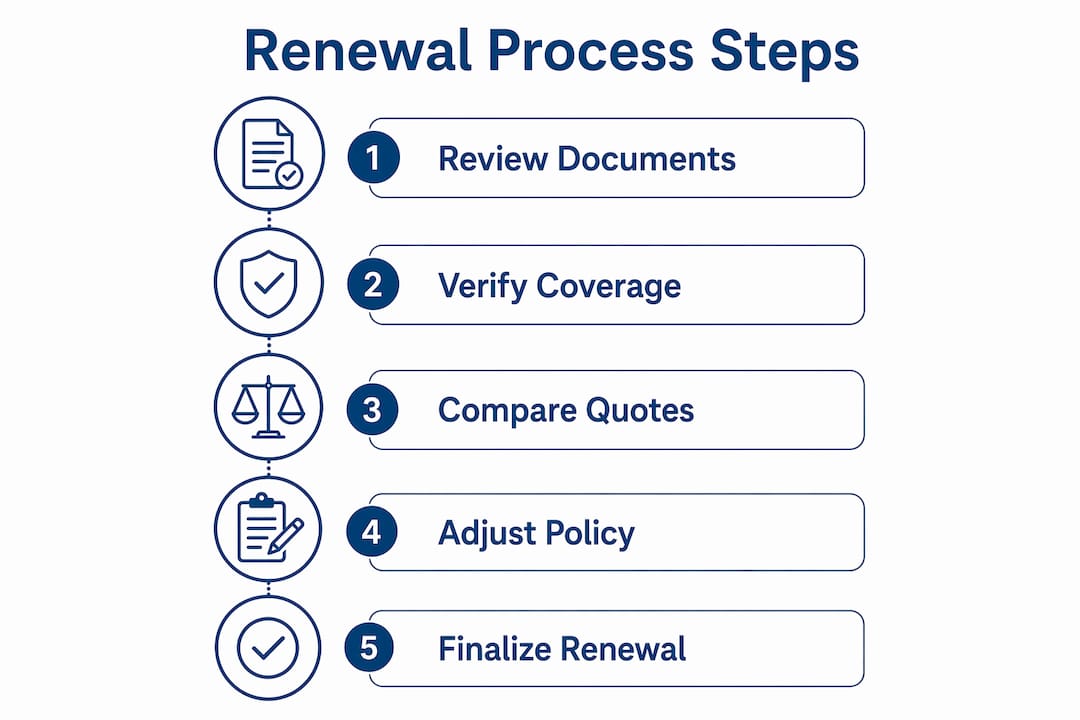
Annual renewal is a mandatory review window for catching gaps where policy values lag behind real rebuilding costs. Skipping this review does not mean nothing changed. It means you will not know what changed until a claim reveals it.
When is the best time to compare quotes and find better rates?
Timing your quote search is not obvious, but it matters financially. The best time to compare home insurance quotes is 21 days before your renewal date. Starting earlier or later than that window often results in higher pricing because of how carrier pricing algorithms treat new applicants versus near-expiration shoppers.
Here is how to use the renewal window to your advantage:
- Request a retention discount from your current carrier. Insurers prefer keeping existing customers over acquiring new ones. Call your agent and ask directly whether a loyalty or retention discount applies to your renewal.
- Get at least three quotes. Use your current declarations page as the baseline so you are comparing identical coverage levels across carriers, not just premium prices.
- Bundle home and auto. Bundling home and auto insurance with the same carrier is one of the most consistent ways to reduce your total premium in Texas.
- Set digital reminders. Use your phone calendar or a renewal tracking app to alert you 60 days and 21 days before expiration. Missing the window costs money.
- Ask about new discounts. Carriers add and modify discount programs regularly. Ask specifically about discounts for impact-resistant roofing, monitored security systems, and claims-free history.
Premiums can increase at renewal even when you have filed no claims. Weather risks and construction costs drive carrier expenses up across entire regions, and those costs pass through to policyholders. Understanding why your homeowners policy increases helps you separate legitimate rate adjustments from overcharges worth challenging.
How do you handle policy changes and finalize your renewal?
Automatic renewal protects you from accidental lapses, but it also means your old policy continues if you do nothing, even if you found a better option. Taking deliberate action at renewal prevents costly mistakes.
Follow this process to finalize your renewal correctly:
- Confirm your renewal decision in writing. If you are staying with your current carrier, confirm receipt of the renewal notice and verify that all policy details are accurate. Do not assume silence equals acceptance.
- Send a formal cancellation notice if switching. Formal cancellation notices sent via email create a digital timestamp that prevents auto-renewal disputes and erroneous escrow charges. Never rely on a verbal notice or a mailed letter alone.
- Obtain your new policy binder before canceling the old one. A policy binder is written proof that your new coverage is active. Submit it to your mortgage servicer immediately so they can redirect escrow payments to the new carrier.
- Notify your mortgage lender. If your homeowners insurance is escrowed, your lender pays the premium from your escrow account. Switching carriers without notifying them can result in your lender purchasing forced-place insurance on your behalf, which is far more expensive and covers only the lender’s interest, not yours.
- Verify the cancellation confirmation. Follow up with your old carrier to confirm the policy was canceled on the correct date. Keep that confirmation on file for at least one year.
Stopping premium payments without sending a formal cancellation notice does not cancel your policy. Your insurer can report the lapse to your credit file, charge you for the unpaid period, or both. Always cancel in writing and get written confirmation back.
A non-renewal notice from your carrier is different from a cancellation. Non-renewal means your insurer has decided not to offer you another term. Carriers must provide 30–60 days notice of non-renewal before your policy expires under Texas state law. If you receive one, start shopping immediately. Waiting until the last week leaves you with fewer options and higher prices.
What I have learned from years of Texas insurance renewal seasons
Every year, I see the same pattern. A homeowner gets a renewal notice, glances at the premium, and either ignores it or pays it without reading the details. Then a hail storm hits, or a pipe bursts, and the claim reveals a coverage gap that has been sitting there quietly for three years.
The most expensive mistake is not the premium increase. It is the underinsurance that builds up silently when homeowners skip the annual review. Rebuild costs in West Texas have climbed steadily, and a dwelling limit that was accurate in 2021 can be short by tens of thousands of dollars today. That gap comes out of your pocket after a total loss, not your insurer’s.
The second mistake I see constantly is homeowners who complete a renovation, install a new roof, or add a security system and never tell their insurer. Those upgrades can reduce your premium and improve your coverage accuracy. Policyholders miss discounts because they assume the insurer already knows. The insurer does not know unless you tell them.
My practical advice: treat renewal like an annual financial checkup. Pull your declarations page, compare it to what your home looks like today, and call your agent with any changes. That one call, made 30–60 days before expiration, is the difference between a policy that protects you and one that looks like it does on paper. For a deeper look at avoiding insurance gaps, the process is the same whether you are renewing or buying for the first time.
— Ron Hettler, CIC (certified insurance counselor), Hettler Insurance Agency
How Hettler Insurance Agency helps Texas homeowners at renewal
Texas homeowners face renewal conditions that are unlike most of the country. Hail, wind, and rising construction costs make accurate coverage more critical here than almost anywhere else.

Hettler Insurance has served Texas homeowners since 1992, representing over 30 top-rated carriers so you get real options, not a single take-it-or-leave-it quote. Ron Hettler and his daughter Meghan are both Certified Insurance Counselors (CIC), the gold standard credential in the industry. The team reviews your current policy, identifies gaps or overcharges, and shops the market on your behalf at no extra fee. Whether you need a policy review or a full coverage comparison before your next renewal date, Hettler Insurance Agency is ready to help. Contact the agency today to get a personalized quote built around your home, your location, and your budget.
Recommended
About the Author
Ronald J. Hettler, CIC is a Certified Insurance Counselor (CIC) [the gold-standard credential in the independent insurance industry]. Ron has over 46 years of real-world experience in the insurance industry. He is the owner/president of Hettler Insurance Agency in Lubbock, Texas and is licensed by the Texas Department of Insurance (License #666862). (Why Trust Hettler Insurance Agency? It’s a Local independent insurance agency representing multiple carriers. Hettler Insurance Agency has established business roots going back to it’s predecessor in the late 1800’s. Local expertise in Lubbock Texas and West Texas risks. Focused on clarity before a claim occurs.) Ron and his daughter Meghan, also a CIC, lead a team that represents 30+ carriers and serves clients across Texas.
Ron specializes in helping individuals, families, and small business owners understand complex insurance concepts in clear, practical terms so they can make informed decisions about their coverage. He specializes in helping individuals and families understand coverage gaps, deductible structures, and real-world claim outcomes before a loss occurs. Ron helps you to understand how insurance policies respond in real-world claim situations.
License verification available through the Texas Department of Insurance.
Frequently Asked Questions ?
Q1 ?: Does home insurance automatically renew every year?
Q2 ?: What is the best time to shop for home insurance quotes?
Q3 ?: Why did my home insurance premium go up at renewal?
Q4 ?: What happens if I stop paying without canceling my policy?
Q5 ?: Do I need to tell my insurer about home improvements?
— Life Insurance Instant Quote and Apply Tool @ GetLifePolicy.com > * Quick self-service term life insurance quote. With or without medical exam.
— Call us about Auto, Home, Business, Life, or Health insurance. * Click to Call (806) 798-7800, Mon-Fri 8:30am-5pm (lunch closed Noon-1pm)
— Come see us @ our new address 4720 S Loop 289 Lubbock, TX 79414 (maps link), or get your online quote started at https://GetHettler.com