
TL;DR:
- Texas homeowners face rising premiums due to hurricane, flooding, hail, wildfire, and financial pressures from reinsurance and construction costs. Conducting a policy review, verifying flood coverage, and implementing mitigation measures can help manage these risks. Market factors and natural hazards are layered and require frequent reevaluation to ensure adequate protection. “The best independent insurance agents don’t just find you a policy. They find you the right insurance policy and then make sure it stays right as your life changes.” — Ron Hettler, CIC (certified insurance counselor), Hettler Insurance Agency
Texas homeowners face a concentrated set of risk factors that explain most of the premium increases hitting policies right now: hurricane and storm surge on the Gulf Coast, inland flooding from tropical rainfall, hail and tornadoes across the North and Central corridor, wildfire in the west, and statewide financial pressures from reinsurance repricing and construction-cost inflation. The single most important action you can take today is to pull out your current policy, check your wind/hail deductible percentage, and confirm whether you have a separate flood policy. If you can’t answer both questions in 30 seconds, a policy review is overdue. Hettler Insurance Agency is one of the few family-owned agencies in Texas where both principals carry the high level certification of CIC (certified insurance counselor). Fewer than 2% of licensed insurance professionals in the U.S. have earned the CIC designation.
Three numbers that frame the problem:
- Texas home insurance premiums run well above national averages.
- Texas recorded 878 hail events of 1 inch or larger in 2024 alone, more than any other state.
- Texas’s climate-risk score for single-family homes averages 61, nearly double the U.S. average of 33.
Immediate actions to take now:
- Check your wind/hail deductible: is it a flat dollar amount or a percentage of your home’s insured value? A 2% deductible on a $400,000 home means $8,000 out of pocket before coverage kicks in.
- Verify flood coverage: standard homeowners policies exclude flood damage. Confirm whether you have a National Flood Insurance Program (NFIP) policy or private flood coverage.
- Photograph your home, roof, HVAC, and major appliances now and store copies in the cloud. This documentation speeds claims dramatically.
- Contact an independent agent for a full policy review, especially if you haven’t compared carriers in the past two years.
Table of Contents
- Why are Texas homeowners paying so much more for insurance?
- Which natural hazards hit Texas homeowners hardest, and where?
- What does standard homeowners insurance actually cover in Texas?
- How do insurers decide what you pay for Texas homeowners coverage?
- What mitigation steps actually reduce your Texas homeowners insurance costs?
- What should you do when Texas home insurance becomes unaffordable or hard to find?
- What happens after major storm damage, and how long does a claim take?
- How Hettler Insurance helps Texas homeowners navigate these risks
- Key Takeaways
- Why individualized reviews matter more than any single policy rule
- Get a free policy review from Hettler Insurance
- Authoritative sources for Texas homeowners insurance
Key Takeaways
Texas homeowners face a concentrated set of natural and financial risk factors that make regular policy reviews and proactive mitigation the most cost-effective protection strategy available.
| Point | Details |
|---|---|
| Hail is the dominant loss driver | Texas recorded 878 hail events of 1 inch or larger in 2024, more than any other state. |
| Flood is excluded from standard policies | Standard homeowners policies do not cover flood; NFIP or private flood insurance must be purchased separately. |
| Roof age and deductible structure matter most | Percentage-based wind/hail deductibles and ACV roof settlements are the two most common sources of claim shortfalls. |
| Hettlerinsurance provides multi-carrier access | Hettlerinsurance compares 30-plus carriers statewide and provides policy reviews at no extra fee to Texas homeowners. |
Why are Texas homeowners paying so much more for insurance?
Reinsurance price increases and replacement-cost inflation are the two primary statewide drivers behind rising Texas premiums, and both operate independently of your personal claims history. Even a homeowner who has never filed a claim can see double-digit premium increases because their insurer’s own costs have climbed.
Here’s how the chain works: when catastrophic storms hit Texas, insurers pay out large claims. To protect themselves from those losses, insurers buy reinsurance. When reinsurance prices rise after a bad storm cycle, insurers pass those costs to consumers through higher premiums. TDI consumer guidance confirms that insurers set prices based on future claim cost expectations, and reinsurance costs are a direct input into that calculation.
Construction costs matter because your policy’s job is to rebuild your home, not just repair it. When lumber, labor, and materials cost more, the replacement cost of your home rises, and so does the premium needed to cover it. The Dallas Fed’s analysis of Texas homeowners insurance confirms this dynamic is structural, not temporary.

Two other factors compound the problem: insurer market exits and the legal environment. Some carriers have reduced their Texas exposure after consecutive years of underwriting losses. The Texas Department of Insurance (TDI) reported a combined ratio of 105.1% for homeowners insurance in 2023, meaning insurers paid out $1.05 for every $1.00 collected in premiums. That kind of sustained underwriting loss accelerates market repricing. For more on how these pressures have built over time, the history of Texas home insurance rate increases is worth reading before your next renewal.
Which natural hazards hit Texas homeowners hardest, and where?
Texas sits in three distinct catastrophic zones: the Gulf Coast faces hurricane and storm surge, the North and Central corridor bears the brunt of hail and tornadoes, and West Texas and the Hill Country carry wildfire and severe wind exposure. Inland flooding cuts across all three zones and is the most underestimated hazard because it strikes well outside FEMA-mapped flood zones.
Regional hazard breakdown
- Gulf Coast (Houston, Galveston, Corpus Christi, Beaumont): Hurricane wind, storm surge, and coastal flooding. Standard homeowners policies in many coastal counties exclude wind and hail; the Texas Windstorm Insurance Association (TWIA) fills that gap for eligible residents. Flood insurance is a separate requirement.
- North and Central Texas (Dallas-Fort Worth, San Antonio, Waco, Lubbock): Hail and tornadoes dominate. The DFW metro regularly ranks among the most hail-damaged markets in the country. Lubbock and the South Plains see frequent severe convective storms with large hail.
- West Texas and Hill Country (Midland-Odessa, Kerrville, Fredericksburg): Wildfire risk is concentrated here. The Insurance Information Institute (Triple-I) reported 244,617 Texas homes at risk for extreme wildfire in 2024. Drought conditions and wind create rapid-spread fire conditions.
- Inland flood zones (Hill Country rivers, Houston suburbs, Central Texas): Tropical systems that weaken inland still dump catastrophic rainfall. More than half of the homes flooded by Hurricane Harvey were outside designated flood zones, according to TDI’s home insurance guide.
| Hazard | Texas 2024 Data | Primary Affected Regions |
|---|---|---|
| Hail events (≥1 inch) | 878 events | Statewide; highest in North/Central |
| Homes at extreme wildfire risk | 244,617 | West Texas, Hill Country |
| Climate-risk score (single-family) | 61 (U.S. avg: 33) | Statewide |
| Hurricane/coastal flood exposure | Gulf Coast counties | Galveston, Nueces, Jefferson |
The July 2025 Hill Country floods and Hurricane Harvey’s inland rainfall are the clearest recent reminders that Texas flood risk does not stop at the coast. Severe convective storms, tropical remnants, and the 2021 winter freeze have each produced major insured losses, and the Triple-I Texas brief documents how these compounding hazards interact to drive aggregate claim volumes higher year after year.
What does standard homeowners insurance actually cover in Texas?
Standard homeowners policies cover fire, theft, windstorm, and hail, but they exclude flood damage entirely. That exclusion catches many Texas homeowners off guard, particularly after inland flooding events where they assumed their policy would respond.
Flood damage requires a separate policy, either through the National Flood Insurance Program (NFIP) or a private flood insurer. The NFIP has a 30-day waiting period for voluntary participants, so purchasing coverage after a storm warning is too late. If your home is in a federally designated high-risk flood zone and financed with a VA or FHA loan, flood insurance is mandatory. But given Harvey’s track record, even homes in moderate or low-risk zones carry real exposure.
Replacement cost value (RCV) vs. actual cash value (ACV): This distinction directly affects your out-of-pocket cost after a claim. RCV pays what it costs to rebuild or replace a damaged item with a new equivalent. ACV deducts depreciation first. On a 15-year-old roof, the difference can be tens of thousands of dollars. Many Texas carriers have shifted older roofs to ACV settlement, meaning you absorb the depreciation gap.
Wind/hail deductibles: Most Texas policies carry a separate, percentage-based wind/hail deductible rather than a flat dollar deductible. Common ranges run from 1% to 5% of the home’s insured value. On a $350,000 home, a 2% deductible equals $7,000 before your insurer pays anything on a hail claim. Coastal counties often carry separate hurricane deductibles that can run higher. The InsuranceClarify overview of Texas home insurance notes that carriers have tightened these deductibles significantly after large hail loss years.
The 80% coinsurance rule: If your home is insured for less than 80% of its full replacement cost, your insurer can reduce claim payments proportionally. With construction costs rising, homes insured at values set two or three years ago may already be underinsured without the homeowner realizing it.
Pro Tip: Pull your declarations page and locate three items: the wind/hail deductible percentage, whether your roof is settled at RCV or ACV, and your home’s current insured replacement value. If any of these are unclear, call your agent before your next renewal, not after a storm.
How do insurers decide what you pay for Texas homeowners insurance coverage?
Location is the single most influential underwriting variable. Your ZIP code tells an insurer your proximity to the coast, your historical hail frequency, your wildfire risk score, and your local fire protection rating. Two homes with identical construction can carry materially different premiums simply because of their county.
The key underwriting variables that affect your premium:
- Roof age and material: Carriers increasingly restrict coverage or apply ACV settlement for roofs older than 15–20 years. A Class 4 impact-resistant shingle roof can qualify for meaningful premium discounts with many carriers.
- Home age and construction type: Older homes often have outdated electrical, plumbing, or framing that raises replacement cost and loss probability. Brick or masonry construction typically fares better in wind events than wood frame.
- Replacement cost: The insured value must reflect current construction costs, not the purchase price or tax-assessed value. Underinsurance is a growing problem as build costs have risen.
- Claims history: Prior claims, especially water or wind claims, can trigger surcharges or non-renewal. A CLUE (Comprehensive Loss Underwriting Exchange) report shows your five-year claims history.
- Credit-based insurance score: Texas allows insurers to use credit-based insurance scores as a rating factor. Improving your credit profile can reduce your premium over time.
- Mitigation features: Storm shutters, impact-rated windows, reinforced garage doors, and elevation above base flood level each reduce expected loss and can earn underwriting credits.
- Local building costs: Labor and material costs vary by metro. Rebuilding in Austin costs more per square foot than rebuilding in a rural county, and premiums reflect that.
Statewide market factors, including reinsurance costs and carrier appetite, can push your premium higher even when your individual risk profile hasn’t changed. Understanding how Texas insurance premiums are calculated helps you separate what you can control from what you can’t.
What mitigation steps actually reduce your Texas homeowners insurance costs?
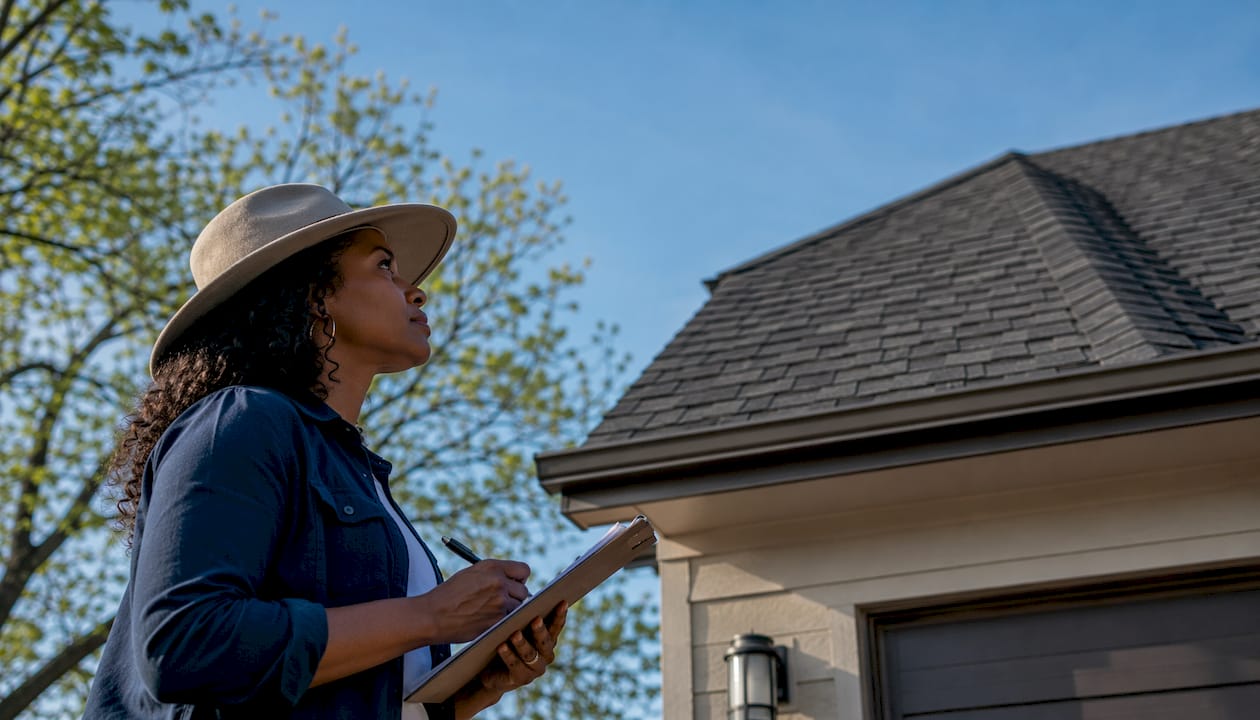
The highest-return mitigation investment for most Texas homeowners is a roof upgrade to Class 4 impact-resistant shingles. Hail is the dominant loss driver in the state, and carriers reward impact-resistant roofing with premium discounts that can offset a meaningful portion of the upgrade cost over time.
Priority mitigation actions, ranked by typical insurance impact:
- Upgrade to Class 4 impact-resistant shingles. Many carriers offer material premium discounts for Class 4 roofs. Get documentation from your contractor confirming the UL 2218 Class 4 rating and submit it to your insurer before renewal.
- Install storm shutters or impact-rated windows. Especially valuable in coastal and high-wind counties. These reduce both wind damage probability and potential premium.
- Reinforce your garage door. Garage doors are one of the most common failure points in high-wind events. Bracing kits are relatively inexpensive and some carriers credit them.
- Secure loose exterior items. Outdoor furniture, equipment, and unsecured structures become projectiles in high-wind events and can cause additional damage.
- Create defensible space if you’re in a wildland-urban interface area. Clear vegetation within 30 feet of your home, use fire-resistant landscaping, and remove debris from gutters and roof valleys.
- Elevate mechanical systems if you’re in a flood-prone area. Moving HVAC, water heaters, and electrical panels above base flood elevation reduces flood loss severity and can lower NFIP premiums.
The Texas Real Estate Research Center notes that hip roofs perform better than gable roofs in wind events, and that eave design and roof-to-wall connections are structural factors insurers and engineers both evaluate. If you’re building or doing a major renovation, these details matter.
Pro Tip: Document every mitigation upgrade with dated photos, contractor invoices, and product specification sheets showing ratings. Submit this package to your agent before your renewal date, not after, so underwriting credits can be applied to the incoming policy term.
What should you do when Texas home insurance becomes unaffordable or hard to find?
Start with an independent agent who can access multiple carriers. That single step gives you more options than calling any one insurance company directly, and it costs you nothing extra in fees.
Step-by-step actions when coverage is difficult or expensive:
- Get multiple quotes through an independent agent. An agent representing 30 or more carriers can identify which insurers are actively writing in your area and which are pulling back. Carrier appetite changes frequently in Texas.
- Request a full policy review. Ask your agent to walk through your deductibles, coverage limits, roof settlement method, and flood exclusion. Many homeowners discover gaps they didn’t know existed.
- Ask for underwriting notes. If you’ve been non-renewed or surcharged, ask the carrier for the specific reason. Sometimes a mitigation repair or documentation update resolves the issue.
- Apply for mitigation credits before shopping. Completing a roof upgrade or installing storm shutters before you request new quotes can change which carriers will write your policy and at what price.
- Check TWIA eligibility if you’re on the Texas coast. The Texas Windstorm Insurance Association sells wind and hail coverage for coastal residents who have been declined by private carriers. You apply through a licensed agent. Note that TWIA won’t issue a policy once a hurricane is already in the Gulf of Mexico, so don’t wait.
- Consider the Texas FAIR Plan as a last resort. The Texas FAIR Plan Association provides basic coverage for homeowners who have been turned down by at least two insurance companies. Coverage is limited compared to standard policies, and you must have been formally declined, not just quoted a high price.
- Contact TDI for consumer guidance. The Texas Department of Insurance operates a Help Line at 800-252-3439 and handles consumer complaints, rate questions, and carrier disputes.
One warning: reducing coverage to lower your premium is a short-term fix with serious long-term consequences. Being underinsured after a major storm can leave you with a gap between your claim payout and your actual rebuild cost that runs into six figures. Paying a higher premium is almost always less costly than absorbing that gap yourself. Understanding the difference between working with an independent agent vs. a single carrier can clarify why multi-carrier access matters when the market tightens.
What happens after major storm damage, and how long does a claim take?
File your claim immediately and document everything before touching a single damaged item. That sequence, file first, document second, repair third, is the single most important discipline after a Texas catastrophe loss.
Claim timeline from damage to payment:
- Day 1 (immediately after the event): Confirm everyone is safe. Call your insurer or agent to open the claim. Take photos and video of all damage on multiple devices. Make only emergency temporary repairs (tarping a roof, boarding windows) to prevent further loss, and keep all receipts.
- Days 2–7: Your insurer assigns an adjuster. In a major catastrophe event like a widespread hail storm or hurricane, adjuster scheduling can take longer due to claim volume. Follow up if you haven’t heard within 48–72 hours.
- Days 7–21: The adjuster inspects the property and prepares an estimate. Review it carefully. If the estimate seems low, you have the right to request a re-inspection or hire a public adjuster.
- Days 14–30: For straightforward claims, initial payment (often at ACV) arrives. If your policy provides RCV, the remaining depreciation holdback is released once repairs are documented and underway.
- Mortgage company involvement: If you have a mortgage, the claim check is typically made out to both you and your lender. TDI’s disaster claims FAQ notes that your mortgage company must contact you within 10 days of receiving the check and release funds within 10 days of you meeting their requirements.
Document checklist to prepare before any storm season:
- Dated photos of every room, the roof, exterior, HVAC, and major appliances
- Serial numbers and purchase receipts for electronics and appliances
- Contractor invoices for any recent upgrades or repairs
- A copy of your policy declarations page stored offsite or in the cloud
Pro Tip: Photograph your home on at least two devices and immediately upload to cloud storage. If your phone is lost or damaged in the same storm that damages your home, you still have your pre-loss documentation intact.
How Hettler Insurance Agency helps Texas homeowners navigate these risks
An independent agency’s core value in a market like Texas is access and advocacy. Hettler Insurance compares coverage across 30-plus carriers, which means the team can identify which insurers are actively writing in your county, which are applying the most favorable roof-age rules, and which offer the best combination of deductible structure and premium for your specific home.
Ron Hettler founded the agency in 1992 and holds the Certified Insurance Counselor (CIC) designation, the gold standard credential in the industry. His daughter Meghan Harris is also CIC credentialed, making Hettler Insurance Agency one of the few family-owned agencies in Texas where both principals carry that level of CIC certification. Less than 2% of licensed insurance professionals in the U.S. have earned the CIC designation. (The Risk & Insurance Education Alliance reports just over 30,000 CIC designees nationwide, and consider that the National Association of Insurance Commissioners (NAIC) reports more than 2 million individuals licensed to provide insurance services in the United States.) The agency holds an A+ BBB rating and a 4.5-star Google rating built over more than three decades of serving Texans from Lubbock to Dallas to Midland-Odessa.
Specific services that matter for Texas homeowners:
- Policy review: A line-by-line review of your current policy to identify wind/hail deductible exposure, flood gaps, roof settlement method, and replacement cost accuracy.
- Multi-carrier quoting: Comparing options across 30-plus carriers to find the right fit at the best available price, at no extra fee to you.
- Mitigation guidance: Practical advice on which upgrades are most likely to earn underwriting credits with specific carriers.
- Claims advocacy: If a claim is disputed or an estimate seems low, the agency works on your behalf to communicate with the carrier.
Pro Tip: Bring your most recent contractor invoices, roof inspection reports, or photos of completed upgrades to your renewal meeting. That documentation can be submitted directly to underwriting and may result in credits applied to your current term.
Regular policy reviews for Texas homeowners are especially important as construction costs and carrier appetites shift. A policy that was well-structured two years ago may have coverage gaps today.
Why individualized reviews matter more than any single policy rule
The conventional wisdom on Texas home insurance tends to focus on one hazard at a time: “get flood insurance if you’re near the coast” or “watch out for hail in DFW.” That framing misses the real problem. Texas homeowners face layered, overlapping risks that interact in ways a single-peril checklist doesn’t capture. A homeowner in the Hill Country may not think of themselves as a flood risk, yet tropical remnants have repeatedly produced catastrophic inland flooding in counties with almost no NFIP enrollment. A homeowner in Lubbock may not think of wildfire as their concern, but a West Texas drought year combined with high winds changes that calculation fast.
What I’ve seen consistently is that the gap between what a homeowner thinks their policy covers and what it actually covers tends to be widest for the risks they consider least likely. The wind/hail deductible percentage surprises people. The ACV roof settlement surprises people. The flood exclusion surprises people, even after Harvey. A policy review isn’t a sales exercise. It’s a structured way to close those gaps before a storm makes them expensive.
The other underappreciated point is that carrier rules change. A carrier that offered RCV on a 20-year-old roof two years ago may now require ACV on anything over 15 years. An insurer that was competitive in your ZIP code last renewal may have quietly tightened their underwriting criteria. Shopping annually, or at minimum every two years, isn’t paranoia. In the current Texas market, it’s basic due diligence.
Get a free policy review from Hettler Insurance Agency in Lubbock Texas
Texas homeowners who haven’t compared carriers in the past two years are likely leaving money on the table or carrying coverage gaps they don’t know about. Hettler Insurance gives you access to 30-plus top-rated carriers statewide, with no extra fee for the comparison. Ron Hettler and Meghan Harris, both CIC credentialed, have been helping Texans navigate this market since 1992.

The process is straightforward: bring your current declarations page, any recent contractor invoices or roof inspection reports, and a few minutes. The team will review your deductibles, flood coverage status, roof settlement method, and replacement cost accuracy, then compare your current policy against what’s available in the market today.
Call the Lubbock office directly, stop by in person, or start with a policy review request online. If your premium has jumped at renewal or you’ve been non-renewed, don’t wait. The Texas market moves fast, and TWIA and FAIR Plan options have eligibility requirements that take time to navigate. Get Better, Get Hettler.
Authoritative sources for Texas homeowners insurance
These are the primary sources used throughout this article. Each one serves a specific purpose for homeowners doing their own research.
- Texas Department of Insurance (TDI): Consumer guidance on how premiums are calculated, carrier complaint filing, and the TDI Help Line (800-252-3439). Start here for any dispute with your insurer.
- TDI Home Insurance Guide: Plain-language explanation of what standard policies cover and exclude, including the flood exclusion and TWIA eligibility rules.
- TDI Homeowners Market Overview: Loss ratio and combined ratio data showing the financial health of the Texas homeowners market by year.
- TDI Disaster Claims FAQ: Step-by-step guidance on filing claims after a storm, including mortgage company timelines and ACV vs. RCV payment mechanics.
- Federal Reserve Bank of Dallas: Economic analysis of why Texas premiums have risen faster than the national average, including reinsurance and construction-cost data.
- Insurance Information Institute (Triple-I): State-level data on hail events, wildfire exposure, and compounding hazards. Best source for claim frequency and severity statistics.
- National Flood Insurance Program (NFIP) via FEMA: Flood zone designations, enrollment requirements, and the 30-day waiting period rule. Use this to check your flood zone and understand NFIP coverage limits.
- Texas Windstorm Insurance Association (TWIA): Wind and hail coverage for coastal residents declined by private carriers. Eligibility and enrollment details are available through any licensed Texas agent or at twia.org.
- Texas FAIR Plan Association: Last-resort coverage for homeowners turned down by at least two private carriers. Coverage is more limited than standard policies; use only after exhausting private market options.
Recommended
About the Author
Ronald J. Hettler, CIC is a Certified Insurance Counselor (CIC) [the gold-standard credential in the independent insurance industry]. Ron has over 46 years of real-world experience in the insurance industry. He is the owner/president of Hettler Insurance Agency in Lubbock, Texas and is licensed by the Texas Department of Insurance (License #666862). (Why Trust Hettler Insurance Agency? It’s a Local independent insurance agency representing multiple carriers. Hettler Insurance Agency has established business roots going back to it’s predecessor in the late 1800’s. Local expertise in Lubbock Texas and West Texas risks. Focused on clarity before a claim occurs.) Ron and his daughter Meghan, also a CIC, lead a team that represents 30+ carriers and serves clients across Texas.
Ron specializes in helping individuals, families, and small business owners understand complex insurance concepts in clear, practical terms so they can make informed decisions about their coverage. He specializes in helping individuals and families understand coverage gaps, deductible structures, and real-world claim outcomes before a loss occurs. Ron helps you to understand how insurance policies respond in real-world claim situations.
License verification available through the Texas Department of Insurance.
Frequently Asked Questions ?
Q1 ?: Why are Texas homeowners insurance premiums rising even if I have never filed a claim?
Q2 ?: How does a percentage-based wind/hail deductible work in Texas?
Q3 ?: Does a standard Texas homeowners policy cover flood damage?
Q4 ?: What is the difference between RCV and ACV roof settlement?
Q5 ?: What mitigation steps can lower my Texas homeowners insurance costs?
— Life Insurance Instant Quote and Apply Tool @ GetLifePolicy.com > * Quick self-service term life insurance quote. With or without medical exam.
— Call us about Auto, Home, Business, Life, or Health insurance. * Click to Call (806) 798-7800, Mon-Fri 8:30am-5pm (lunch closed Noon-1pm)
— Come see us @ our new address 4720 S Loop 289 Lubbock, TX 79414 (maps link), or get your online quote started at https://GetHettler.com