
TL;DR summary:
- The fastest way to file an auto insurance claim is to call your insurer’s 24/7 hotline, open their mobile app, or log into their portal as soon as you’re safely away from the scene — you do NOT have to wait until the next business day, and you do NOT need to know who was at fault before you call. Have your policy number, accident date/time/location, all other driver info, a factual (non-speculative) description, scene photos, and the police report number ready. Prompt reporting triggers the investigation, protects your right to compensation, and gets your payout moving.
The fastest way to file an auto insurance claim is to call your insurer’s 24/7 claims hotline, open their mobile app, or log into their online portal as soon as you are safely away from the accident scene. You do not need to wait until the next business day, and you do not need to know who was at fault before you call. What matters is prompt reporting, which triggers the investigation and gets your payout moving.
Here is what to have ready when you make that first contact. Filing promptly also protects you from missing policy deadlines, which vary by carrier and can affect your right to compensation.:
- Your policy number and the name of your insurer
- Date, time, and location of the accident
- Names, contact details, and insurance information for all other drivers involved
- A brief description of what happened, without speculating on fault
- Photos of the damage and any witness contact information you collected at the scene
- The police report number, if officers responded
Table of Contents
- TL;DR Summary
- Key Takeaways
- How to file an auto insurance claim step by step
- How does your policy affect what you can claim?
- How to work effectively with your insurance adjuster
- Repairing your vehicle and using rental car coverage
- Frequently Asked Questions
Key Takeaways
Filing an auto insurance claim correctly requires prompt reporting, thorough documentation, and active cooperation with your adjuster from the accident scene through final repair authorization.
| Point | Details |
|---|---|
| Report immediately | Contact your insurer by hotline, app, or portal as soon as you are safely away from the scene. |
| Document everything | Collect photos, witness contacts, police report numbers, and all party information before leaving the scene. |
| Know your deductible | For minor damage near your deductible amount, get an independent estimate before deciding to file. |
| Work with the adjuster | Provide factual information only, verify the adjuster’s identity, and keep written records of every interaction. |
| Confirm rental coverage | Rental car benefits are not automatic; confirm your daily limit and activate coverage as soon as the claim is open. |
.
How to file an auto insurance claim step by step
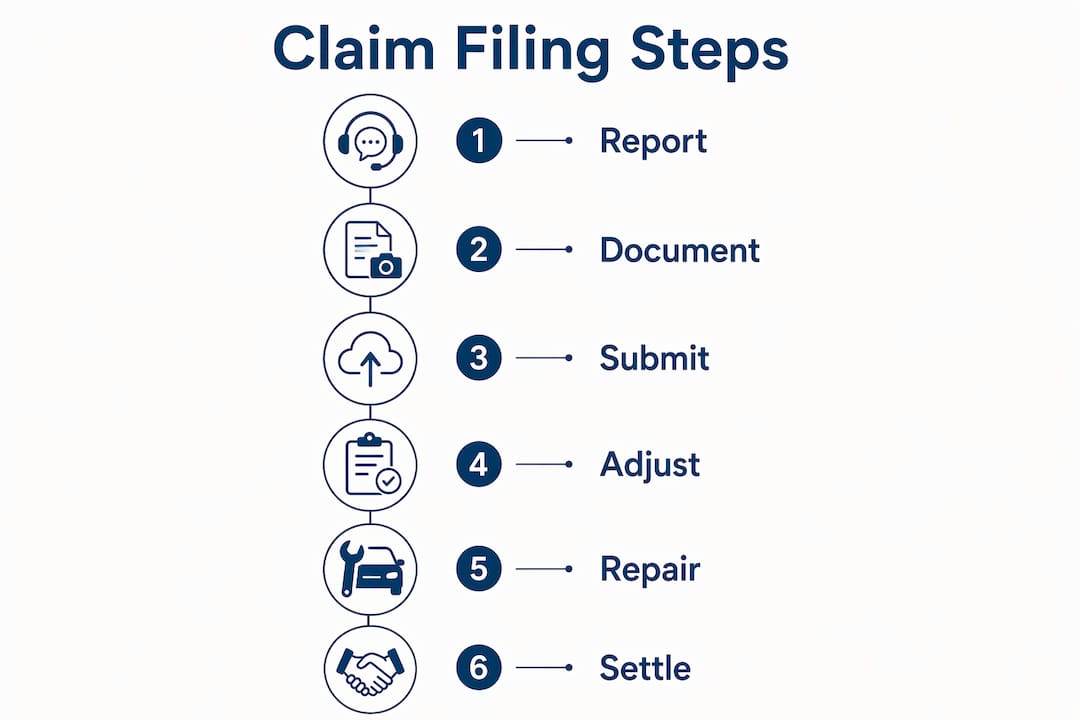
The auto insurance claim process follows a clear sequence. Skipping steps or getting them out of order is one of the most common reasons claims get delayed.
- Check for injuries and move to safety. Before anything else, confirm that everyone involved is okay. Call 911 if there are injuries. Move vehicles out of traffic if it is safe to do so.
- Call the police. A police report is a core piece of documentation in the claims paper trail. If officers cannot respond to a minor collision, many jurisdictions allow you to file a report online, by mail, or in person at the local station.
- Gather information at the scene. Collect the other driver’s name, phone number, license plate, driver’s license number, and insurance policy details. Photograph all vehicle damage from multiple angles, note road and weather conditions, and record the direction each vehicle was traveling. If witnesses are present, get their names and phone numbers.
- Contact your insurer as soon as possible. Call from the scene if you can, or as soon as the police clear you to leave. It does not matter who caused the accident. Even minor collisions can produce expensive hidden damage, especially on newer vehicles equipped with sensors and cameras for systems like automatic emergency braking.
- File the claim through your preferred channel. Use the hotline, mobile app, or online portal. Many insurers now encourage or require photo submission via app to speed up damage assessment. Some apps even let you visually recreate the accident with diagrams or video.
- Submit required documentation. Your insurer will ask for a proof-of-claim form and, if available, a copy of the police report. Ask specifically what documents are needed and whether there are deadlines for submitting additional information.
- Cooperate with the assigned adjuster. Once your claim is open, an adjuster will contact you to inspect the damage, interview involved parties, and calculate a settlement. Respond quickly and completely.
- Review the settlement offer and authorize repairs. Once the adjuster’s assessment is complete, you will receive a settlement offer or a repair authorization. If the offer seems low, you have the right to ask for a written explanation and to get your own repair estimate.
Pro Tip: Download your insurer’s mobile app before an accident happens and sign in so it is already connected to your policy. When you need it, you will not be fumbling with account setup at the side of the road.
How does your policy affect what you can claim?
Before you file, pull up your declarations page and review what coverage you actually carry. The type of coverage determines what the insurer will pay, and the deductible determines what comes out of your pocket first.
- Collision coverage pays for damage to your vehicle from a crash, regardless of fault, after you pay your deductible.
- Comprehensive coverage covers non-collision events: theft, vandalism, hail, flooding, and fire.
- Liability coverage pays for damage or injuries you cause to others. It does not cover your own vehicle.
- Uninsured/underinsured motorist coverage protects you when the at-fault driver has no insurance or not enough.
- Medical payments (MedPay) or personal injury protection (PIP) covers medical expenses for you and your passengers, regardless of fault.
Your deductible is the amount you pay before insurance kicks in. If your deductible is $1,000 and the repair estimate is $1,200, filing a claim nets you only $200 before considering that claims appear on your CLUE report and can raise your future premiums. Get an independent repair estimate before you decide to file for minor damage.
Rental car coverage is not automatic. It must be explicitly listed in your policy, and it typically applies only while your vehicle is being repaired. Confirm the daily limit and the maximum rental period your policy allows before you book anything.
Ask your insurer these questions about timing:
- Does my policy have a deadline for filing claims or submitting bills?
- Is there a time limit for resolving disputes?
- When should I expect the company to contact me after I file?

How to work effectively with your insurance adjuster
The adjuster’s job is to assess the damage, verify coverage, and calculate what the insurer owes you. Understanding that role helps you work with them, not around them.
- Verify the adjuster’s identity. Ask your insurer for the name of the person they will send before the visit. When they arrive, request identification. Fraud is a real concern, particularly after natural disasters.
- Be present during the inspection. Walk the adjuster around the vehicle yourself to make sure every area of damage gets examined, including areas that may not be immediately visible.
- Provide facts, not guesses. Clear, factual information speeds up the process. Do not speculate about fault, speed, or what the other driver was doing. Stick to what you directly observed.
- Document every interaction. Correspond by email when possible to create a written record. Take notes after phone calls, including the date, the name of the person you spoke with, and what was discussed.
- Keep copies of everything you submit. If the adjuster is replaced mid-claim, your paper trail proves what was already agreed upon.
One nuance worth knowing: you can file a third-party claim directly with the at-fault driver’s insurer, which can help you avoid paying your own deductible. The tradeoff is that your insurer will not advocate for you in that process. If the other driver’s insurer disputes the claim, you are on your own. Weigh that carefully before deciding which route to take.
If you believe the adjuster’s settlement is too low, ask for a written breakdown of how the figure was calculated, including any coverage limits or exclusions applied. You can also get your own repair estimate from a shop you trust. If the disagreement cannot be resolved, your state’s Department of Insurance accepts formal complaints, and an attorney who specializes in insurance law can advise you on your options.
Repairing your vehicle and using rental car coverage
Once the adjuster approves your claim, you move into the repair or replacement phase. Here is how to handle it without surprises.
- Choose a repair shop carefully. Your insurer may have a preferred network of shops, but you are generally not required to use them. Get at least one estimate from a shop you trust and compare it against the insurer’s assessment.
- Get repair authorization in writing. If the adjuster tells you to proceed with repairs, confirm that permission in a written message or email before any work begins.
- Track all bills and approvals. Keep receipts for every repair-related expense, including towing, storage fees, and any parts you are asked to approve separately.
- Understand total loss valuation. If your vehicle is declared a total loss, the insurer pays you the actual cash value of the car, minus your deductible. That figure is based on market value, not what you paid or what you owe on a loan. If you have a loan balance that exceeds the payout, gap insurance covers the difference.
- Activate rental car coverage promptly. Rental coverage is not automatic and applies only during the active repair period. Contact your insurer immediately after the claim is filed to confirm your daily limit and start the rental process without delay.
- Monitor repair progress. Many insurer websites and apps let you track claim status in real time. If your claim goes quiet, call or email at least once or twice a week for updates.
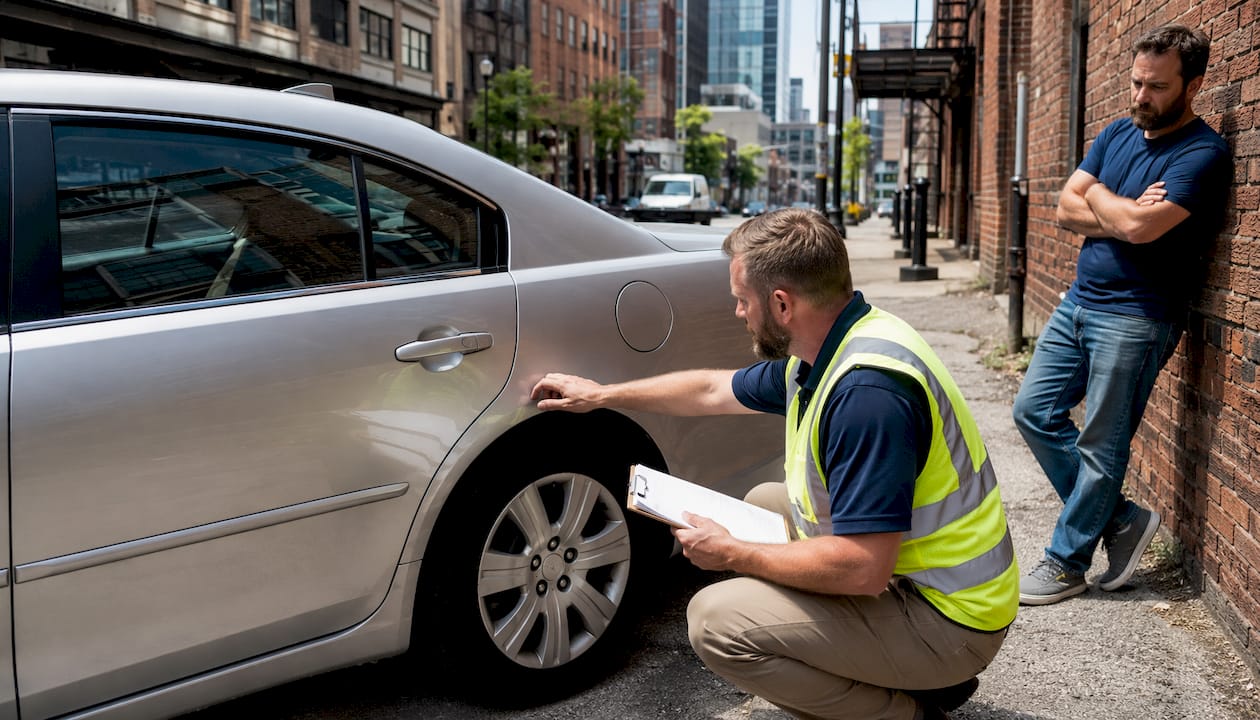
Water damage from flooding frequently results in a total loss, even when the vehicle appears drivable at first. Corrosion in wiring and mold in upholstery can develop over time, so do not assume a flooded car is repairable until a qualified shop has fully inspected it.
Avoiding common mistakes after an accident is just as important as following the right steps. If you want to make sure your coverage is set up correctly before an accident ever happens, review your auto insurance checklist to confirm you have the right limits and options in place.
At Hettler Insurance Agency, Ron and Meghan Hettler (both CIC, certified insurance counselor) and their team have been helping Texans navigate claims and coverage since 1992. As an independent agency representing over 30 carriers, they can review your current policy, identify gaps, and make sure you are not caught off guard when you need your coverage most. Call the Lubbock office or visit hettlerinsurance.com to speak with a Certified Insurance Counselor today.
Recommended
About the Author
Ronald J. Hettler, CIC is a Certified Insurance Counselor (CIC) [the gold-standard credential in the independent insurance industry]. Ron has over 46 years of real-world experience in the insurance industry. He is the owner/president of Hettler Insurance Agency in Lubbock, Texas and is licensed by the Texas Department of Insurance (License #666862). (Why Trust Hettler Insurance Agency? It’s a Local independent insurance agency representing multiple carriers. Hettler Insurance Agency has established business roots going back to it’s predecessor in the late 1800’s. Local expertise in Lubbock Texas and West Texas risks. Focused on clarity before a claim occurs.) Ron and his daughter Meghan, also a CIC, lead a team that represents 30+ carriers and serves clients across Texas.
Ron specializes in helping individuals, families, and small business owners understand complex insurance concepts in clear, practical terms so they can make informed decisions about their coverage. He specializes in helping individuals and families understand coverage gaps, deductible structures, and real-world claim outcomes before a loss occurs. Ron helps you to understand how insurance policies respond in real-world claim situations.
License verification available through the Texas Department of Insurance.
Frequently Asked Questions ?
Q1 ?: How quickly should I file an auto insurance claim after an accident?
Q2 ?: What information do I need to file the claim?
Q3 ?: Should I file a claim if the damage is close to my deductible?
Q4 ?: Is rental car coverage automatic while my vehicle is being repaired?
Q5 ?: What if I think the adjuster’s settlement offer is too low?
— Life Insurance Instant Quote and Apply Tool @ GetLifePolicy.com > * Quick self-service term life insurance quote. With or without medical exam.
— Call us about Auto, Home, Business, Life, or Health insurance. * Click to Call (806) 798-7800, Mon-Fri 8:30am-5pm (lunch closed Noon-1pm)
— Come see us @ our new address 4720 S Loop 289 Lubbock, TX 79414 (maps link), or get your online quote started at https://GetHettler.com


